the haiku comics of matt madden
Comics artist Matt Madden, known for his 99 Ways to Tell a Story (Penguin, 2005), has created haiku comics that capture the simplicity of both pictures and words.
His use of color perfectly underscores the haiku and illuminates it in a way that adds to its meaning. He mostly uses thirds for his layout which aligns with the 3-linw break of what’s become English-language haiku style. While the image may follow the three-lines “rule” his text breaks into smaller lines (while maintaning the 5-7-5 syllable count across the lines).
In the examples below, he foregoes frames, using white space and color to beautifully define the haiku count.
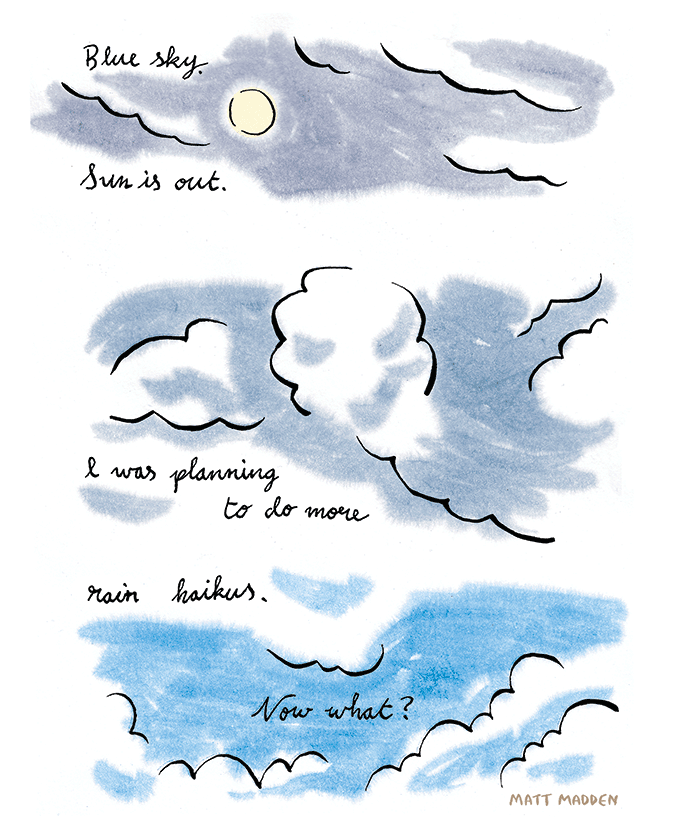
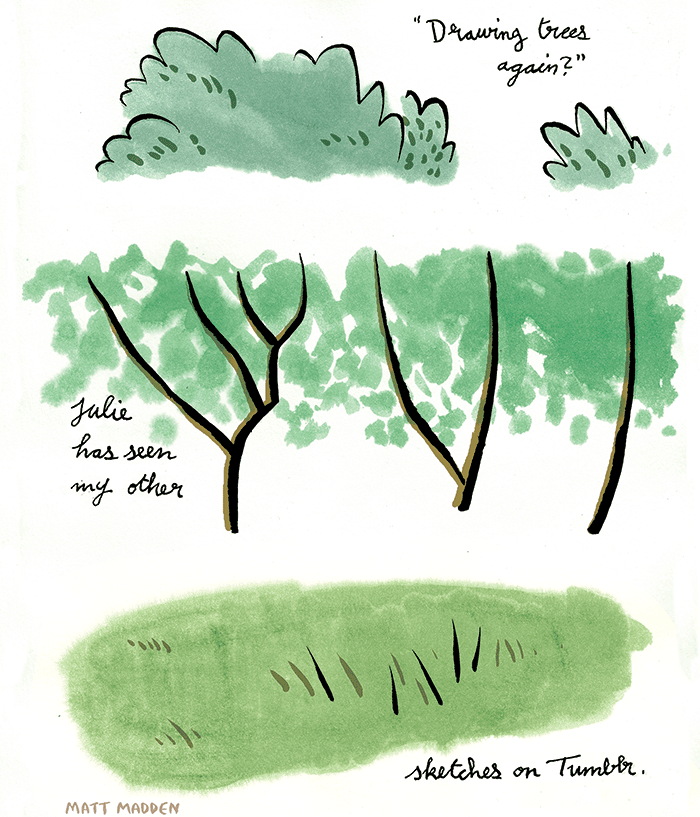
There’s so much to admire about these – their simplicity foremost. Also, they’re unique in their approach. (For compare/contrast, see the haiku comics of Susanne Reece, featured in AHOPC #11.) The implied panels as the haiku moves down the page work really well. They’re humorous and current. And they’re a direct reflection of the poet’s mind. For me, they’re the perfect examples of what poetry comics can and should do.
Timeline: Current
Warning: This incomplete history maps my journey as a poet learning about comics and doesn’t follow a strict chronological order.
 JB
JB 