book reviewS – recent collaborations
Collaboration has a long history in American comics. Until the underground comix movement in the 1960s and 1970s, a team of writers and illustrators was the norm (the team also often included support from an editor, penciler, inker, colorist, and letterer). Perhaps the most (in)famous duo is Stan Lee (writer/editor) and Jack Kirby (comics artist) and their work at Marvel Comics. The tradition continues today but with a more equitable and transparent sharing of credit.
Collaborations between poets and artists have shown up in poetry comics since at least the early 1960s. Just three examples: Poet/artist Joe Brainard creating comics collaborations (often featuring Nancy) with poets Ted Berrigan and Ron Padgett (see History of Poetry Comics #08). KAPOW! zine pairing spokenword poets with cartoonist in the late 1990s (see History of Poetry Comics #16.) And poetry comics creator Bianca Stone illustrating Anne Carson’s translation of Antigonick by Sophokles in 2012 (see History of Poetry Comics #04.)
Here are two recent noteworthy collaborations between poet and comics artist.
THE STONEWARE JUG
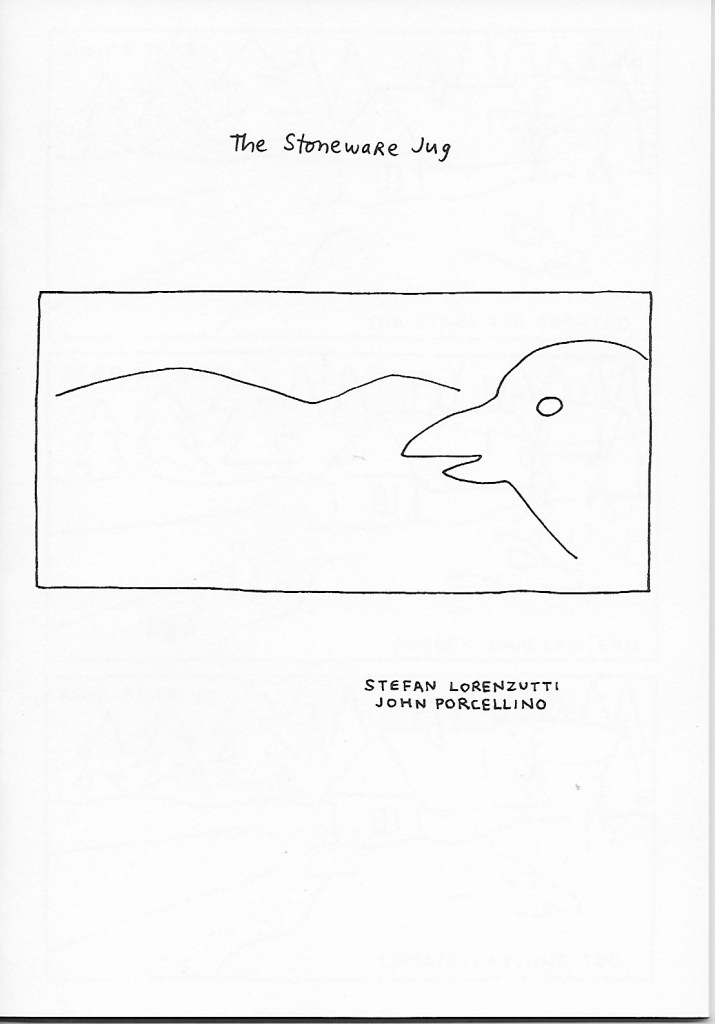
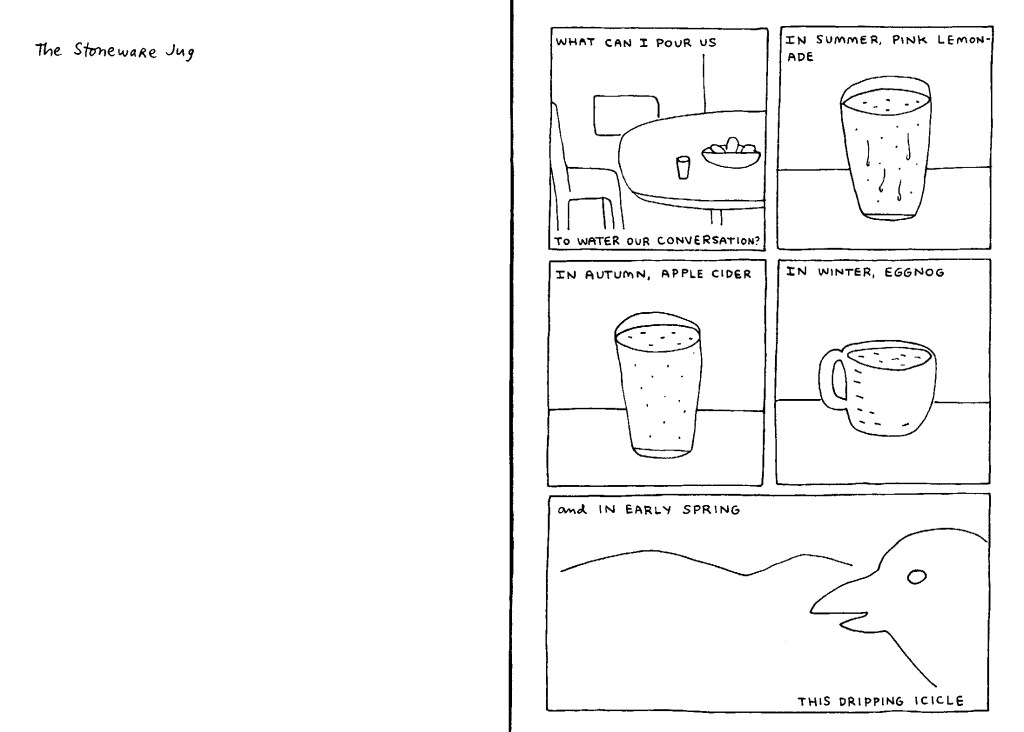
The Stoneware Jug by Stefan Lorenzutti (words) and John Porcellino (pictures) (Nieves, Bored Wolves, and Spit and a Half, 2022). In this collection of poems illustrated with 1- to 6-panel, 1-page comics, Stefan Lorenzutti provides simple, direct poems about being cold, the end of winter, and memories of (seemingly) empty places. Titles include “The Iceberg,” “When I Lived in Krakow,” and “On a Night of Cruel Frost.” The 13 poems in the collection are perfectly illuminated by John Porcellino in the simple, direct line drawings that he’s known for. Here’s the title poem from the collection:
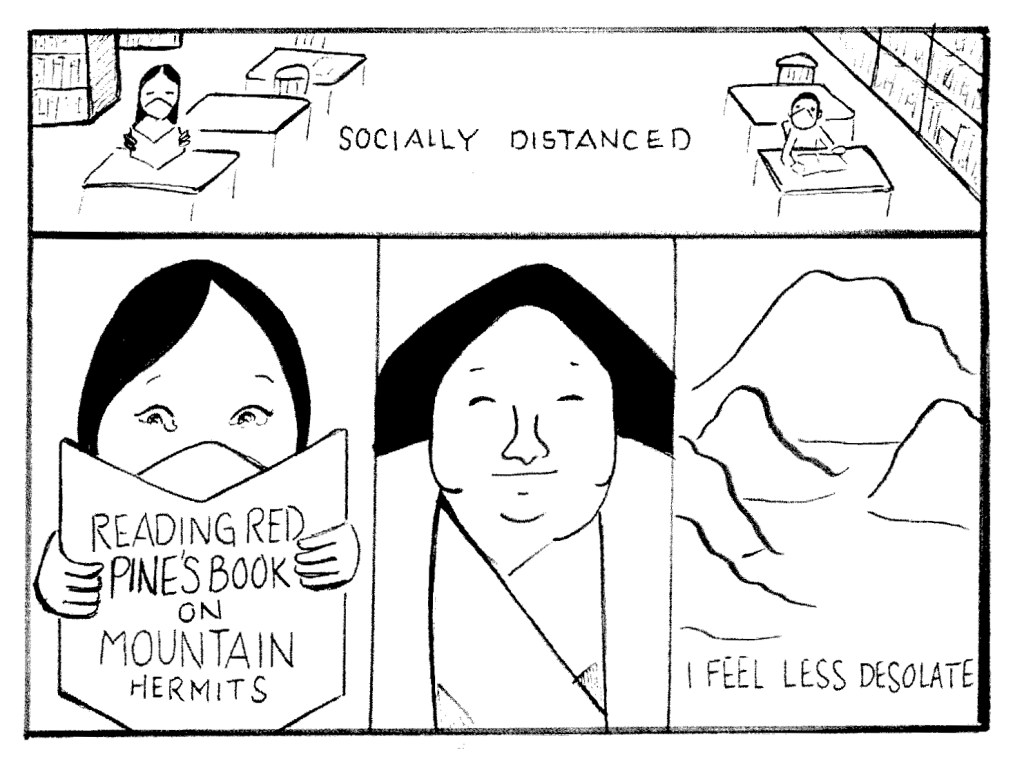
LESS DESOLATE
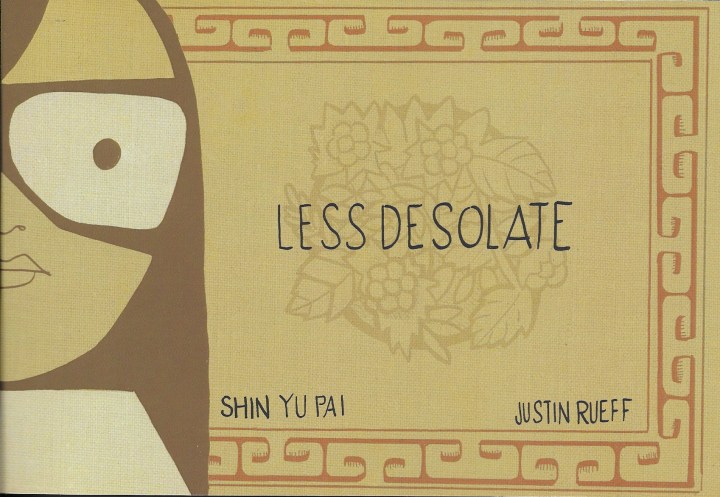
Less Desolate by Shin Yu Pai (haiku) and Justin Rueff (illustrator) (Blue Cactus Press, 2023). Poet/artist/podcaster Shin Yu Pai collects haiku she wrote during the pandemic, including the concurrent social unrest and her personal search for being present. Her haiku flow from rituals to yoga, from social distancing to social justice, and from being at home to being part of a wider community and world. The haiku are minimal yet pack a lot of meaning in a few words (12 words or fewer in most cases). Justin Rueff provides comics-inspired illustrations ranging fron 1 to 4 frames for the 1-page haiku comics, giving us just the right amount of context — and occasionally a touch of color. Here’s the title haiku comic from the collection:
Timeline: Current (2022-2023)
Warning: This incomplete history maps my journey as a poet learning about comics and doesn’t follow a strict chronological order.
 JB
JB 