book reviews – notley, field guide, Damm, bp

End of summer means the end of summer reading! Here are some of the poetry comics (and books on poetry comics) I read this summer.

>Runes and Chords by Alice Notley (Archway Editions, 2023). Poet Alice Notley started posting these “poem/drawings” on Instagram in 2019 during the pandemic. As she writes in the introduction, “They seemed to portray my state of mind better than a selfie, they wasted more time than a selfie, and were generally fun.” Done in her own handwriting, her words are interlaced with pictures of masked faces, portraits, flowers, and doodles; and the lettering piles on top of each other, becomes crosswords, and/or change colors in each panel, sometimes obscuring the drawings and vice versa. They comment on current affairs both political and personal. Most importantly, they directly reveal what the artist is thinking in her own voice. Here’s one example:
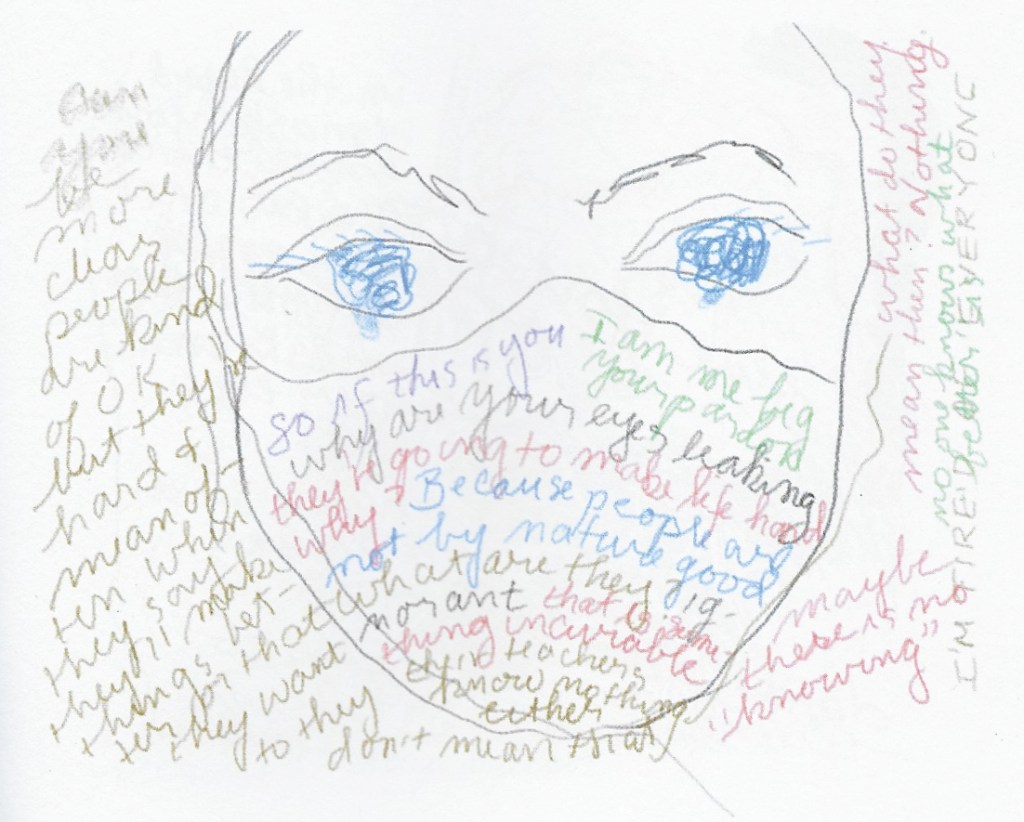
From Runes and Chords by Alice Notley (Archway Editions, 2023)

>Field Guide to Graphic Literature edited by Kelcey Ervick and Tom Hart (Rose Metal Press, 2023). Wow! A book for instructors, students, and writers who are looking to create “graphic narratives, poetry comics, and literary collage.” Each of the 28 essays/lessons is by a poet/writer/artist working in a specific aspect of combining pictures and words; each comes with an example of their work; and each comes with an exercise to guide your own creation. In total, these comprise a great survey of current state of affairs. I couldn’t put it down! My favorite aspect of the book is the “Alternate Table of Contents by Form,” which makes it easy to navigate to the form you want to explore, such as “Poetry Comics & Comics Poetry.”

>The Stoneware Jug, by Stefan Lorenzutti and John Porcellino (Nieves, Bored Wolves, and Spit and a Half, 2022). Stefan Lorenzutti, poet and publisher (with Joanna Osiewicz-Lorenzutti) of Bored Wolves in Krakow and the Polish Highlands, provided the words. John Porcellino, poet and comics artist of King Cat fame, provided the drawings. The collaboration works on a number of levels. The haiku-esque poetry is perfectly illumninated by elegantly simple pictures in comic-book panels settings. This work encapsulates my sensibilities of poetry comics. (More on collaborations in a future post.) Get your copy now!

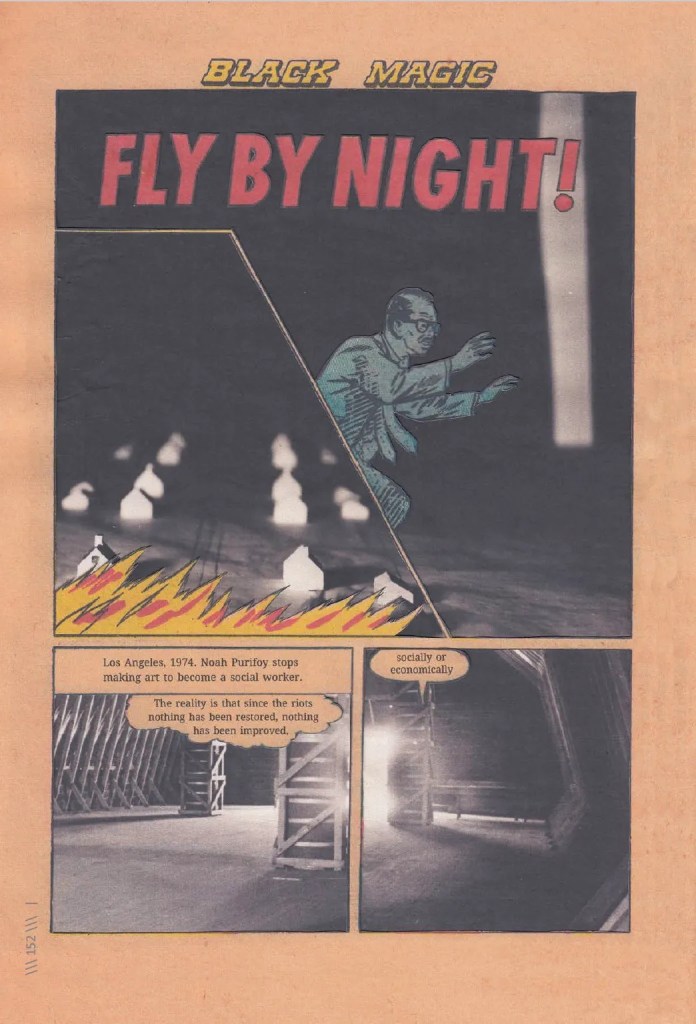
>Riot Comics & “I’m a Cop” No. 2 by Johnny Damm (2023). Johnny Damm continues his hybrid-comics-collages using found text with two new works this year. Riot Comics combines cut-up classic cops comics and Depression-era photos with quotes from those who participated or witnessed the Tompkins Square Park riot in 1988. “I’m a Cop” No. 2 directly quotes “actual statements of police union leaders.” Both resonate with current events.

By placing these “law and order” comics in the context of a real-world police, Riot Comics seeks to challenge the carceral logic that dominates the vast majority of U.S. comic books and to question if this medium might also serve as a space of abolitionist possibility.

Johnny Damm in Notes to Riot Comics

For more on Johnny Damm’s work, see AHOPC #9.

>Team Photograph by Lauren Haldeman (Sarabande Books, 2022). Graphic novelist/poet Lauren Haldeman interleaves poems between chapters of this graphic memoir and ghost story. While not fully integrated visually, the poems serve as a soundtrack to the narrative she’s telling in graphic novel format, providing context, depth and space for the story to unfold. Or perhaps it’s the other way around — the graphic novel provides context for the poems. Either way, this work made me realize there are different ways to think about the relationship between poetry and comics; a welcomed reminder to keep an eye on the overall.

>St. Art: The Visual Poetry of bpNichol curated by Gil McElroy (Confederation Centre Art Gallery and Museum, 2000). This catalog to an exhibit of bp Nichol‘s visual poetry features three insightful essays, his “mech sheet for pome objects,” and a detailed list of his works. Here are three insights I gleened from the essays and bp Nichol in his own words:

  1. My earliest visual poems I called “ideopomes” because I had read Fenellosa on the Chinese written character as a medium for poetry, because I was very interested in Chinese, Japanese, Haida & Kwakiutl poetic modes, & because I saw myself as consciously working with the ideogrammatic potential of the arabic alphabet … This interest in the ideogrammatic & (as I later saw) runic capacity of the alphabet, ran parallel to an interest in the comic strip & its narrative & syntactic convention. (bp Nichol)
  2. Within the realm of the literary arts, visual poetry, a poetic form with a history that arguably stretches back to at least 1700 B.C.E., truly came of age in the century with the work of the French poet (and first major theoretician of Cubism) Guillaume Apollinaire, his Dadaist contemporary, Tristan Tzara, and the Italian Futurist, F.T. Marinetti. (Gil McElroy)
  3. While painter Roy Lichtenstein moved into the comics frame to work at a kind of molecular level of technique, Nichol pushed out against the frame and other comic conventions to a more panoramic approach. The simply drawn, minimally detailed figures of the characters and scenes in Nichol’s comics contrast with the sophisticated play occurring with the panels themselves. (Paul Dutton)

Timeline: 2000, 2022, 2023

Warning: This incomplete history maps my journey as a poet learning about comics and doesn’t follow a strict chronological order.
A History of Poetry Comics

kapow! paired poets with cartoon artists

I admire zinesters on many fronts. Their DIY attitude. Their willingness to work outside traditional publishing and distribution channels. Their strong sense of community. Their courageous sharing of what catches their attention or what they’re obsessing on. And always, their ideas.

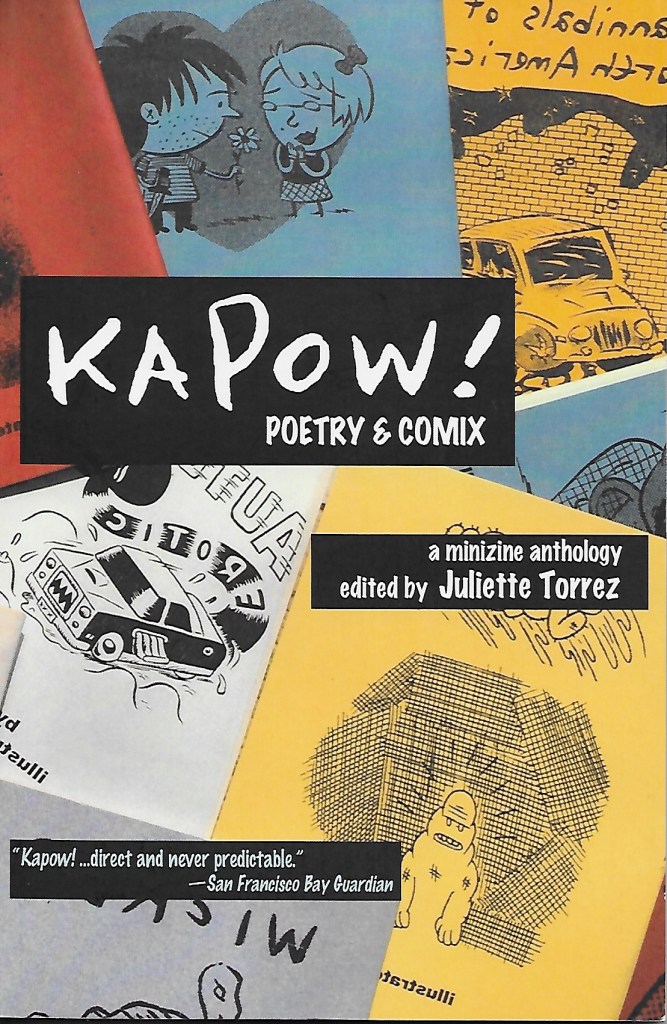
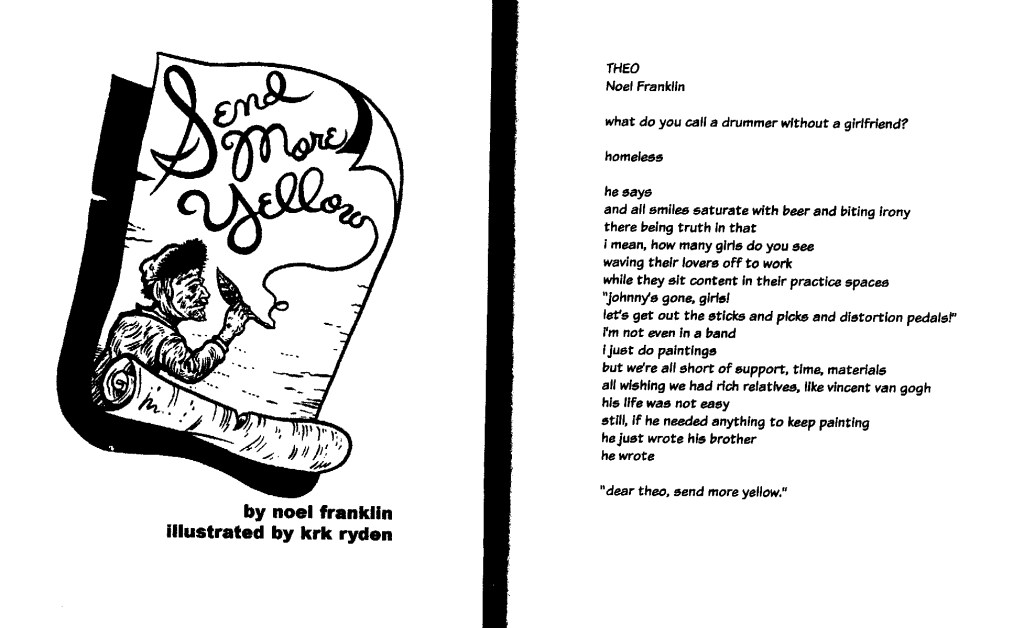
So it was soul-affirming to be led to Juliette Torrez and her idea to match slam poets’ work with comic artists’ drawings. She published these match-ups originally in her hand-stapled zine (are there any others?) Kapow! in the late 1990s. Eventually these collaborations (or actually illuminated poems) were collected in Kapow! Poetry & Comix (Manic D Press, 2017).

Kapow! Poetry & Comix, edited by Juliette Torrez (Manic D Press, 2017)

Here are a couple of examples from the anthology. (Both are facing pages.)

From Kapow! Poetry & Comix (Manic D Press, 2017)

The matches made here are right on thanks to Torrez’s knack for pairing the right comics artist with the right spoken word poet. These pairings showcase the edginess/ directness/ openness of the work in a way that goes beyond illustration. The comics provide context, a moment in time, new ways to consider the text, and a willingness to accept outside influence.

Collaboration between artists and writers has been a part of the comics canon almost since the beginning of comic books (e.g., perhaps most famously, Stan Lee and Jack Kirby). Zine culture – and Kapow! specifically – gave it an updated twist. More on collaboration in a future AHOPC.

Timeline: 1990s

Warning: This incomplete history maps my journey as a poet learning about comics and doesn’t follow a strict chronological order.

A History of Poetry Comics

Porcellino on connection between poetry and comics

John Porcellino is one of my comics heroes and major inspiration when I started drawing. His cartoons done in black lines are direct, uncluttered, achingly beautiful simple. His style is perfectly matched to the directness of his narratives, thinkings, observations, and poetry. He’s known for his King Cat Comics, which he has self-published since 1989 and have been reissued as collections. Among these pages are gems of poetry comics, many evoking haiku.

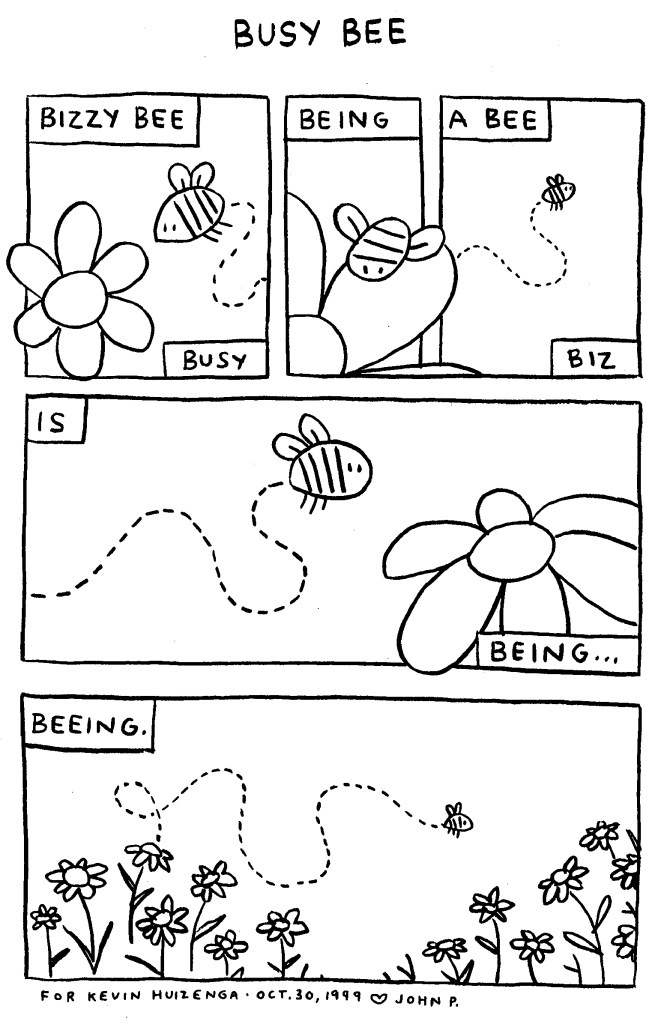
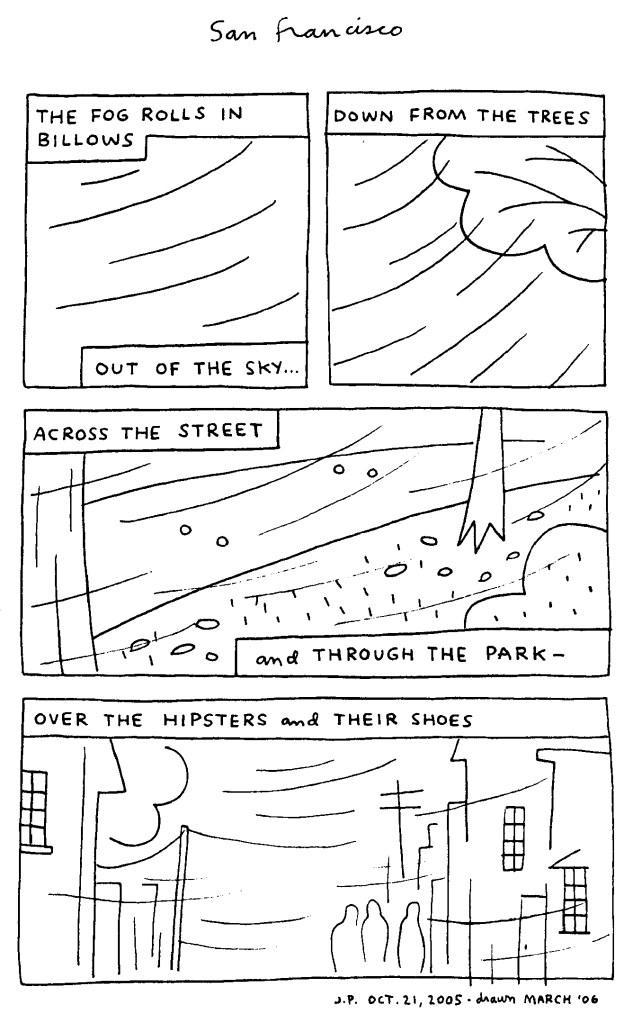
In an April 2018 interview with The Herald, Porcellino talks about the connection between poetry and comics: Comics, especially self-published comics, broke down the barriers between artist and audience the way punk rock did. It allowed for a more direct connection. / Many cartoonists note the similarities between comics and music, which I agree with. In the same way, there are similarities between comics and poetry. As I mentioned, I’ve studied and written poetry throughout my life – it has always been a creative part of me. / Somewhere around the late nineties I started to more consciously begin to integrate my comics with my poetry. Around this time, many of my comics began life as straight poems – text on a page in poetic form – that I adapted into comics.

There are way too many to share all my favorites, so here are just two of his poetry comics:

“Busy Bee” collected in “Map of My Heart – Best of King Cat Comics & Stories 1996-2002” (Drawn and Quarterly 2009)
“3 Poems about Fog – San Francisco” collected in “From Lone Mountain – King Cat Comics and Stories 2003-2007” (Drawn and Quarterly 2018)

Both of these poetry comics perfectly capture small moments – just enough words with the right accompanying drawings – balanced – leaving us simply to hear the bee and feel the fog.

Porcellino’s website KING CAT COMICS is where you’ll find more about his world. Check it out!

Timeline: 1989-Present

Warning: This incomplete history maps my journey as a poet learning about comics and doesn’t follow a strict chronological order.
A History of Poetry Comics

Book review – illuminated poems of moni-sauri

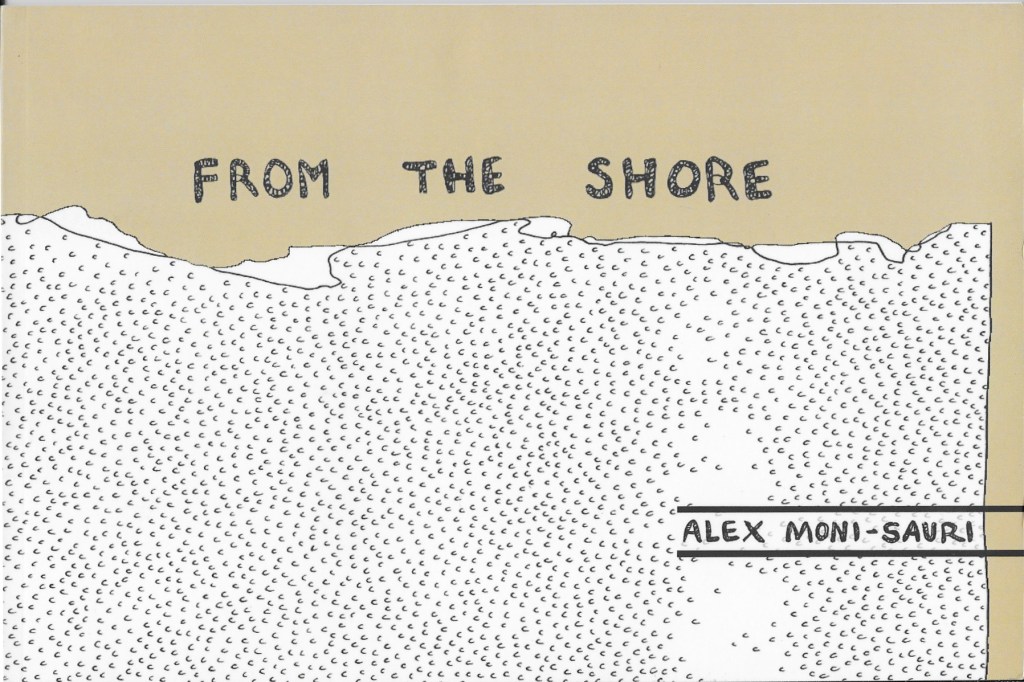
Book review: “From the Shore” by Alex Moni-Sauri (Gasher Press, 2020)

Throughout From the Shore, Alex Moni-Sauri’s drawings perfectly complement her handwritten poems adding illumination, punctuation, and thoughtful pauses. Artfully and simply, the poet/artist uses line drawings and squiggles to explain and expand the meaning of her poems.

Her drawings – I should say, cartoons – wouldn’t be out of place in the New Yorker. Whole panels stand alone at times as a kind of coda to the proceeding poem. My favorite poems/panels in the collection are ones where the words and drawings are integrated. The street lamp accompanying “Late from Work” (see below). The horizon line with the sun barely rising/setting in “From the Shore.” The lines of poetry with no distinction from the lines of the sea in “Wet Morning.” The security camera aimed at the poem in “Scene at the Mall.” There are more.

Her poems in this collection are mostly set outside. There are beaches, shorelines, barren (i.e. treeless) landscapes, ocean (which appears to be engulfing the poem), sky, manicured lawns, strata, power lines, and birds, which appear throughout these poems. Even when showing an interior space, like a room, birds are present, as in “Vulcan City” where the poems goes: Crows pass by like arrows / between buildings / that were dropped from air. And there’s the bird on a string hanging from the top frame of the cartoon in “A Thank You to the Empty Land.”

Late from Work - Alex Moni-Sauri
“Late from Work” by Alex Moni-Sauri from “From the Shore” (Gasher Press, 2020)

In an interview with Gasher Press, Moni-Sauri shares her approach: “Making poems and making drawings are distinct processes for me, although they talk to each other a lot. Using the same medium (pen and paper) for both connects them in a basic way, and my writing and drawings always exist in the same sketchbooks no matter how much I try to designate separate spaces for them. But in the end it is much more curatorial, or like collage.”

Find more images of her work on her Instagram page.

Timeline: 2020

Warning: This incomplete history maps my journey as a poet learning about comics and doesn’t follow a strict chronological order.
A History of Poetry Comics

poetry comics of bp Nichol (part 2)

(Our first two-parter! bpNichol continued …)

There’s so much more to blow your mind about the poetry comics of bpNichol.

Nichol brought his obsession with language and words to his comics and drawing. One of the restraints of comics Nichol explored was frames (see AHOPC #12). Drawing also gave him a way to make words tangible for the reader. He’s quoted in the introduction for bpNichol Comics (Talonbooks, 2002): “how can the poet reach out and touch you physically as say the sculptor does by caressing you with objects you caress?”

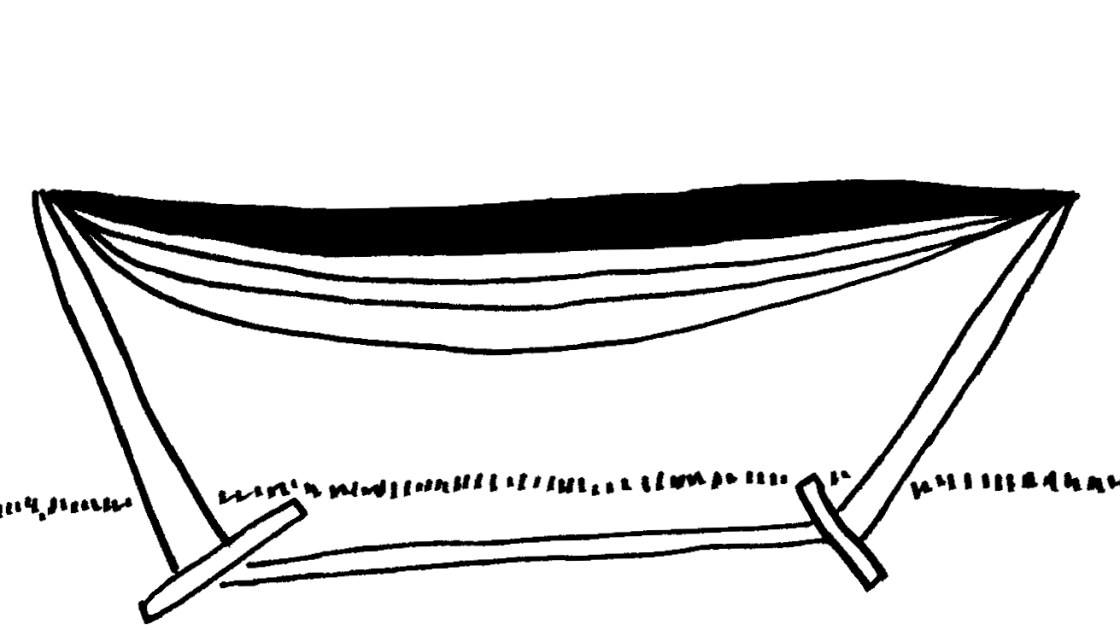
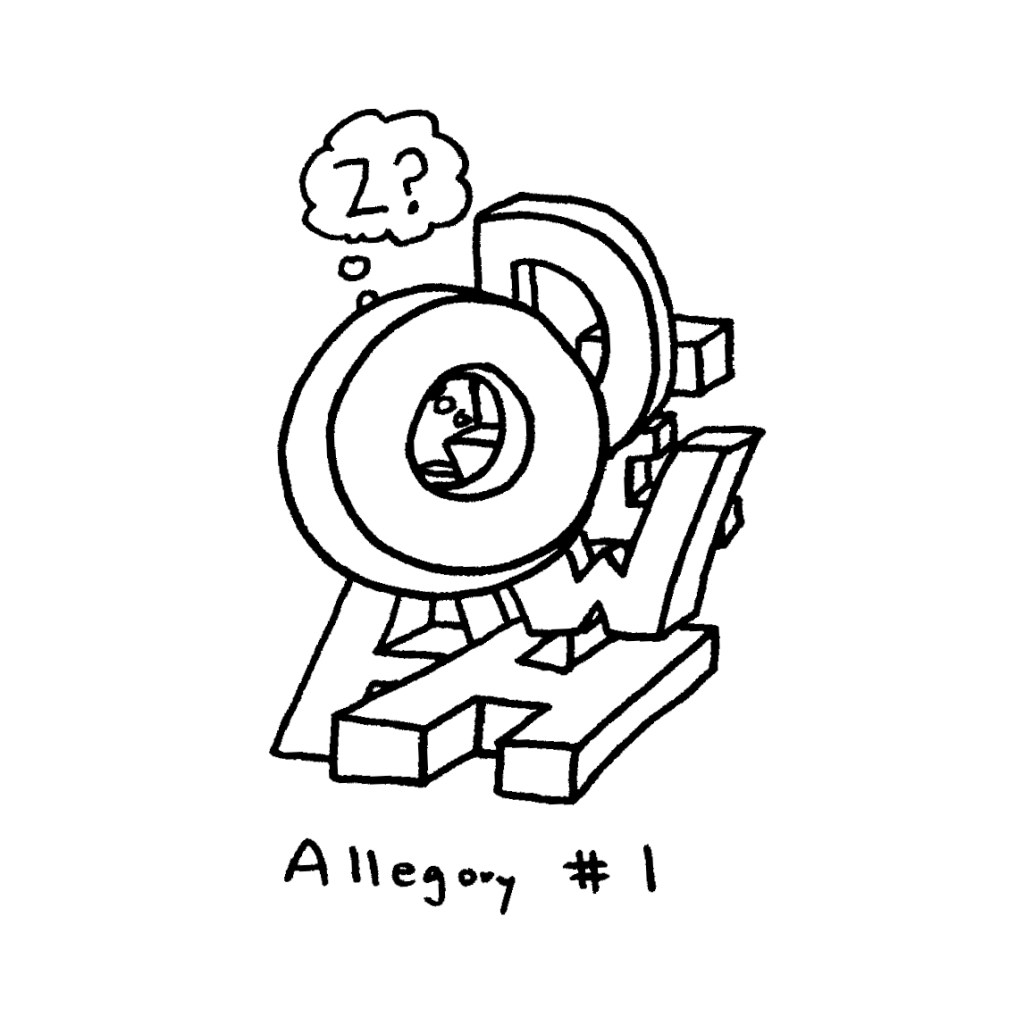
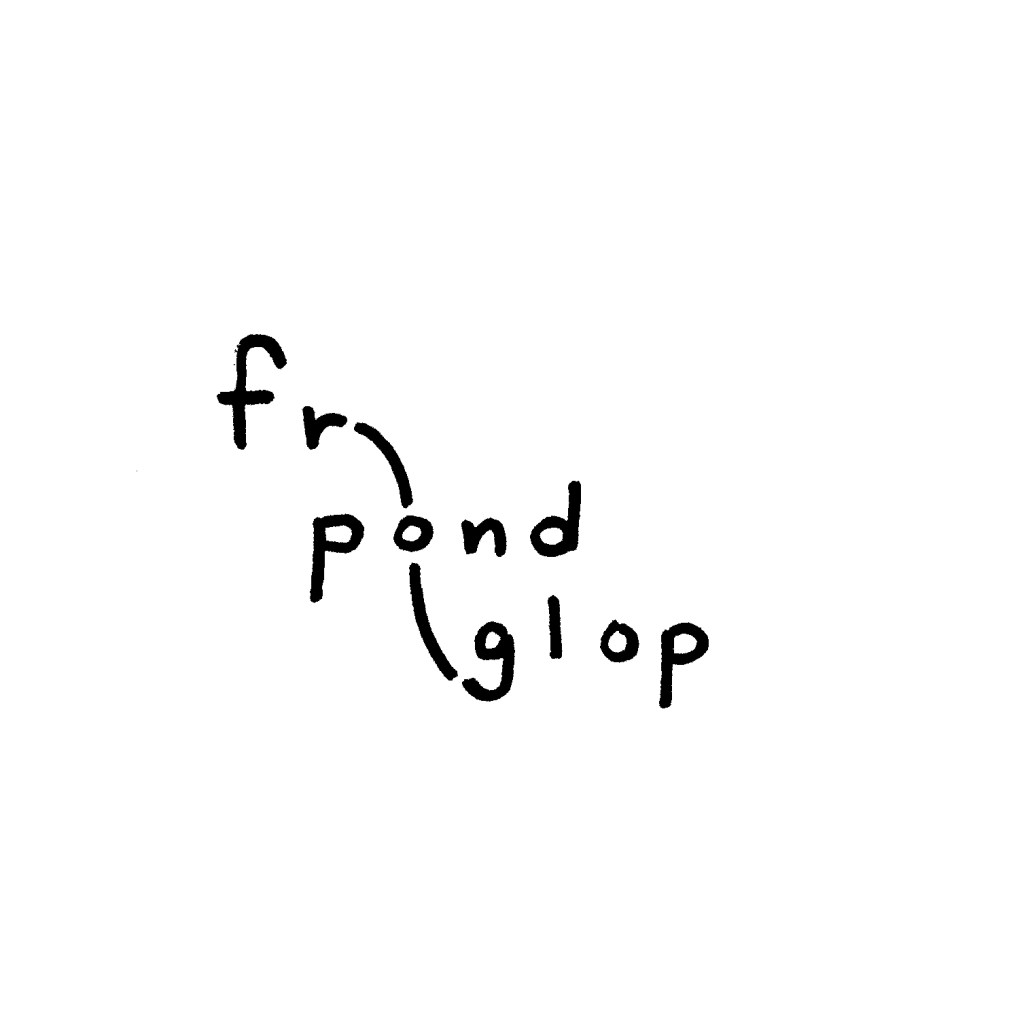
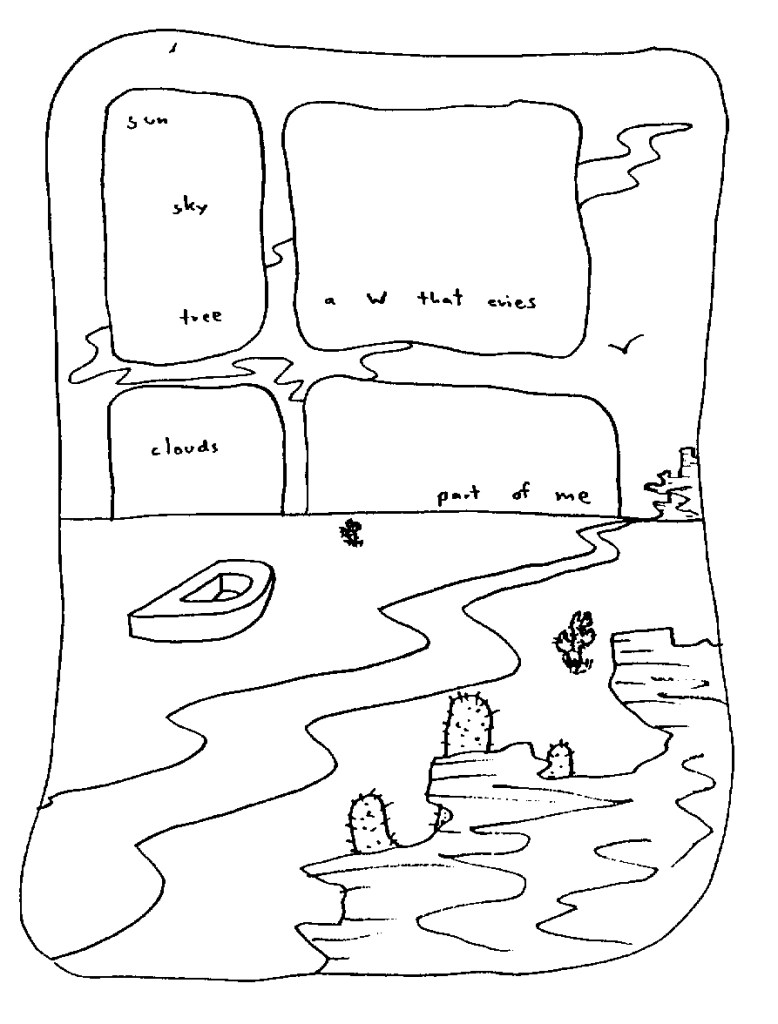
To that end, he found ways to incorporate letters, the alphabet, and words into his drawings and comics – blurring the line between pictures and words. Here are examples of Nichol’s use of letters/lettering in his art.

Frame 3 by bpNichol originally from love: a book of remembrances (1974) reprinted in a book of variations (Coach House Books, 2013)
Allegory #1 by bpNichol originally from love: a book of remembrances (1974) reprinted in a book of variations (Coach House Books, 2013)
Sixteen Lilypads by bpNichol originally from art facts (1990) reprinted in a book of variations (Coach House Books, 2013)
Unititled by bpNichol originally from art facts (1990) reprinted in a book of variations (Coach House Books, 2013)

I admire the wit and the humor in these poems. A comic written with just words and a horizon line. Is the Z missing or is the Z sleeping? The erasure of the word frog until we’re left questioning (did we even see a frog?). The witty homage to Basho’s famous haiku (old pond / a frog jumps in / splash!) where you can also see the motion.

bpNichol makes us think about poetry and comics differently. He adeptly used the two to create something new. Fusing words and pictures, he found ways to transcend both.

Recommended: Lots more to explore in the bpNichol Archives.

Timeline: 1960-1980+

Warning: This incomplete history maps my journey as a poet learning about comics and doesn’t follow a strict chronological order.
A History of Poetry Comics

Poetry comics of bp Nichol (part 1)

Canadian poet bpNichol (1944-1988) explored the outer limits of words, sound, and pictures, starting with concrete poetry, moving through sound poetry, and creating a treasury of poetry comics.

In the poet’s own words: hence for me there is no discrepancy to pass back and forth between trad poetry, concrete poetry, sound poetry, film, comic strips, the novel or what have you in order to reproduce the muse that musses up my own brain. (Quoted in the introduction to bpNichol Comics (Talonbooks 2002))

He incorporated many of the restraints of comics into his poetry comics – lettering, frames and strips, superhero homage (Captain Poetry), recurring characters, captions, speech bubbles, and emanata. He also featured letters of the alphabet including a starring role for *H*, signifying H-section in Winnipeg where he lived as a child. But he also pushed against these restraints – ignored the frame, lettering ranging from precise to illegible, empty speech bubbles.

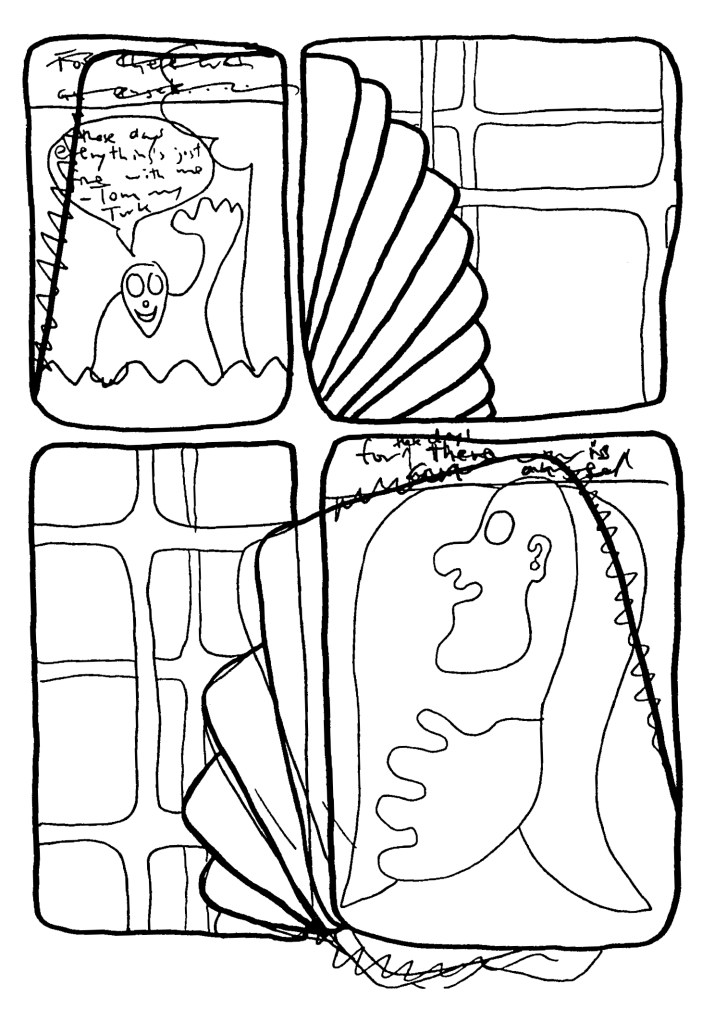
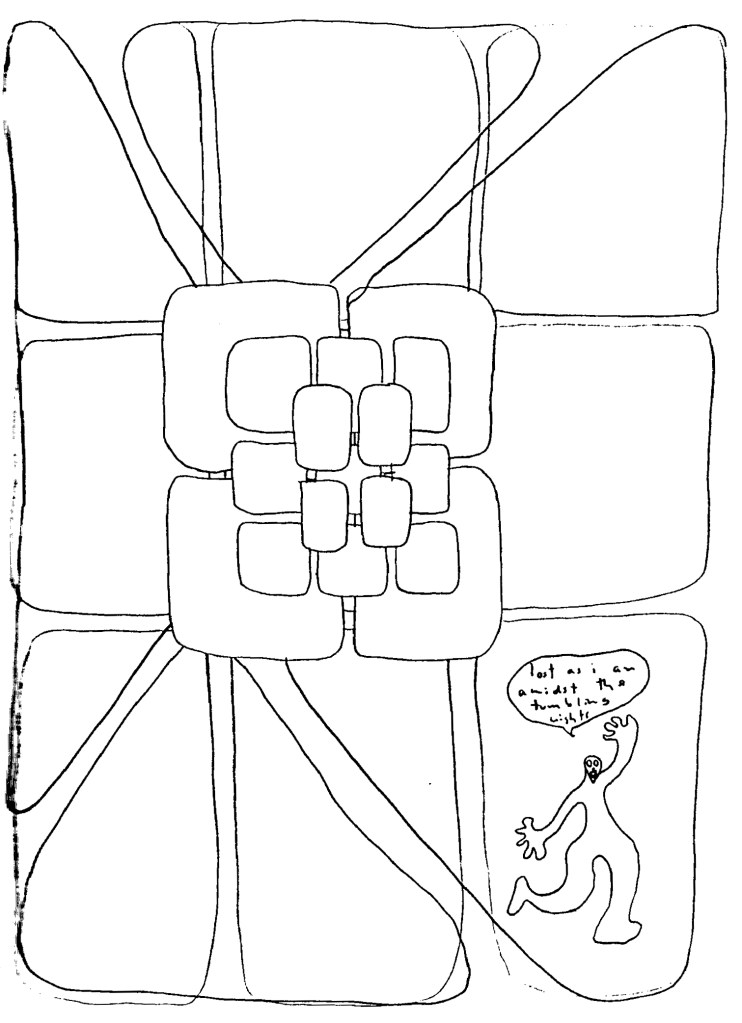
Here are 3 examples that illustrate how Nichol used the conceit of the comic book strip or grid but pushed against what was expected.

bpNichol from “Notebook 1971” collected in bpNichol Comics (Talonbooks 2002)
bpNichol from “The True Tale of Tommy Turk” collected in bpNichol Comics (Talonbooks 2002)

These are wild! There are frames coming out of pictures, frames inside frames, a network of frames, frames fanning and folding, frames ignoring gutters while creating their own runaway gutters, frames that are crossed out. They make their own universe with their own context and logic – surreal, meta, morphed – while carrying simple yet profound poetic messages. Much to admire here and be inspired by.

To be continued …

Timeline: 1960-1980+

Warning: This incomplete history maps my journey as a poet learning about comics and doesn’t follow a strict chronological order.
A History of Poetry Comics

Book review – DIY poetry comics from Susanne Reece

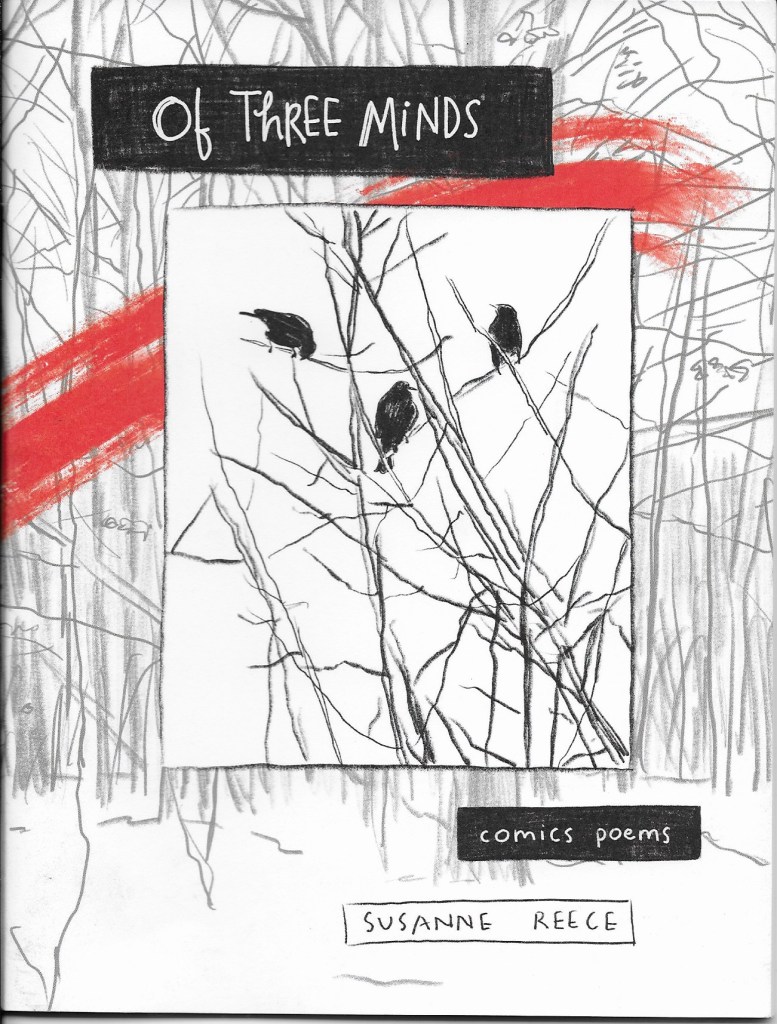
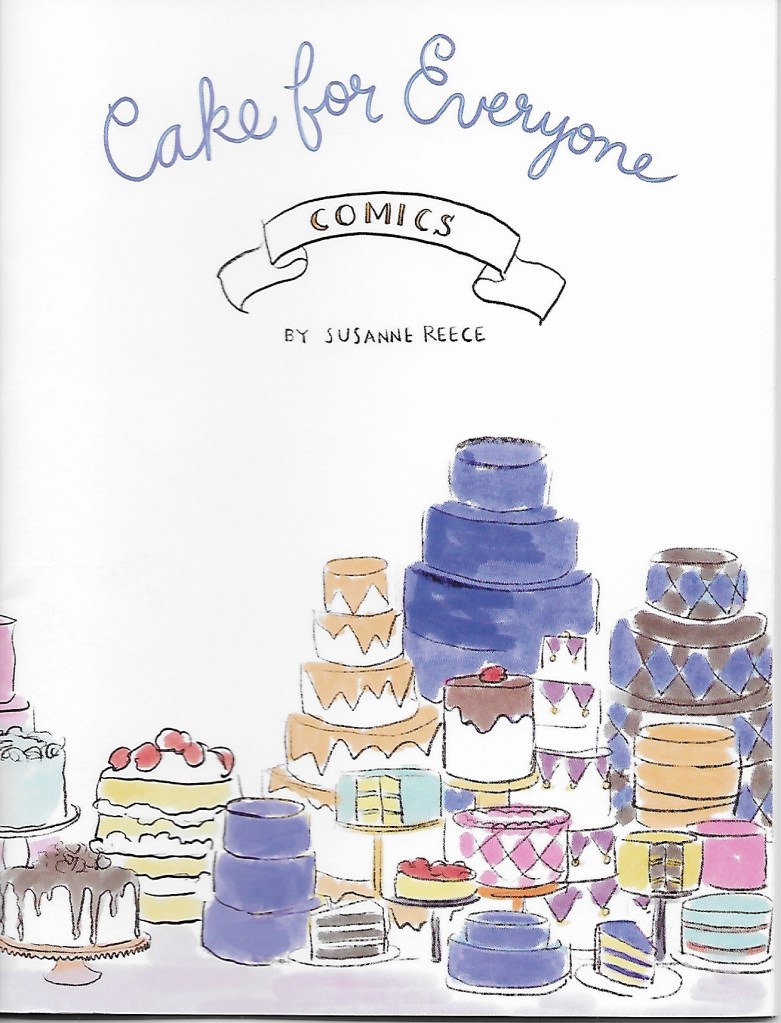
(New section!) Book review: “Of Three Minds” by Susanne Reece (DIY, 2022) and “Cake for Everyone” by Susanne Reece (DIY, 2022)

In ways less experimental, in other ways more compelling, the poetry comics of Susanne Reece are direct, confessional, and wonder-provoking. Two recent zines of poetry comics by the writer/artist are engaging examples of words and pictures creating a third meaning. (For more on defining poetry comics see AHOPC #05.)

“Of Three Minds” opens with the title poem, inspired by Wallace Stevens’s blackbird. It’s a series of frames or windows set atop of a bleak winter scene that encloses the lines of the poem and small moments of noticing – a blackbird, clouds, a falling leaf. Anchoring it all is the poet herself, bundled up against winter as observer/experiencer. It brilliantly captures how the mind works, how we assemble a whole from the parts.

This is followed by a series of haiku comics, with the poem spread across three panels with a 5-7-5 syllable count. All of them direct observations by the poet-artist, with titles continuing the winter theme: “A Winter Walk,” “Ice Storm,” “Blizzard,”and “Hibernation.” Each frame provides a different perspective from close-ups to scene setting. After spring, summer, and fall diary comics, Reece returns to haiku comics to end the collection with the dark yet beautiful “DFW–>LGA” and “Insomnia.” In the former, the night opens up the wonders of city lights observed from an airplane. In the latter, night becomes an antagonist when the artist can’t fall asleep. Her confessions always get at something deeper.

This is also true in Reece’s “Cake for Everyone.” Nestled among the dominant diary comics are two poetry comics – “Guilty Pleasure” and “The Lantern Fish.” In both, from the darkness, light appears as a flicker – desperate yet defiant. There is advice we learn from our elders as well as from nature, she reminds us. In both, as Reece writes, “trying to find / Its way in the dark.” Indeed.

Reece self-describes her work as “comics poetry, comics essays, and diary comics.” See more of her comics – and buy her books – at her website here.

Timeline: 2022

Warning: This incomplete history maps my journey as a poet learning about comics and doesn’t follow a strict chronological order.

A History of Poetry Comics

Concrete poetry – honoring our forerunners

Concrete poetry can inform our understanding of poetry comics. They are literally words, letters and/or characters as pictures. The graphic element emerges from the letters and characters used.

The common idea I see is that the words/letters/characters and the resulting picture/image/field come together to do what they can’t achieve on their own. (See my note on *illumination* in my attempt in #05 to define poetry comics.)

There’s also an urge I sense by the concrete poets to provide context for their ideas. Concrete implies building and foundation. The resulting whole (words as image) underpins the attempt to place letters and typewriter characters graphically on the page often times within frames (or at the least within the restraint of margins). It’s the same process that the comics artist wrestles with – composition on the page within the boundaries of a frame.

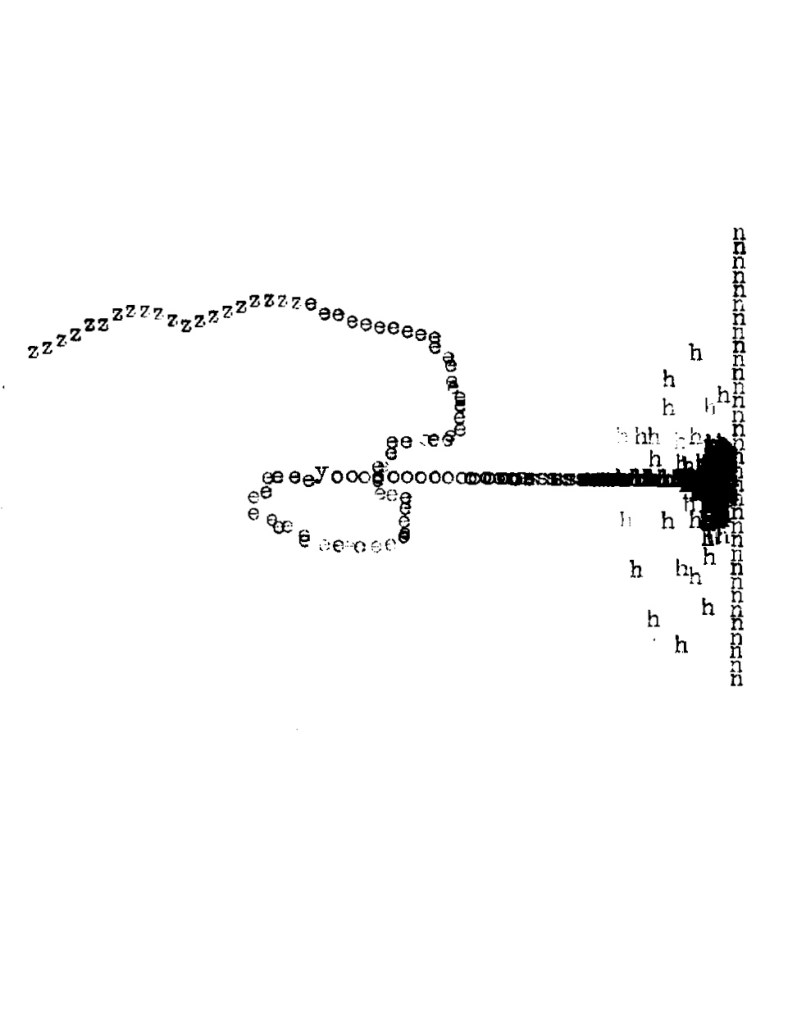
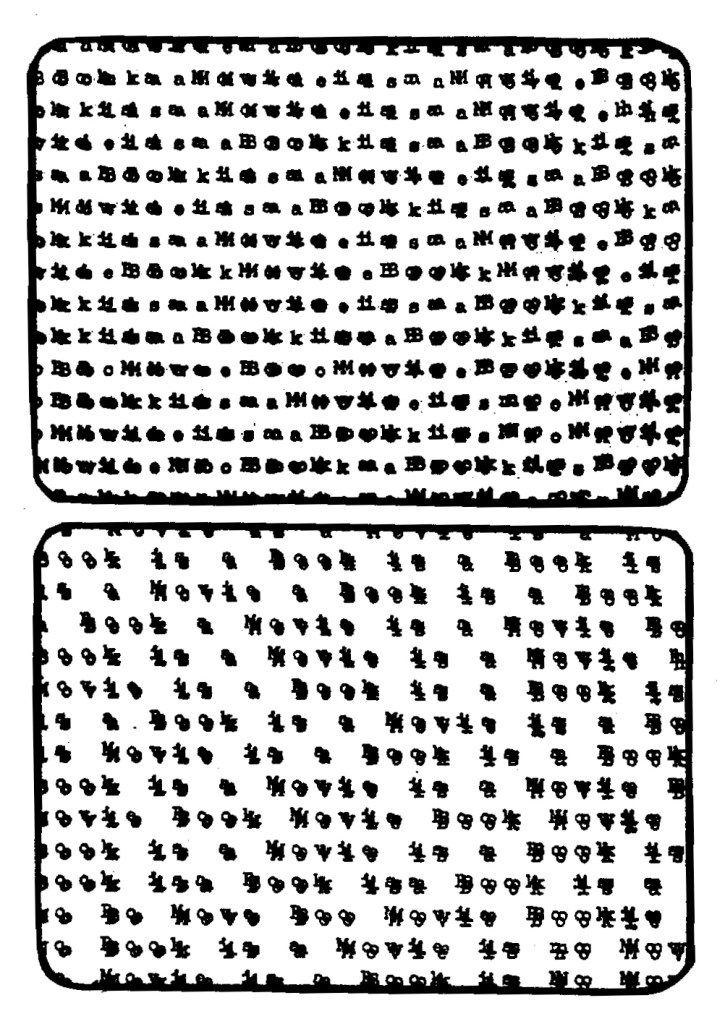
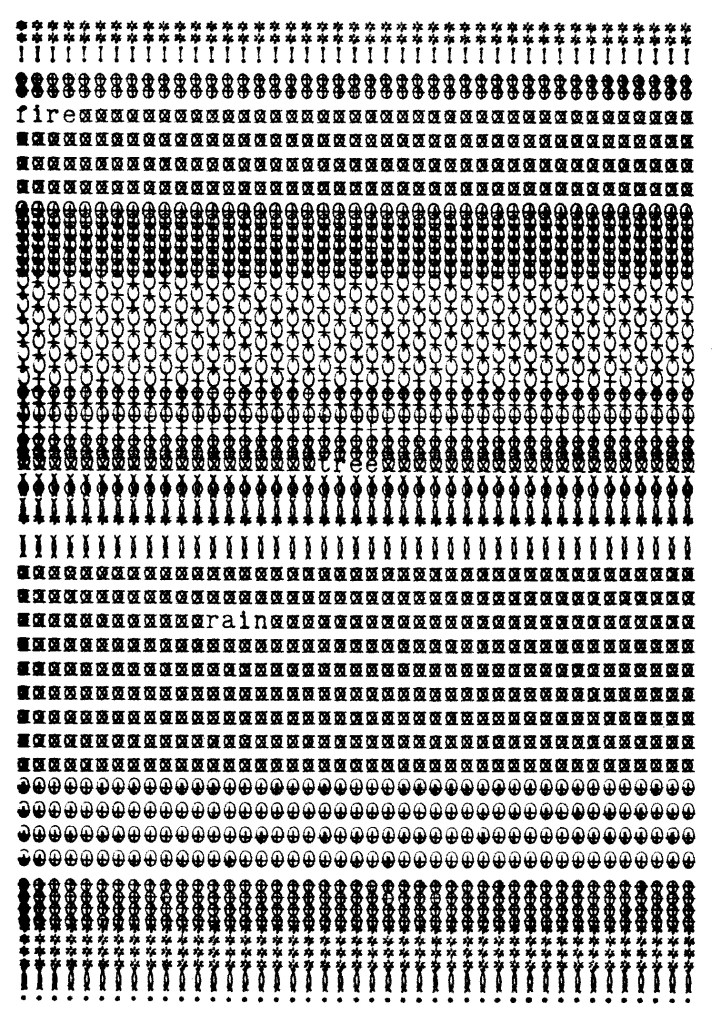
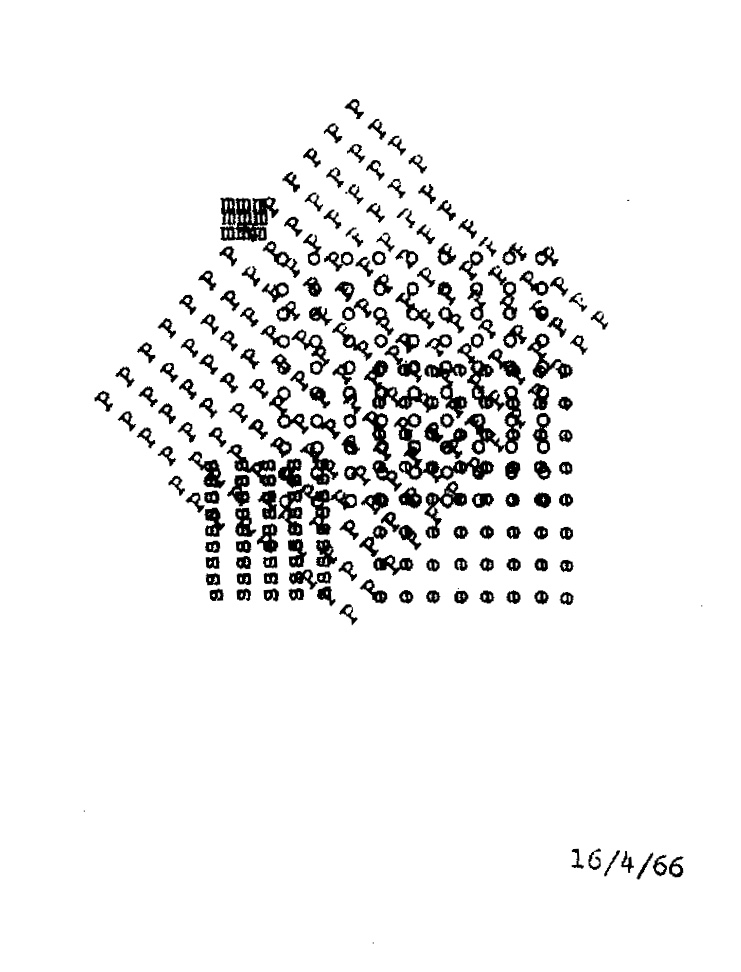
Concrete poetry is centuries old, however, the term *concrete poetry* was coined in the early 1950s. Below are some concrete poems from the 60’s, 70’s, and 80’s. Though my predisposition for manual typewriters is evident in these examples, the proliferation of home computers has even further expanded the exploration of concrete poems, pushing into the realm of visual poetry.

zeeeyooosshhhhhhhh by Cavan McCarthy from Typewriter Poems (Something Else Press, 1972)
“From: A Movie Book” by Bob Cobbing from Typewriter Poems (Something Else Press, 1972)
from “4 vizual pomes” by bill bissett reprinted in breth (Talonbooks, 2019); originally published in soul arrow (blewointmentpress, 1980)
from “KON 66 & 67” by bp nichol reprinted in bp: beginnings (BookThug, 2014); originally published by Ganglia, 1968.

Many concrete poems are also sound poems, which mirrors the challenges of “performing” poetry comics. The intimacy of encountering the poetry comic on the page can’t truly be replicated through projection or screen sharing at a reading. (I will explore performance of poetry comics in a future post.)

Timeline: 1960s – 1980s

Warning: This incomplete history maps my journey as a poet learning about comics and doesn’t follow a strict chronological order.

A History of Poetry Comics

Book review – Johnny Damm brings found text to his poetry comics

Artist-poet-teacher Johnny Damm‘s most recent poetry comics carefully collages X-Acto-knived images from vintage comics books pairing them with found text. Perhaps beyond genre or classification, his work speaks to the edge of the universe where comics become poetry and poetry becomes comics.

There’s no mistaking he’s currently working within the context of comics. His supplies consist of vintage comic books from the late 1940s and 1950s from which is “excepts” panels and images. As he states in an interview included in the back of Failure Biographies (The Operating System, 2021), “I make comics out of other comics.” (p.170)

Damm uses found text from sources as varied as journals, public statements, articles, interviews, and letters — juxtaposing these words and phrases within the context of the panels. The resulting found poetry changes both the comics and the text in ways that shift and create new meaning.

Here’s an examples from “Failure Biographies:”

From “Failure Biographies ” by Johnny Damm (The Operating System, 2021)

Like the best poetry, Damm has created something entirely new working within preset constraints. (Think “The Sonnets” by Ted Berrigan.) The comics and the text work to build a context for each other, increasing the impact of both. These poetry comics may appear simple, i.e. effortless, but the comics and text together communicate the complexities and challenges of contemporary life in an exacting and engaging way.

Recommended: Damm’s 2022 work “I’m a Cop.” Provocative and timely.

Footnote: Tradition of found poetry is a long one. An example I admire is Charles Reznikoff’s “Testimony” (Black Sparrow Press, 1978), a work created entirely from transcripts from U.S. trials 1885-1915. He worked on the project for 10 years, according to the introduction note. His work inspired me to assemble poems using text found in the Journals of Lewis & Clark in “by Land…” (Ravenna Press, 2015). Another book I’ve kept around is Found Poems by Bern Porter (republished by Nightboat Books, 2011). Many of the poems in this collection use text found in newspaper advertising.

Timeline: 2017-now

Warning: This incomplete history maps my journey as a poet learning about comics and doesn’t follow a strict chronological order.