A Map of Roots & Influences
Poetry comics and haiku comics are a relatively new development in the historical context of artists and writers using words and pictures together to create meaning deeper than either could do on its own.
Historical roots can be traced back centuries to pattern poems and illuminated texts in Europe and calligraphic pictures and poems in Asia, Japanese haiga for example. By the 1800s painters and poets were looking at things differently and becoming more experimental and more accepting of non-traditional influences. This led to the concrete poetry movement in poetry and the pop art aesthetic in painting.
Comics, which can be defined as drawings that tell a sequential narrative, started in the (mostly agreed to) 1870s. The rise of comics and comic strips, which were going full bore by the 1940s in newspapers and magazines, provided source materials for poets and artists who used influences from comic book aesthetics, comic strip characters, and comics’ mechanics.
Poetry comics, a term finally coined in the 1970s, have continued through today, running parallel with the mainstream acceptance and interest in graphic literature, DIY, and zines. Haiku comics, starting around 1995 as a natural outgrowth of poetry comics, have been recently popularized by poets/comic artists.
I’m sharing the first draft of my map of “A History of Poetry Comics” that attempts to show related roots, influences and representative practitioners of poetry comics. While definitely not definitive, hopefully it will serve to illuminate and inspire further investigation. This is what I’ve learned so far.
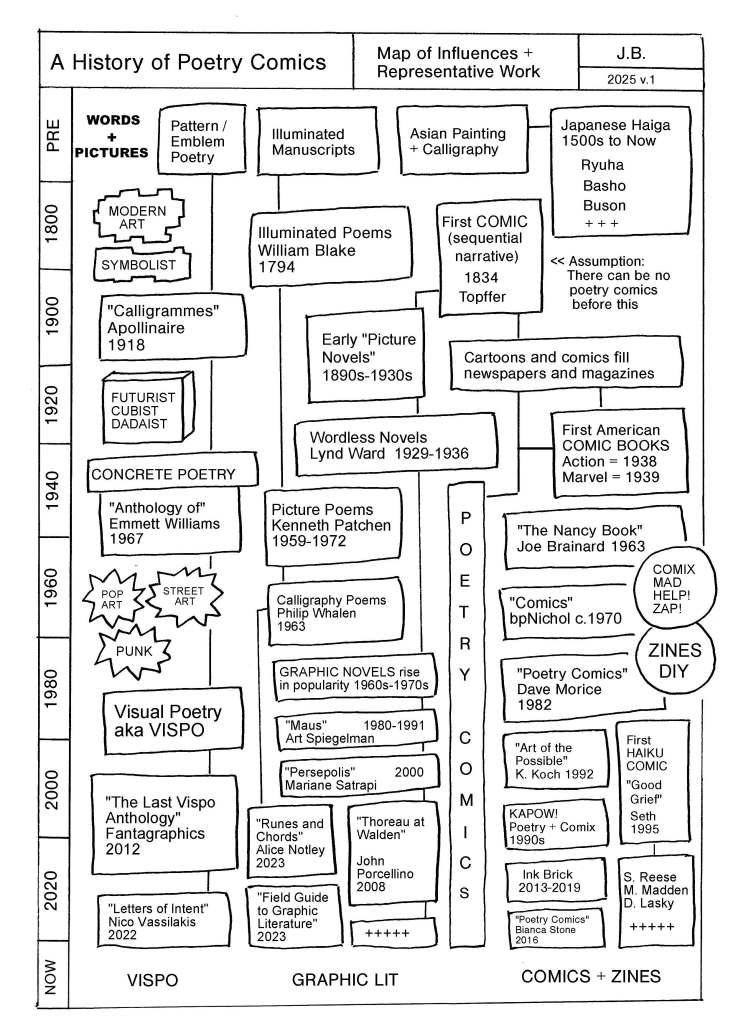
Timeline: 2025
Warning: This incomplete history maps my journey as a poet learning about comics and doesn’t follow a strict chronological order.
 JB
JB 