A History of Poetry Comics

Summer Reading Book Reviews

Poetry comics continue to be a way of illuminating thoughts, adding context to text (if that isn’t redundant), and helping the reader make that leap from what is said to what is possible. Here are three poet-artists I read this summer that continue to make things new.
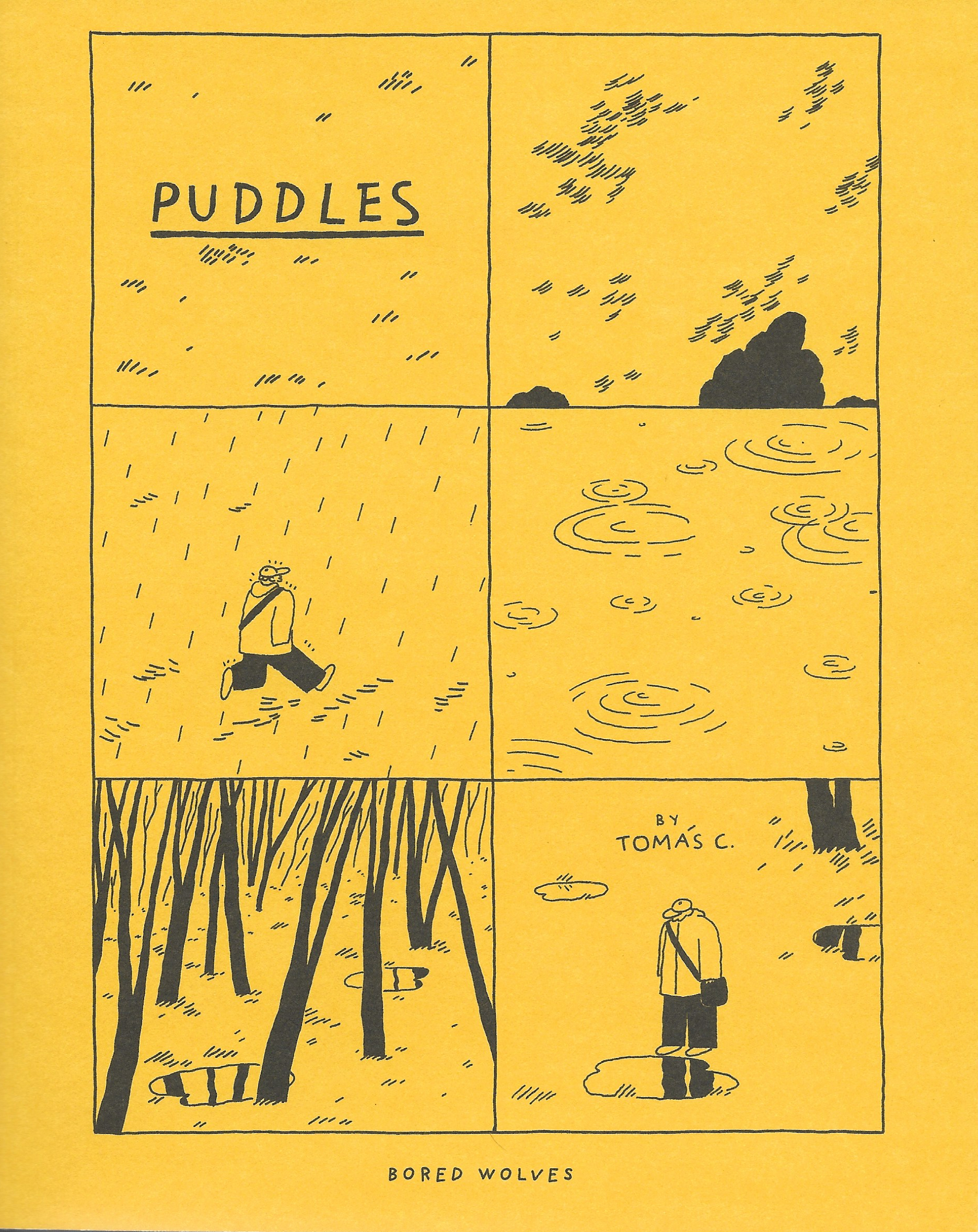
Cover of Puddles by Tomas Cisternas (Bored Wolves, 2024) Puddles by Tomas Cisternas (Bored Wolves, 2024). Translated from the original Spanish, these comics by Tomas Cisternas perfectly illuminate his often spare text that focuses on nature, solitude and solace, and being human in the natural world. The work is black-and-white with a simplicity of line that matches the sentiment of the work (totally my sensibility).  If you don’t want to call them poetry comics then call them poetic comics.

Along with diary comics of walks, which are often multi-page, the single page comics are particularly poetic. In one panel he writes: “Throughout my life I have wasted time magnificently.” Indeed

Here’s one of my favorite comics from this collection (it was hard to pick just one) that speaks to the poetry in Cisternas’s work. He adeptly uses the last frame as a “silent” panel (i.e. a picture that doesn’t need words) that puncuates the poem perfectly.
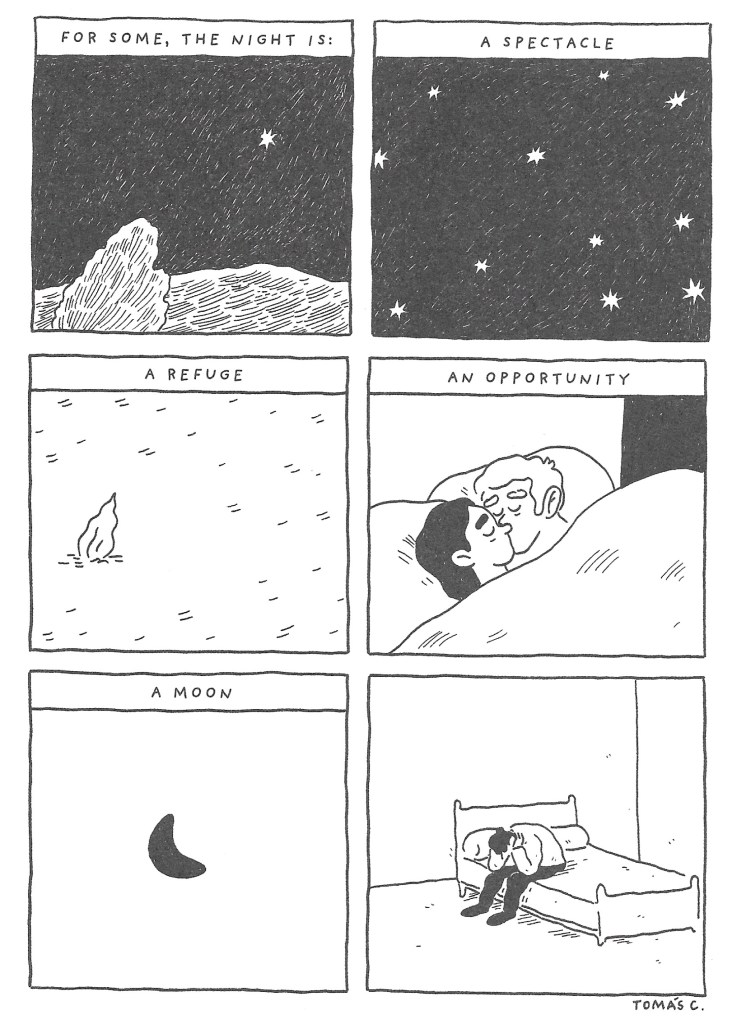
From Puddles by Tomas Cisternas (Bored Wolves, 2024)

Shout out to Bored Wolves for the translation and making Cisternas work available in English. It’s a beautiful production. Check out the other works the Krakow-based press offers, many of which combine words and pictures.
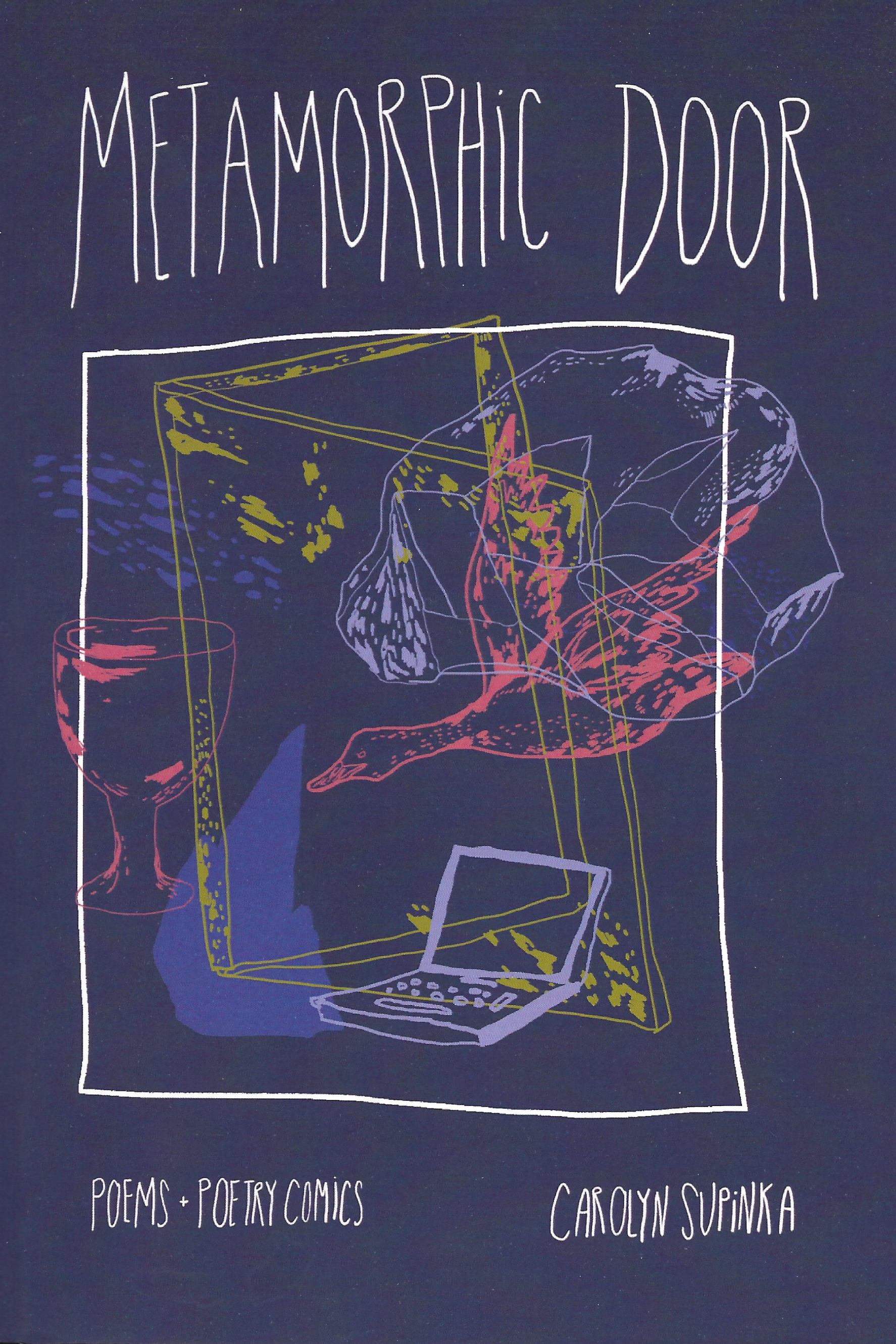
Cover to Metamorphic Door by Carolyn Supinka (Buckman Publishing, 2024) Metamorphic Door by Carolyn Supinka (Buckman Publishing, 2024) Wild poetry comics are sandwiched between equally wild poems (some illuminated) in Metamorphic Door by Portland poet-artist Carolyn Supinka. In one poetry comic, she writes: “The question / of / who am I / if I’m not / constantly / creating / something.” It’s a question she keeps answering throughout the collection with both words and pictures.

The six poetry comics included here span from two to 10 pages of one-panel or two-panels each. Each panel is multi-layered, drawings of objects that morph intertwined and interrelated, and can disappear totally at times. The text too can’t be contained by the panel. Instead it hovers above, intertwines, and fills empty spaces as it spills down the page. (See AHOPC #12 to compare how bpNichol exploded the frame of the panel in his poetry comics.)

Here’s a representative page from Supinka’s “Earth Tide” that illustrates her style: 
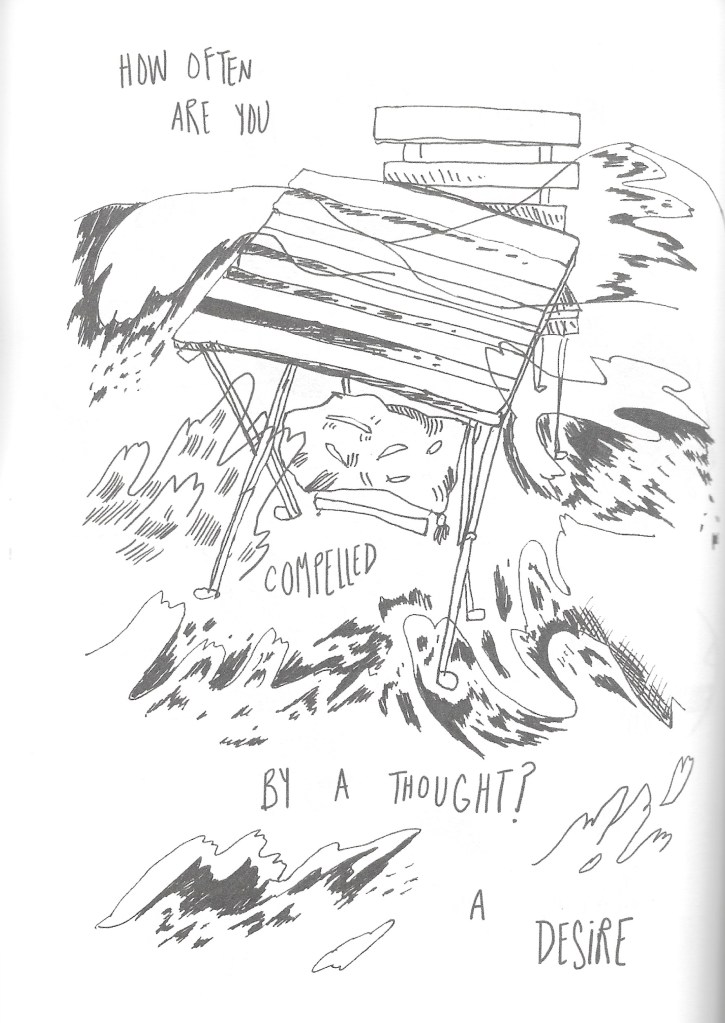
Panel from poetry comic "Earth Tide" by Carolyn Supinka
From “Earth Tide” in Metamorphic Door by Carolyn Supinka (Buckman Publishing, 2024)

Her poetry is more experimental than it may first appear, which perfectly matches her illustrations/illuminations. There are poems that ignore the gutter and spill across the spread; and poems that are literary photo-negatives of each other. The Index is a work of art as well!

BTW I came across Supinka’s collection while browsing the poetry stacks at Powell’s City of Books on Burnside in downtown Portland. Browsing at Powell’s is one of my favorite things to do!
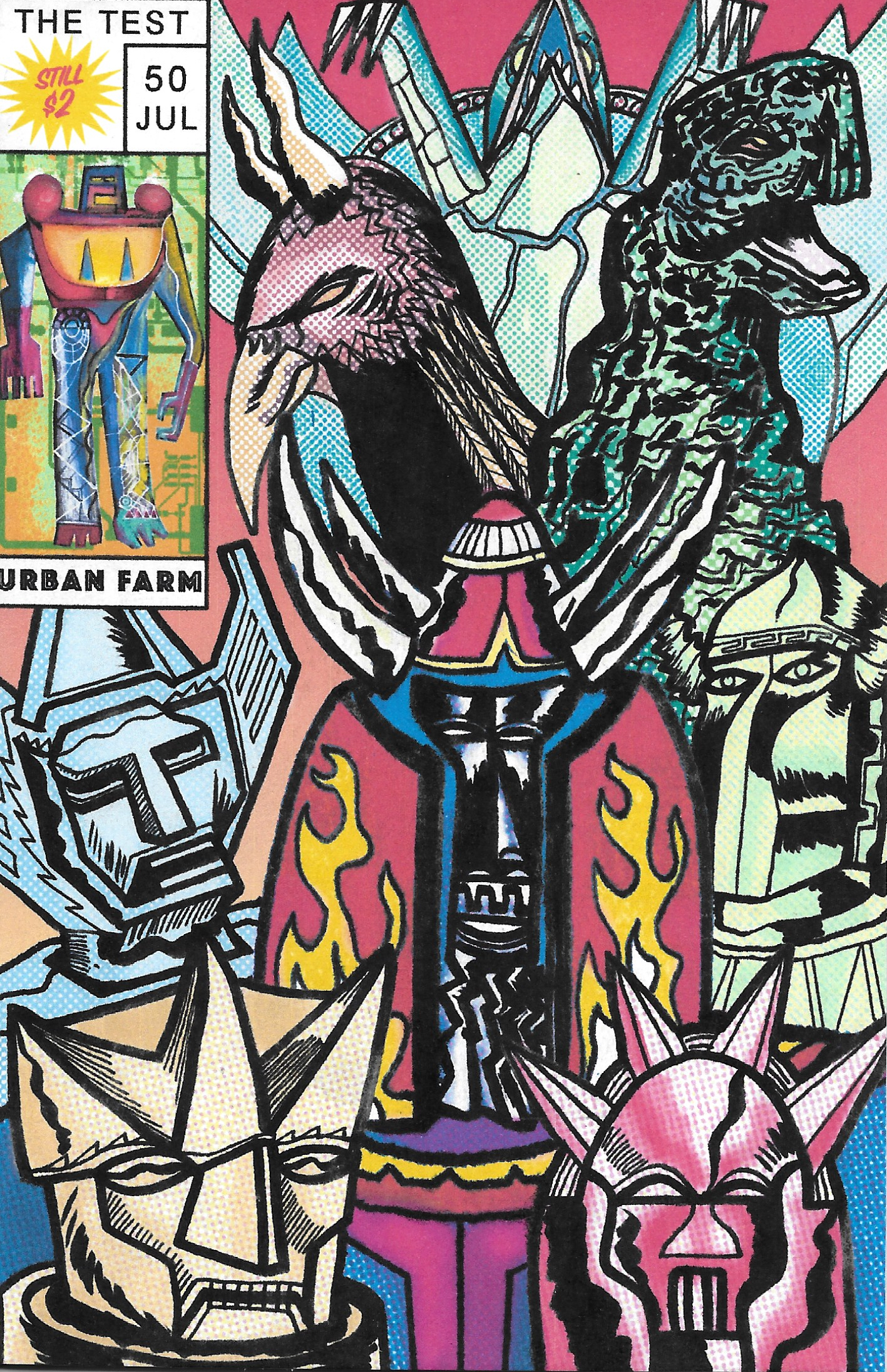
Cover of THE TEST #50 by Blaise Moritz (Urban Farm Print and Sound, 2023) THE TEST #50: In Prasie of Shogun Warriors by Blaise Moritz (Urban Farm Print and Sound, 2023)

East Toronto artist Blaise Moritz creates poetry comics that are engaging, explosive, and original. He has published two books of poetry (without pictures) in addition to his monthly comic book, THE TEST, and graphic novels, including his latest Bar Delicious (Conundrum Press, 2023). Call Moritz a poet-artist or an artist-poet — either way he smartly uses words and pictures to illuminate and expand context.

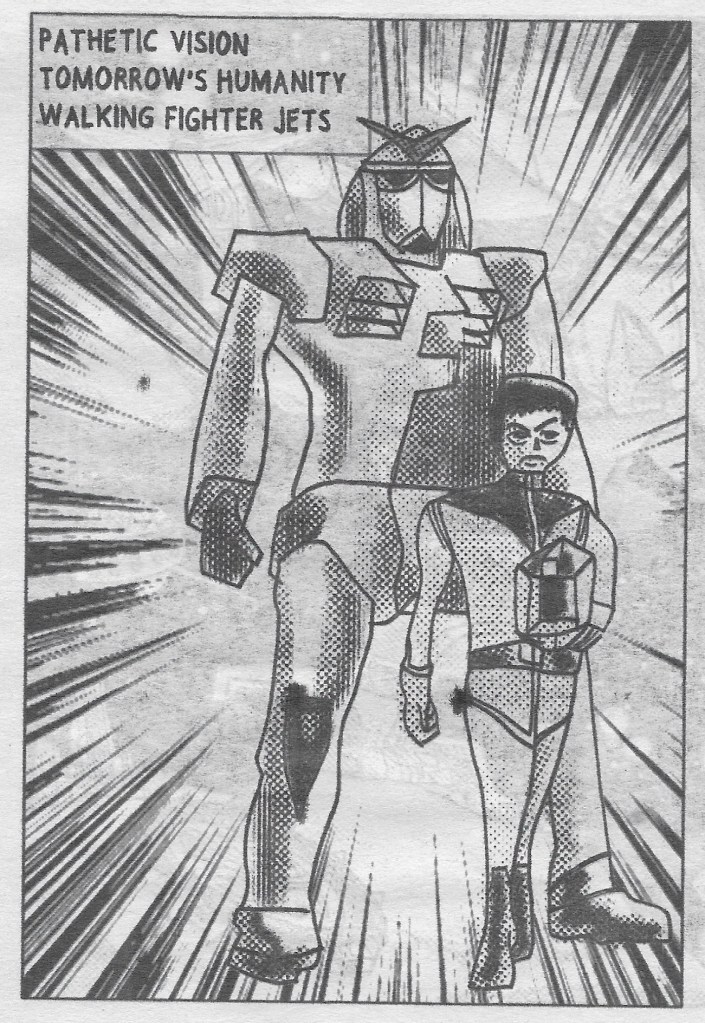
His piece “In Praise of Shogun Warriors” in THE TEST #50 (Urban Farm Print and Sound, 2023) features linked haiku stanzas (from 2015) that Moritz illustrated in 2023 with Gundam-inspired robots remembered from his childhood (including Shogun Warriors fan art he made when he was 8 or 9 years old). Japanese haiku (three lines of 5-7-5 syllables) aptly fit this subject matter; it’s perfectly played. Here’s a sample from the 16-page poetry comic:
Other examples of his poetry comics can be found online by following Moritz on Instagram. Some of his single-panel poetry comics are reminiscent of Kenneth Patchen’s picture poems. He also makes music as The New Birds of America (underscoring the poet-artist drive to build additional context for when we’re asked, “What does it mean?”)

Thanks to David Lasky for recommending Blaise and sharing his THE TEST comics with me.

Timeline: Current

Warning: This incomplete history maps my journey as a poet learning about comics and doesn’t follow a strict chronological order. 

A History of Poetry Comics

More Book Reviews

The more I look, the more I find! Here are some books of poetry comics worth checking out. (They’re in descending order of publishing date.)


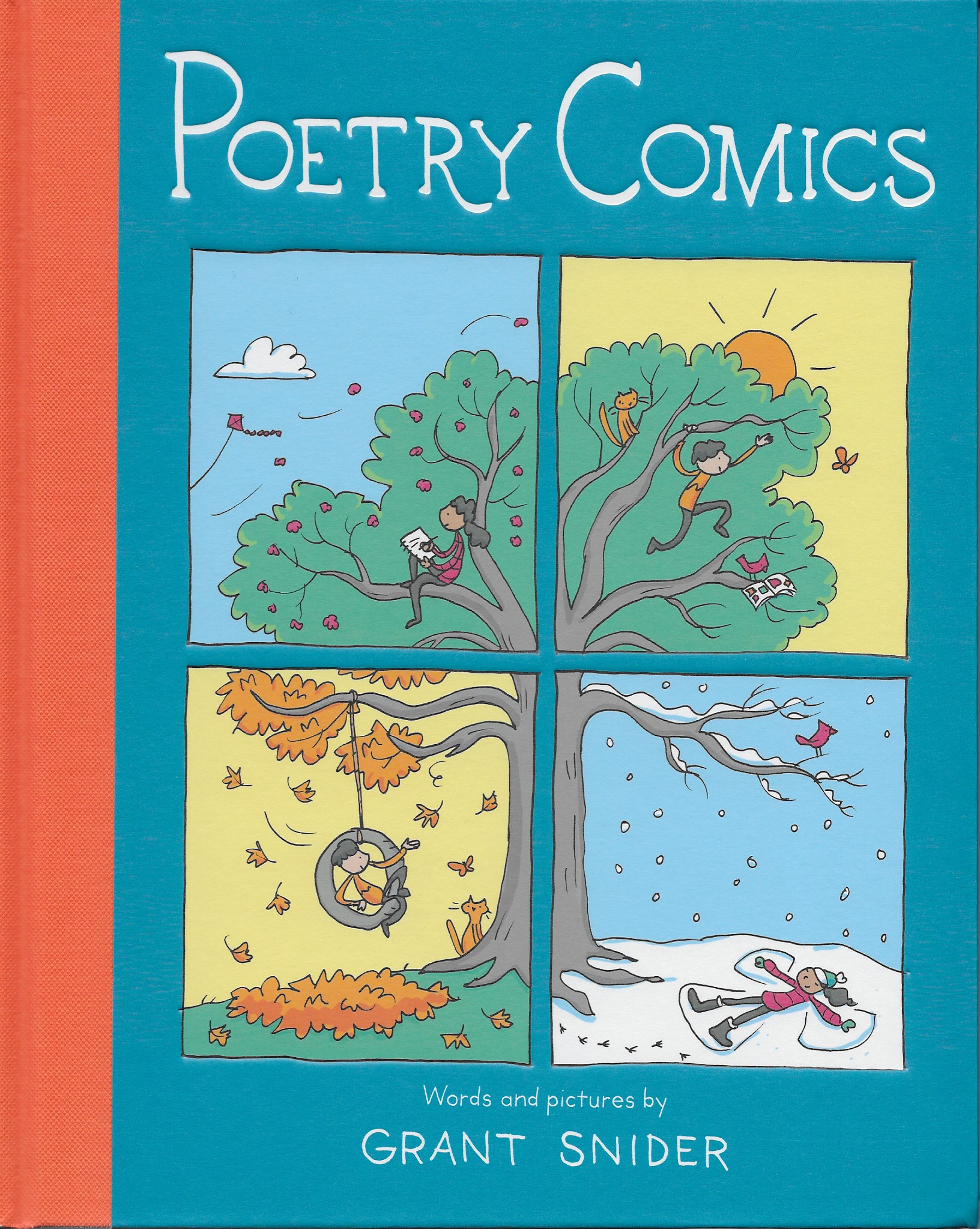
Poetry Comics by Grant Snider (Chronicle Books, 2024). Fun introduction to poetry comics for a YA audience, Grant’s colorful comics provide both inspiration (e.g., “Becoming” and “A Moment”) and instruction (e.g., “How to Write a Poem” series) for budding poets and their teachers. Organized by season, the shorter poems especially feel like haiku, and in fact there are haiku comics included. More of his work can be seen on Instagram @grantdraws.


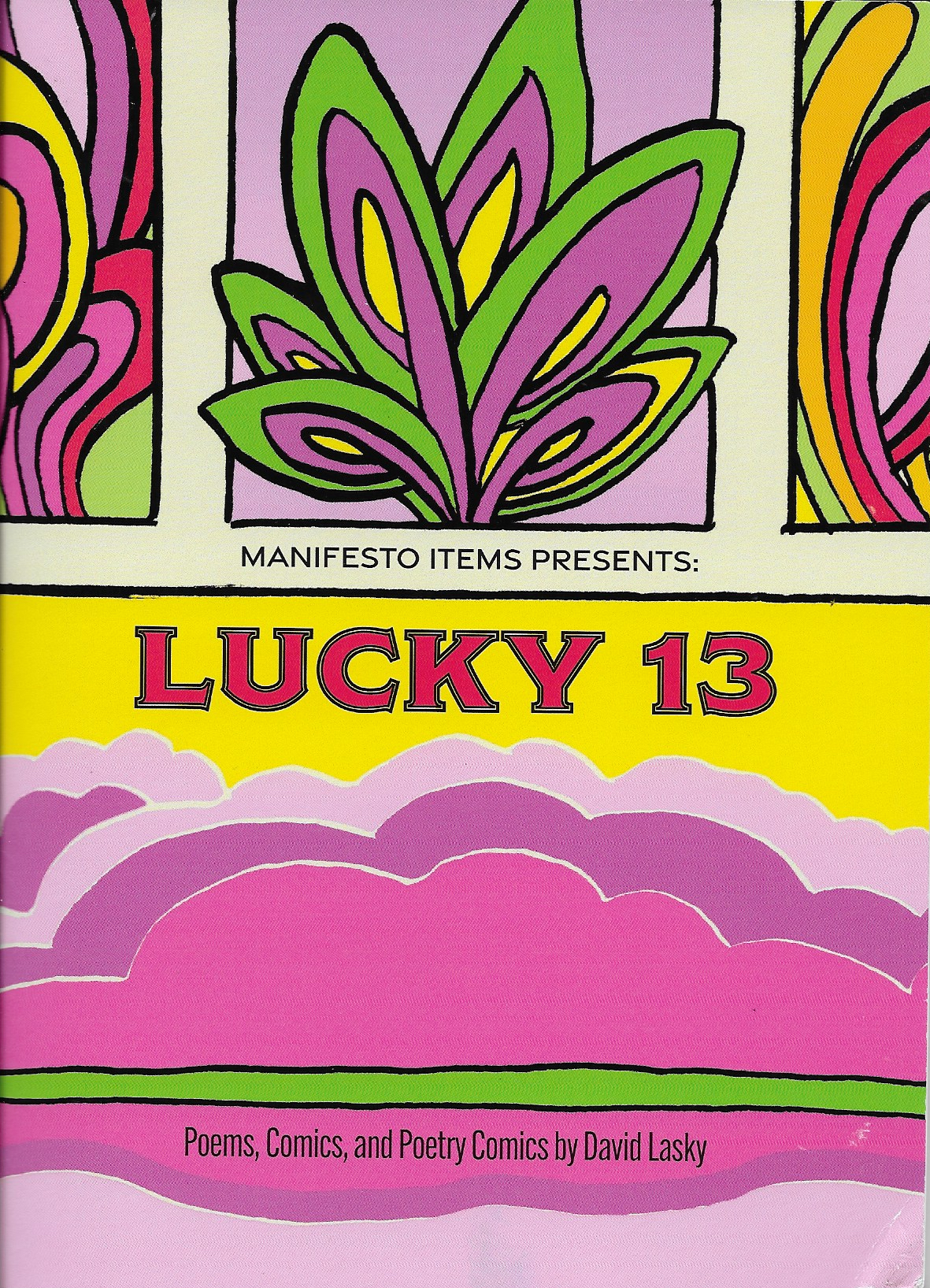
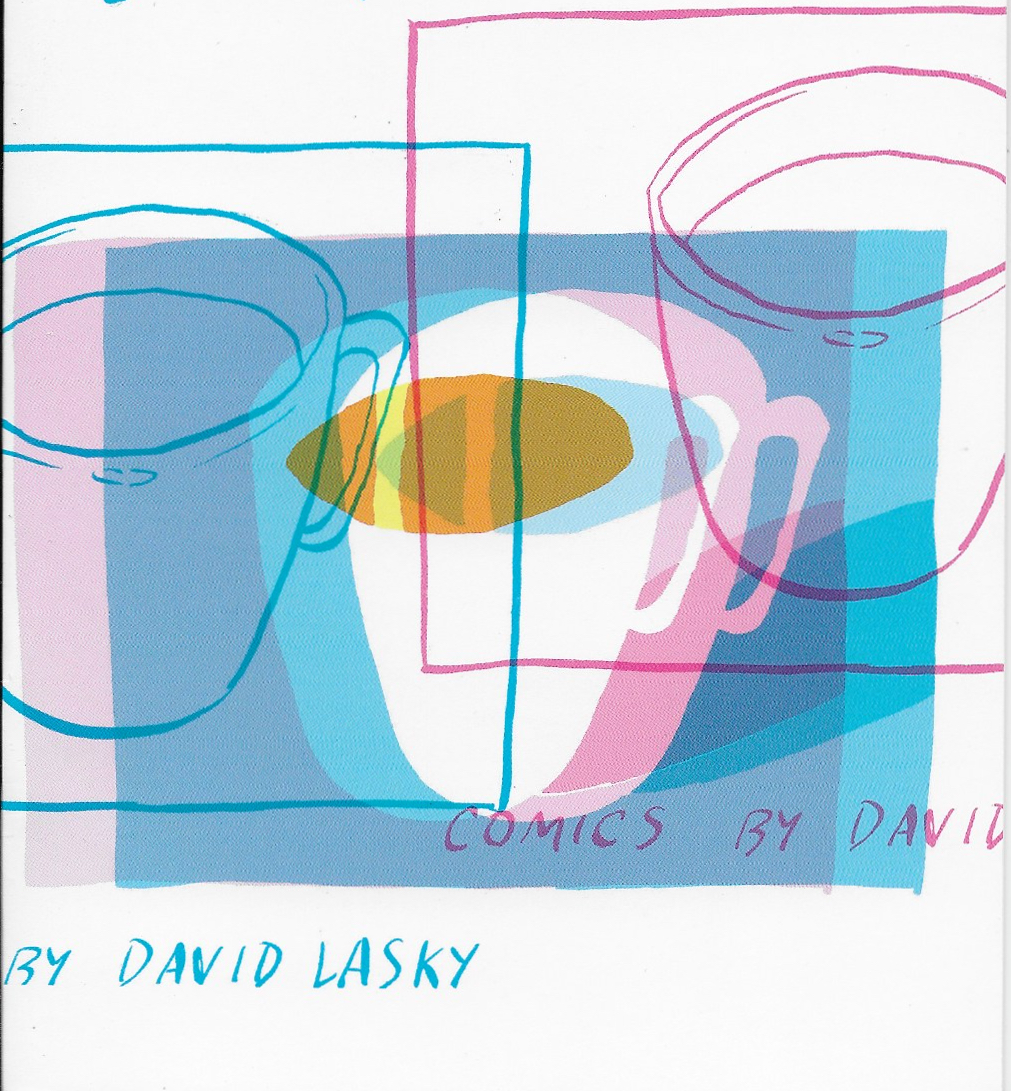
Lucky 13 + Summer Haiku by David Lasky (DIY, 2023). My teacher and friend David Lasky continues to be an inventive creator of poetry comics and haiku comics. As he says in his “Mix Tape” comic in “Lucky 13:” Every good teacher is also a student. Indeed. His 2023 DIY zines are both filled with poetic moments seamlessly integrated into his accompanying art. His collection of 12 haiku comics in “Summer Haiku” shows his increasingly deep (deep in the sincereset sense) understanding of haiku. He’s an artist-poet who’s fast becoming a poet-artist! Check his Etsy site for availability–his zines always go fast!


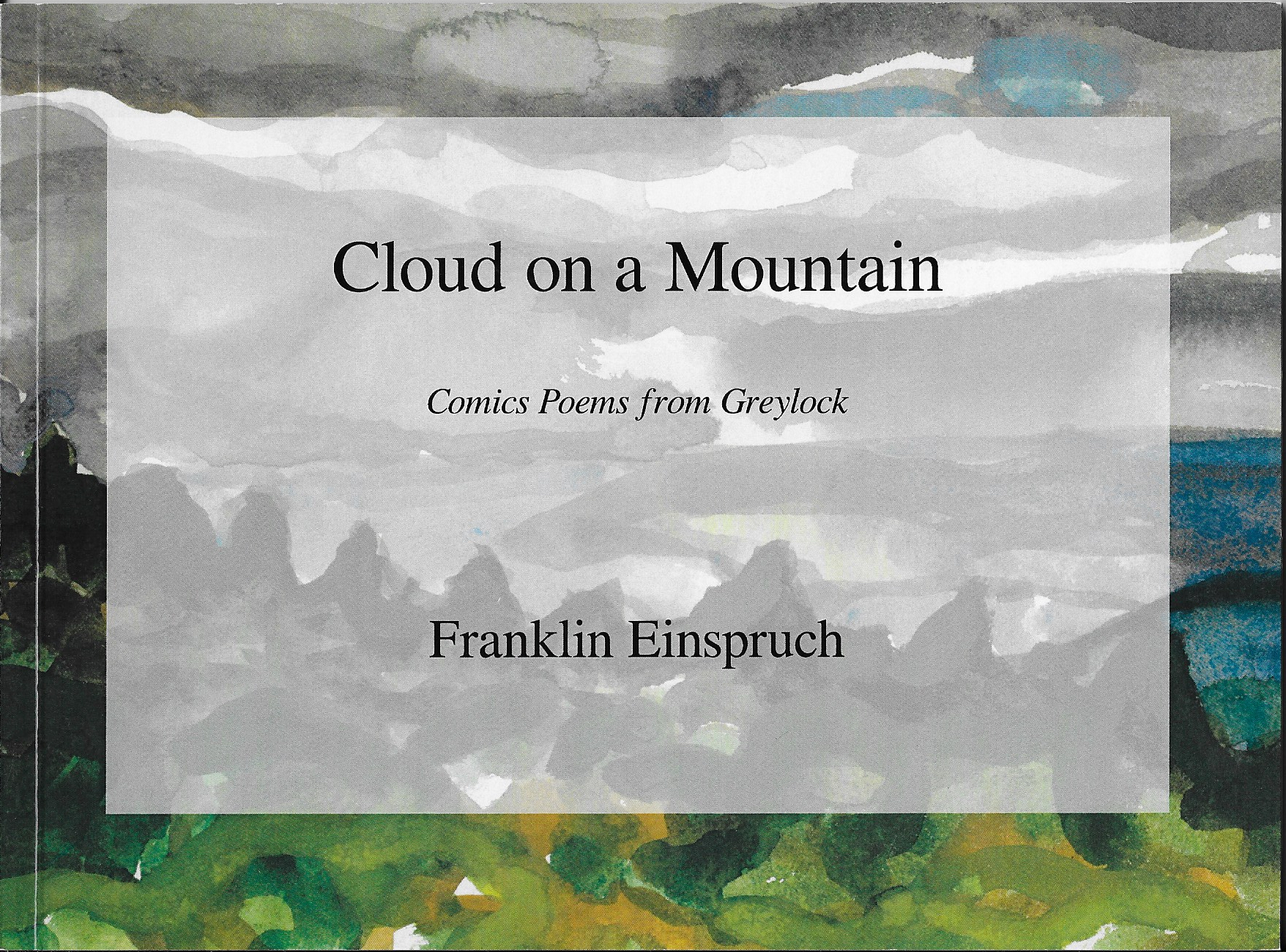
Cloud on a Mountain – Comics Poems from Greylock by Franklin Einspruch (New Modern Press, 2018). Franklin Einspruch has a painterly approach to poetry comics. His art is dense and deeply colored. The haiku-like poems are hand-lettered and often fully incorporated into the artwork. The poems in “Cloud on a Mountain” (currently out of print, with the promise of a second edition) each spill across two panels, creating space and giving time for the meaning to form and land. See his art and poetry at https://franklin.art.


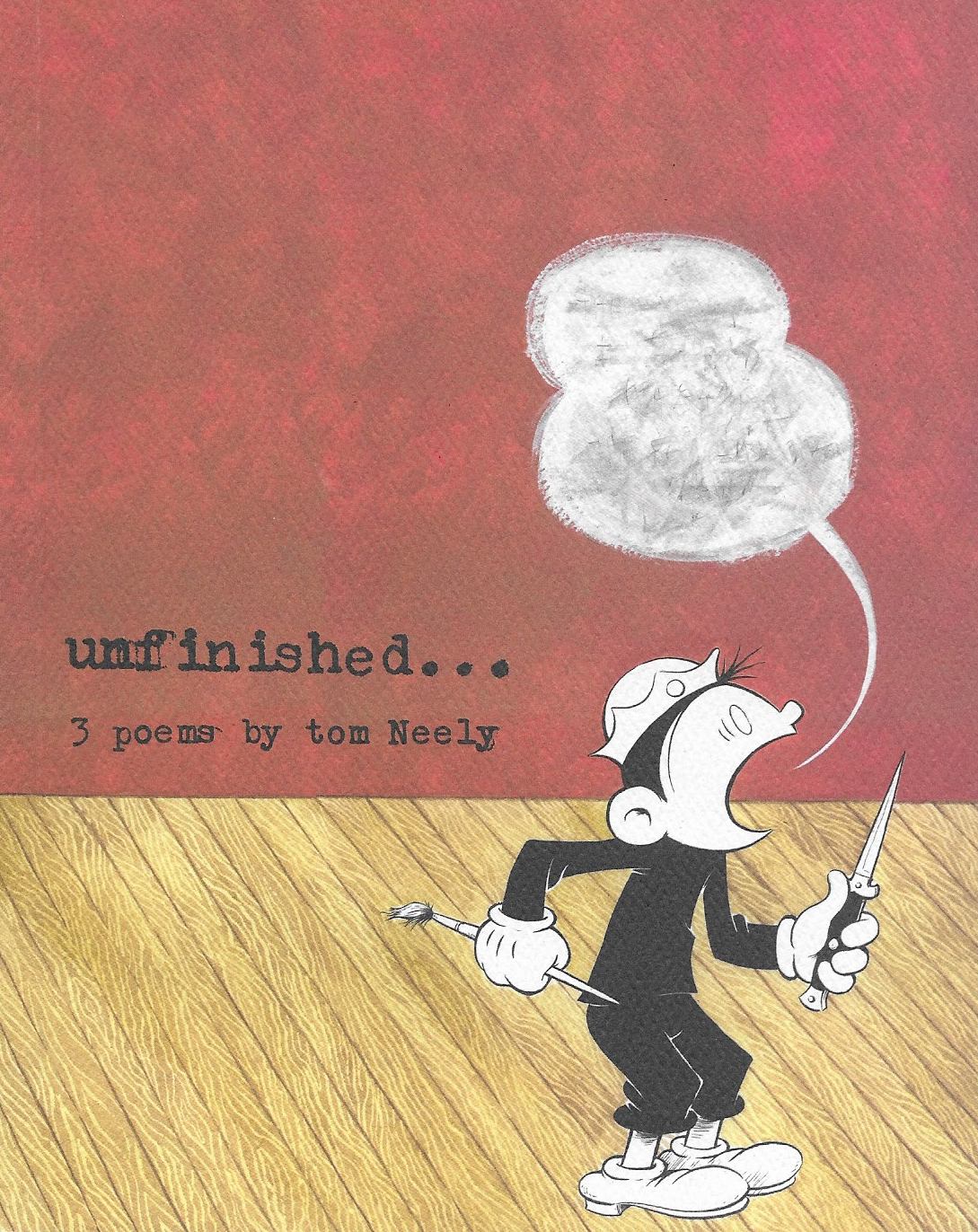
unfinished … 3 poems by Tom Neely (DIY, 2017). Man, these are heart-wrenching poetry comics about the loss of a friend. Tom Neely brings his comic artistry, a very punk, comix-influenced style, to tackle this painful experence — taking three years to complete and another four years before publishing it. Each page is a single panel, with the last poem fading over several pages to an empty panel that becomes a poignant eulogy to “an unfinished life…” See more of Tom’s work on Instagram @iwilldestroytom


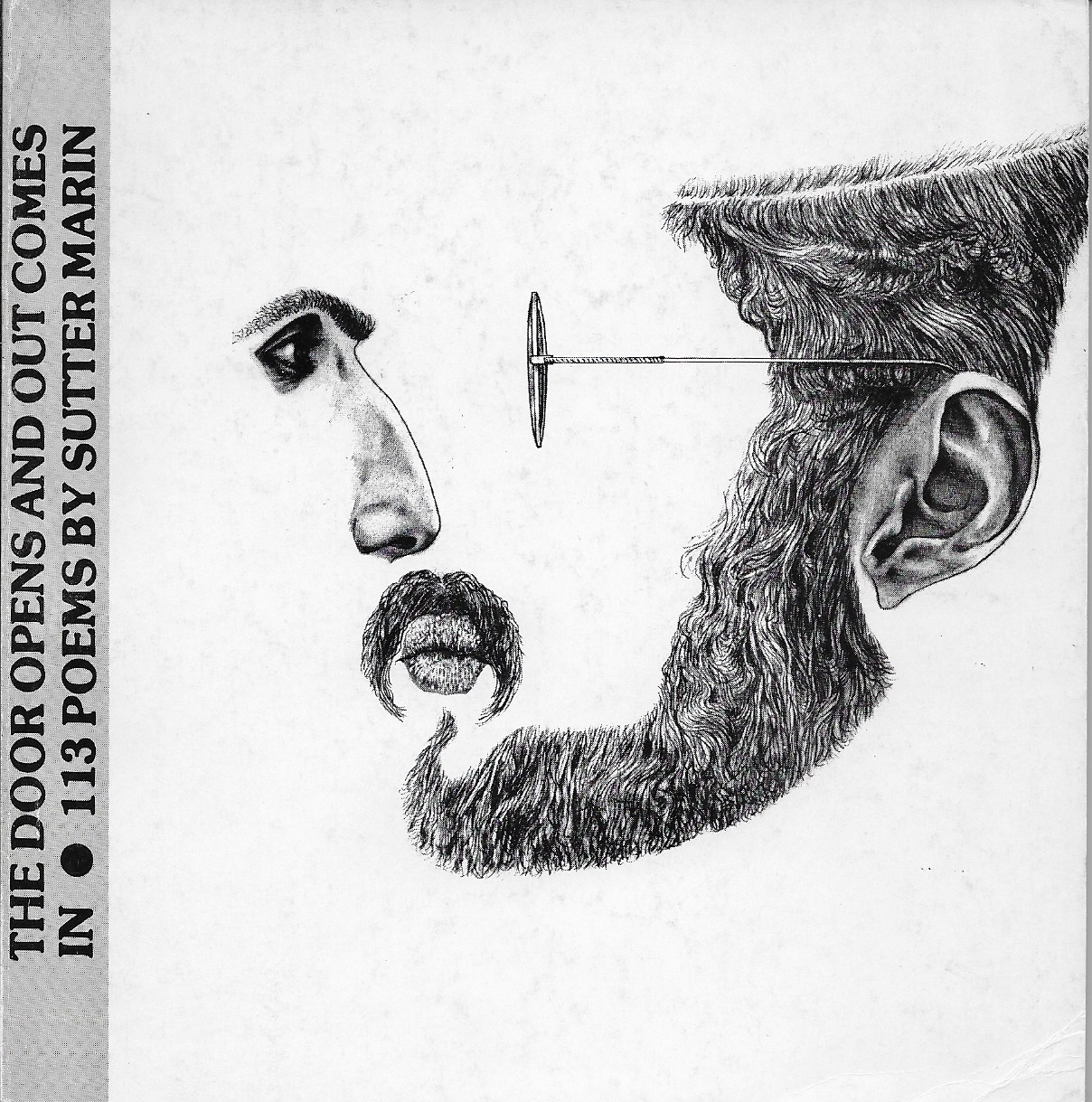
The Door Opens and Out Comes In by Sutter Marin (Underlying Press, 1979). Not sure these qualify as poetry comics, perhaps definitely in kindred spirit with picture poems. Many of the 113 poems by Sutter Marin in this collection are illustrated with diagrams, simple figures – human and otherwise – and/or animated everyday objects. Humor abounds. Sutter was an atist (he died in 1985) associated with the North Beach Beats and notably illuminated poetry by Beat poet ruth weiss.

Happy Poetry Month!

Timeline: 1979-2024 (but new to me!)

Warning: This incomplete history maps my journey as a poet learning about comics and doesn’t follow a strict chronological order.
A History of Poetry Comics

Book review – illuminated poems of moni-sauri

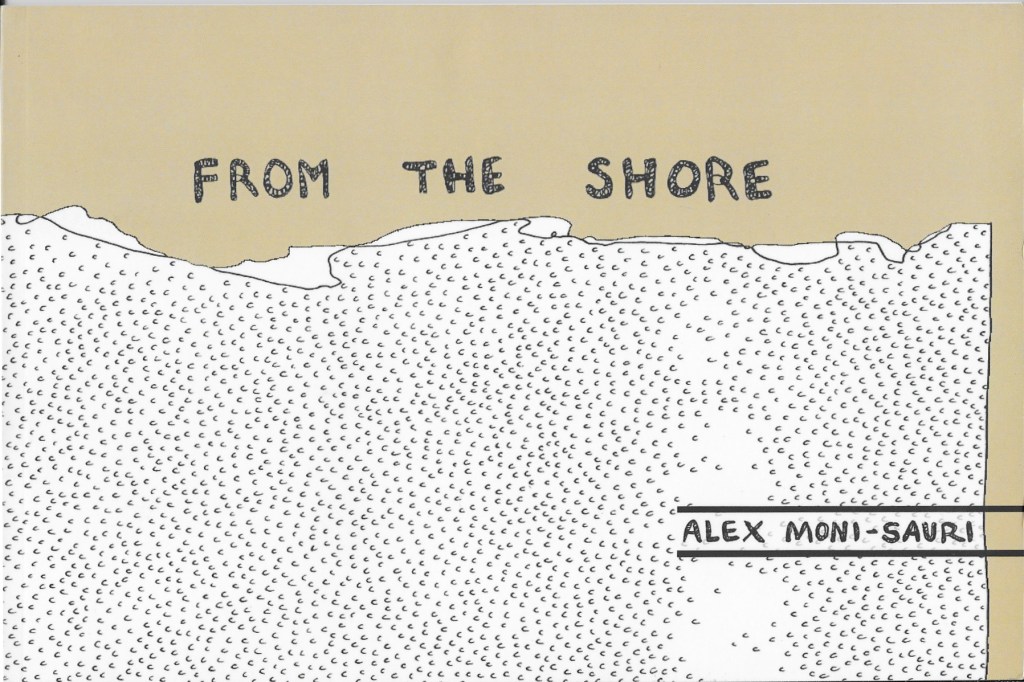
Book review: “From the Shore” by Alex Moni-Sauri (Gasher Press, 2020)

Throughout From the Shore, Alex Moni-Sauri’s drawings perfectly complement her handwritten poems adding illumination, punctuation, and thoughtful pauses. Artfully and simply, the poet/artist uses line drawings and squiggles to explain and expand the meaning of her poems.

Her drawings – I should say, cartoons – wouldn’t be out of place in the New Yorker. Whole panels stand alone at times as a kind of coda to the proceeding poem. My favorite poems/panels in the collection are ones where the words and drawings are integrated. The street lamp accompanying “Late from Work” (see below). The horizon line with the sun barely rising/setting in “From the Shore.” The lines of poetry with no distinction from the lines of the sea in “Wet Morning.” The security camera aimed at the poem in “Scene at the Mall.” There are more.

Her poems in this collection are mostly set outside. There are beaches, shorelines, barren (i.e. treeless) landscapes, ocean (which appears to be engulfing the poem), sky, manicured lawns, strata, power lines, and birds, which appear throughout these poems. Even when showing an interior space, like a room, birds are present, as in “Vulcan City” where the poems goes: Crows pass by like arrows / between buildings / that were dropped from air. And there’s the bird on a string hanging from the top frame of the cartoon in “A Thank You to the Empty Land.”

Late from Work - Alex Moni-Sauri
“Late from Work” by Alex Moni-Sauri from “From the Shore” (Gasher Press, 2020)

In an interview with Gasher Press, Moni-Sauri shares her approach: “Making poems and making drawings are distinct processes for me, although they talk to each other a lot. Using the same medium (pen and paper) for both connects them in a basic way, and my writing and drawings always exist in the same sketchbooks no matter how much I try to designate separate spaces for them. But in the end it is much more curatorial, or like collage.”

Find more images of her work on her Instagram page.

Timeline: 2020

Warning: This incomplete history maps my journey as a poet learning about comics and doesn’t follow a strict chronological order.
A History of Poetry Comics

Book review – DIY poetry comics from Susanne Reece

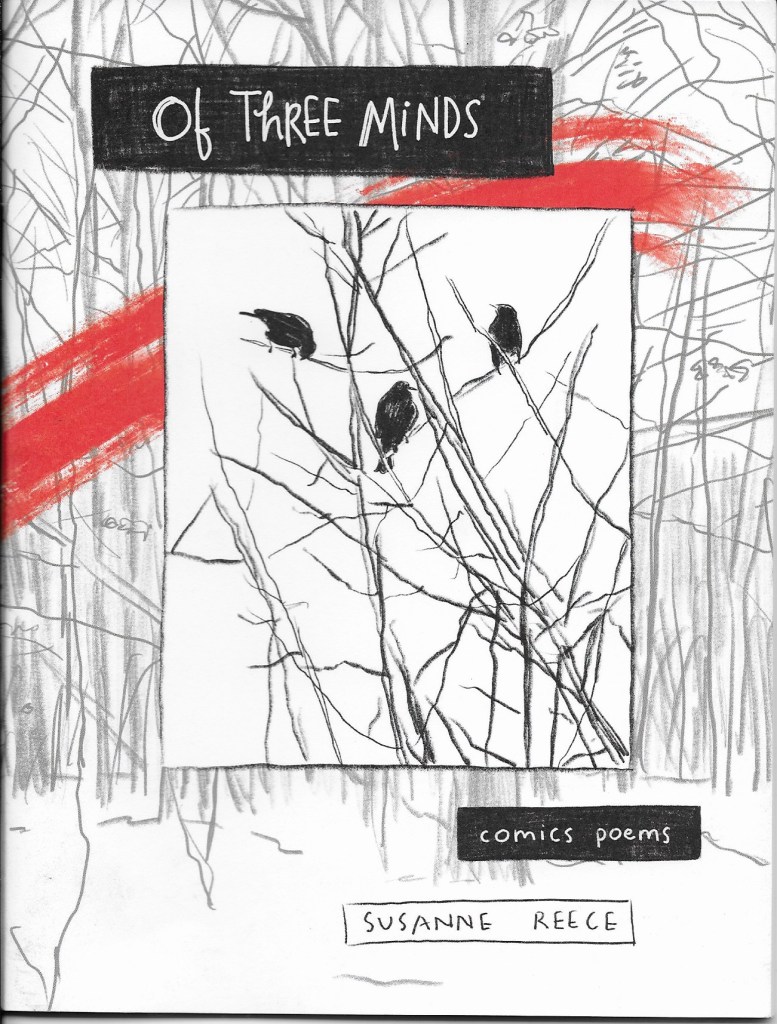
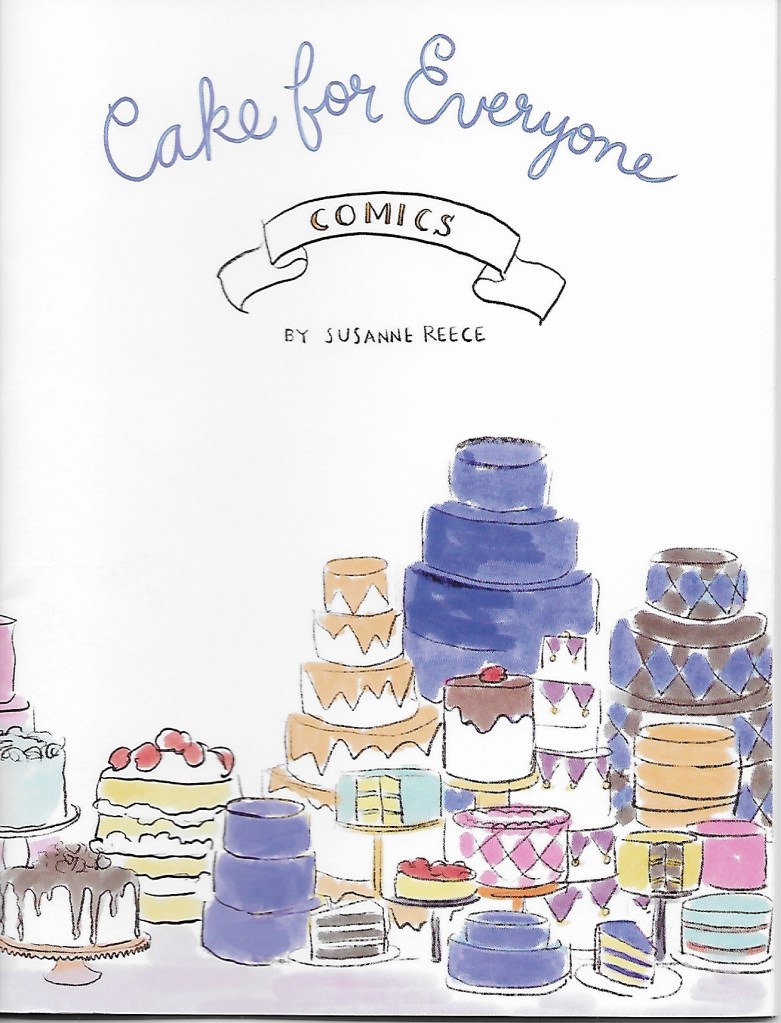
(New section!) Book review: “Of Three Minds” by Susanne Reece (DIY, 2022) and “Cake for Everyone” by Susanne Reece (DIY, 2022)

In ways less experimental, in other ways more compelling, the poetry comics of Susanne Reece are direct, confessional, and wonder-provoking. Two recent zines of poetry comics by the writer/artist are engaging examples of words and pictures creating a third meaning. (For more on defining poetry comics see AHOPC #05.)

“Of Three Minds” opens with the title poem, inspired by Wallace Stevens’s blackbird. It’s a series of frames or windows set atop of a bleak winter scene that encloses the lines of the poem and small moments of noticing – a blackbird, clouds, a falling leaf. Anchoring it all is the poet herself, bundled up against winter as observer/experiencer. It brilliantly captures how the mind works, how we assemble a whole from the parts.

This is followed by a series of haiku comics, with the poem spread across three panels with a 5-7-5 syllable count. All of them direct observations by the poet-artist, with titles continuing the winter theme: “A Winter Walk,” “Ice Storm,” “Blizzard,”and “Hibernation.” Each frame provides a different perspective from close-ups to scene setting. After spring, summer, and fall diary comics, Reece returns to haiku comics to end the collection with the dark yet beautiful “DFW–>LGA” and “Insomnia.” In the former, the night opens up the wonders of city lights observed from an airplane. In the latter, night becomes an antagonist when the artist can’t fall asleep. Her confessions always get at something deeper.

This is also true in Reece’s “Cake for Everyone.” Nestled among the dominant diary comics are two poetry comics – “Guilty Pleasure” and “The Lantern Fish.” In both, from the darkness, light appears as a flicker – desperate yet defiant. There is advice we learn from our elders as well as from nature, she reminds us. In both, as Reece writes, “trying to find / Its way in the dark.” Indeed.

Reece self-describes her work as “comics poetry, comics essays, and diary comics.” See more of her comics – and buy her books – at her website here.

Timeline: 2022

Warning: This incomplete history maps my journey as a poet learning about comics and doesn’t follow a strict chronological order.