A History of Poetry Comics

THE BOOK of Death Haiku Comics

Haiku comics are a relatively new development in the history of poetry comics. While a scattering of forerunners can be found in the 1970s and 1980s, we consider the first haiku comic to be a four-panel rendering of a Basho haiku by the Canadian comics artist Seth published in Drawn & Quarterly in 1995. (See AHOPC #21 for a closer look at this.) Since then there has been markedly more comics artists/poets creating haiku comics.
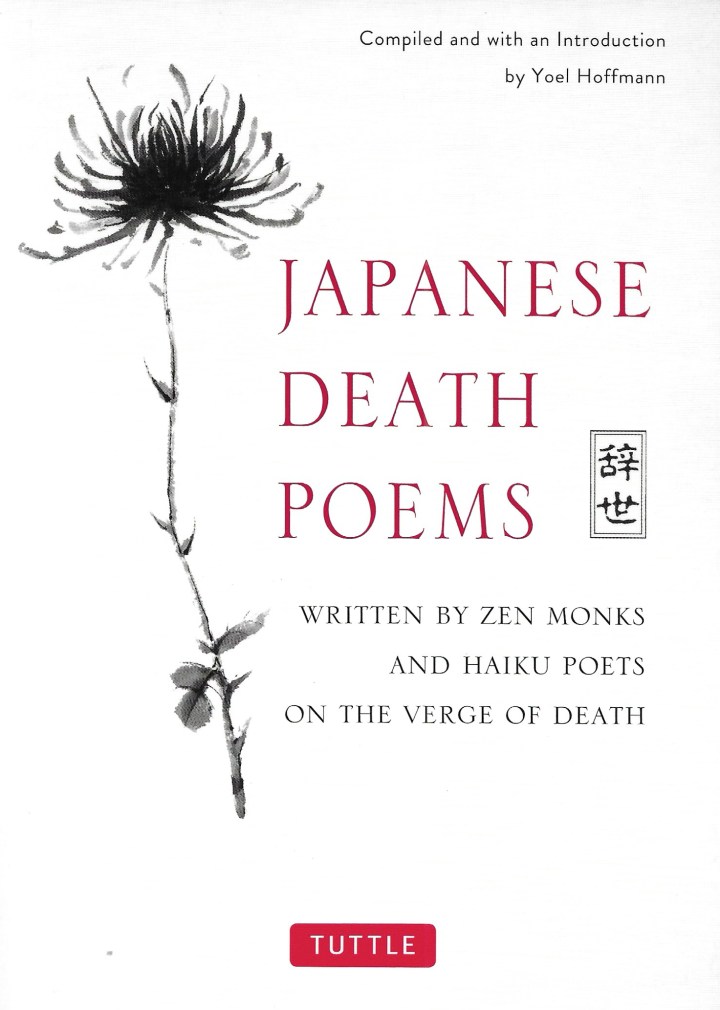
Cover of Japanese Death Poems compiled by Yoel Hoffman

Joining the movement is Seattle artist/writer William Chen, whose new work is The Book of Death Haiku Comics. Using as a resource Japanese Death Poems (Tuttle, 1986) compiled by Yoel Hoffman, Chen has made his own translations to which he adds skillfully executed drawings that feel like a whole graphic novel in one page.

Chen talks about his project: “Jisei, which come from Japan, are poems written on the occasion of one’s own death. I don’t remember how I stumbled on them, but when I did, death haiku immediately struck me as a fascinating subject for interpreting and illustrating as poetry comics.”

Chen lived in Otsu, Japan (just a 10-minute, local train ride from Kyoto) for about a year. He made a living teaching at an English conversation school to people of all ages. While there he saw sites, studied Japanese, and learned to Pop (Popping, the dance style).

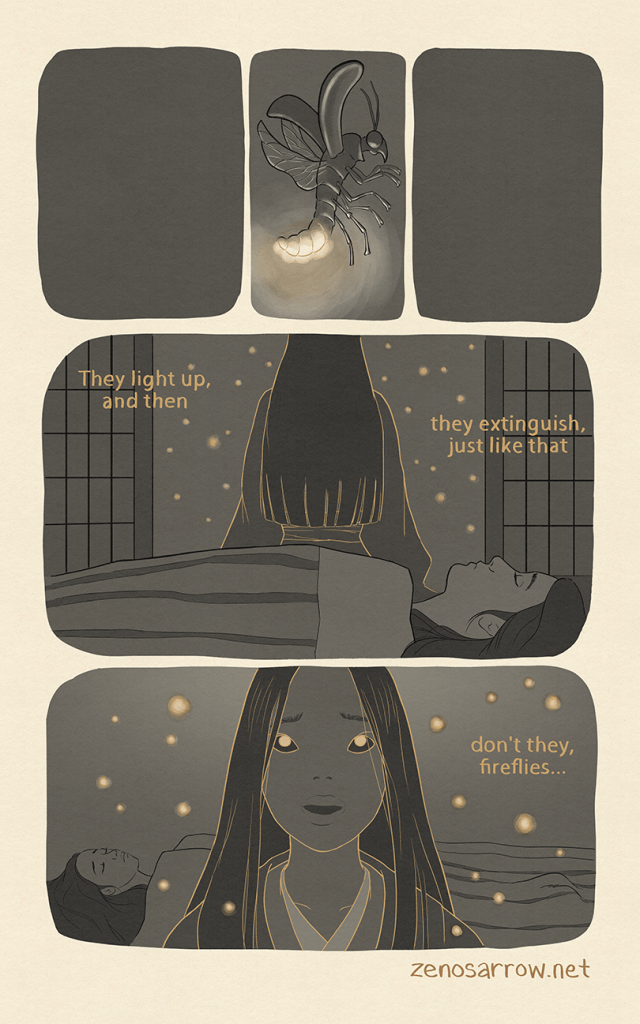
Here’s one example from his forthcoming chapbook:

ChinE’s Fleeting Fireflies
For a copy of “The Book of Death Haiku Comics” visit his table at Short Run (Nov. 1, 2025, in Seattle). After that, you can go to Chen’s Ko-Fi store here. He will also have copies in a few local comic shops around Seattle (Fantagraphics, Phoenix, Outsider).

Follow Chen on Bluesky @zenosarrow.net.

READ MORE: I came across “Japanese Death Poems” in 2006. I was staying with a poet-friend in San Francisco while doing readings for “Punk Poems,” and he had a copy in his library. I couldn’t put it down and had to get my own copy so I could finish consuming it. Hoffman’s background introduction is essential. The poems are in two large sections: Death Poems by Zen Monks and Death Poems by Haiku Poets. And the Index of Poetic Terms at the end of the book provides additional context and cultural insights. Recommended.

Timeline: 2025

Warning: This incomplete history maps my journey as a poet learning about comics and doesn’t follow a strict chronological order.
A History of Poetry Comics

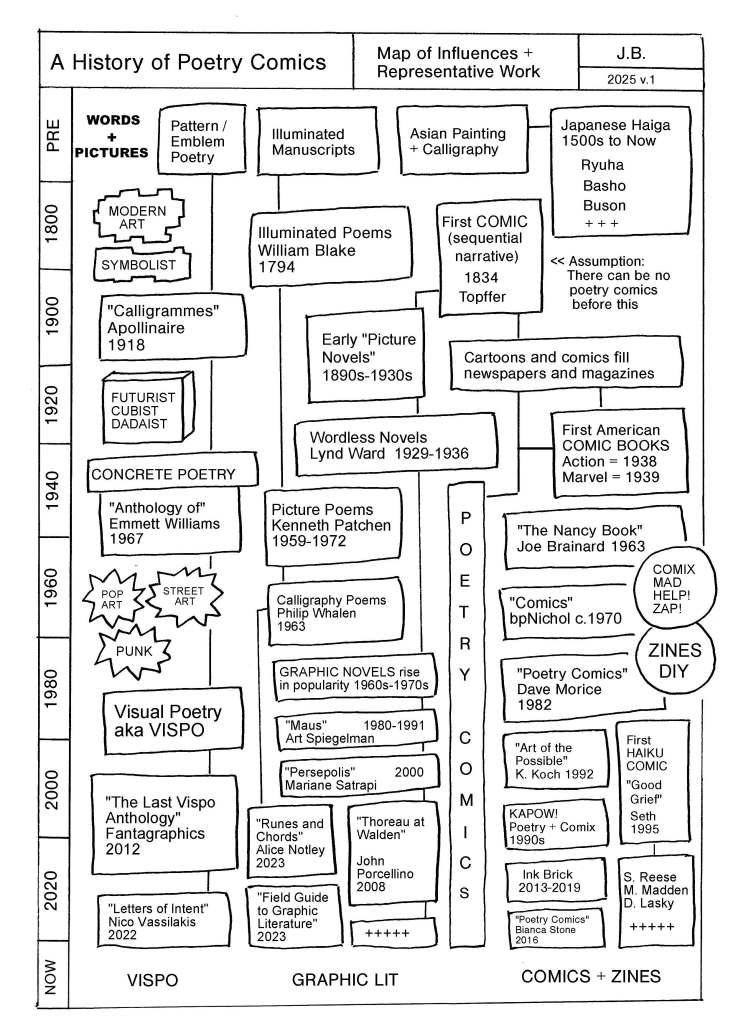
A Map of Roots & Influences


Poetry comics and haiku comics are a relatively new development in the historical context of artists and writers using words and pictures together to create meaning deeper than either could do on its own.

Historical roots can be traced back centuries to pattern poems and illuminated texts in Europe and calligraphic pictures and poems in Asia, Japanese haiga for example. By the 1800s painters and poets were looking at things differently and becoming more experimental and more accepting of non-traditional influences. This led to the concrete poetry movement in poetry and the pop art aesthetic in painting.

Comics, which can be defined as drawings that tell a sequential narrative, started in the (mostly agreed to) 1870s. The rise of comics and comic strips, which were going full bore by the 1940s in newspapers and magazines, provided source materials for poets and artists who used influences from comic book aesthetics, comic strip characters, and comics’ mechanics.

Poetry comics, a term finally coined in the 1970s, have continued through today, running parallel with the mainstream acceptance and interest in graphic literature, DIY, and zines. Haiku comics, starting around 1995 as a natural outgrowth of poetry comics, have been recently popularized by poets/comic artists.

I’m sharing the first draft of my map of “A History of Poetry Comics” that attempts to show related roots, influences and representative practitioners of poetry comics. While definitely not definitive, hopefully it will serve to illuminate and inspire further investigation. This is what I’ve learned so far.

Timeline: 2025

Warning: This incomplete history maps my journey as a poet learning about comics and doesn’t follow a strict chronological order.

A History of Poetry Comics

Naming Poetry Comics

“Rose is a rose is a rose is a rose.” -Gertrude Stein

Although labeled differently by poets, artists, and historians, work that investigates the relationship between pictures and words (i.e. drawing and poetry) strives for the same result: create meaning that’s not possible with words or pictures alone.

Here are terms “A History of Poetry Comics” has uncovered that each point in their own way to the practice of incorporating words and pictures into art.

TermRepresented byTimeline
haiga (Japanese haiku drawings)Bashō, Buson1500s on
illuminated poemsWilliam Blake1780s
sequential narrativesRodolphe Topffer1830s
comic books, comic strips, comics Various*1890s-1930s
pictorial prose poems (without words)Lynd Ward1930s
picture poemsKenneth Patchen1940s-70s
concrete poems –> vispo (visual poetry)Augusto deCampos,
Nico Vassilakis
1950s-70s on
graphic novelscoined by Richard Kyle1960s
hand-drawn poemsbpNichol1970s
poetry comics (drawings w/ other’s poems)Coined by Dave Morice1980s
comics mainly without picturesKenneth Koch1990s
haiku comicsSeth1995
poetry comics** (drawings w/ own poems)Bianca Stone2010s
poem/drawingsAlice Notley2020s
graphic poetryNaoko Fujimoto2021

*A good starting point to get perspective on when these terms were first use is Wikipedia’s History of Comics. For U.S.-centric perspective, American Comics: A History by Jeremy Dauber (W.W. Norton & Co., 2022) comes recommended.

**See A History of Poetry Comics #05 for suggested ways to identify poetry comics.

Timeline: Pre-history to Current

Warning: This incomplete history maps my journey as a poet learning about comics and doesn’t follow a strict chronological order.