A History of Poetry Comics

Notable / Recent Finds

At AHOPC we’re open to exploring the roots, influences, and parallel movements that inform poetry comics. These three notable / recent finds present poetry as art that’s sometimes outside the definition of poetry comics but still in the sphere of influence.
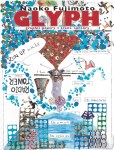
GLYPH by Naoko Fujimoto

Collage has been used by both visual artists and poets alike since it’s recognition as as art form in the early 20th century. Naoko Fujimoto uses collage to create what she calls “graphic poetry,” bringing in materials that thematically underscores their meaning. Her collection “GLYPH: graphic poetry = trans. sensory” (Tupelo Press, 2021) brings both the beauty and the power of collage to the intimacy of personal poetry. In the introduction Fujimoto writes, “I wanted my graphic poems to transport the viewer’s senses from paper, bridging the gap between words and images and their physical counterparts.” She uses found materials to create a base for her poetry, which is often handwritten, sometimes cut up, and always cascaded across her canvas. Her found materials include washi, origami paper, supermarket advertisements, gift wrap, postcards, and magazines among other materials. Among my favorite poems here are “Natane Rain Is,” “Greenhouse,” and “I Burn the Upright Piano.” This is a great addition to the graphic literature canon.
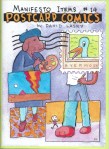
More often closer to Abstract Comics than Poetry Comics, David Lasky‘s “Manifesto Items #14: Postcard Comics” (2025) expands what can be done with the constraints of a structured format. Like fitting a sonnet into 14 lines or a haiku into 17 syllables, Lasky masters the postcard form to tell stories, illuminate poems, and expand our definnition of landscapes. He then mails them out, as he writes in the introduction, “to see if something small and precious could survive the machinery of the USPS and reach its destination.” His humor, wit (he goes meta in all the right ways), and color expertise are all on display here. For example, check out the raven’s attempt to correct Poe’s nevermore! Don’t wait to get your copy! Available here. ICYMI: I first mentioned Lasky’s “Lucky 13” a year ago in AHOPC #23. Lucky for us, he has reissued this 2023 sprawling collection of poems, comics, and poetry comics, adding some new ones and giving others more space. Full disclosure: David is my comics teacher and friend. We’ve co-curated exhibitions of haiku comics in 2024 and 2025 for art spaces in Washington and Oregon. And he’s the inspiration for this blog!
Letter of Intent by Nico Vassilakis

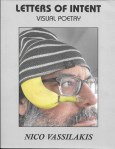
Visual poetry, as noted in AHOPC #28, is the direct descendent of concrete poetry. There’s a painterly feel to vispo that’s not always present in concrete. Poet Nico Vassilakis continues to explore and explode the power of letters to create (or should I say paint?) his poetry work “Letters of Intent” (Cyberwit.net, 2022). He notes this is “a collection of visual essays designed to explore the interior space of language material.” There’s humor (“Letters Are Escaping”); there’s instruction (“Ways To Begin”); there’s a nod to couplets (“Doubles”). The section “Opinions” sees messages emerging from the alphabet-primordial soup such as “letters are leaving these words,” “staring,” and “words are a crowd.” Like an abstract painting, I like taking my time when looking at each piece as different meanings emerge and submerge. Often layered like graffiti on graffiti, other times blended until just a color field remains, the work grabs your attention and creates wonder (a future language, perhaps?) for the reader/viewer.

Timeline: Current

Warning: This incomplete history maps my journey as a poet learning about comics and doesn’t follow a strict chronological order.

A History of Poetry Comics

Pattern Poetry: Words and Pictures have Gone together since the beginning

Poetry comics are just one step on a continuum. They’re among the recent incarnations of words and pictures being used together to create context and/or deeper meaning. Tracing these roots back — well before comics existed as a form of literature — leads you to century-old forerunners that evolved to inform today’s illuminated texts, picture poems, concrete poetry, visual poetry (vispo), and poetry comics. For discussion sake, let’s collectively categorize these words-and-pictures progenitors as pattern poetry.

“The story of pattern poetry is, in fact, not the story of a single development or of one simple form, but the story of an ongoing human wish to combine the visual and literary impulses, to tie together the experience of these two areas into an aesthetic whole.” Poet Dick Higgins wrote that in “A Short History of Pattern Poetry” from his 1987 work “Pattern Poetry: Guide to an Unknown Literature” (State University of New York Press, 1987).

Let’s look at early examples of pattern poetry from c. 300 BC to c. 1700 AD, collected by Higgins, to get a sense of how long the history is of poets using words and pictures together. There are pattern poems in more than the countries and areas chosen here, too, speaking to the diversity and range of this impluse.

“The Egg” by Simmias of Rhodes c. 325 BC. According to Higgins, “The text is lyrical, celebrating nature.” This makes it one of the earliest extant examples of poetry and shape being used together. (Higgins p. 20)
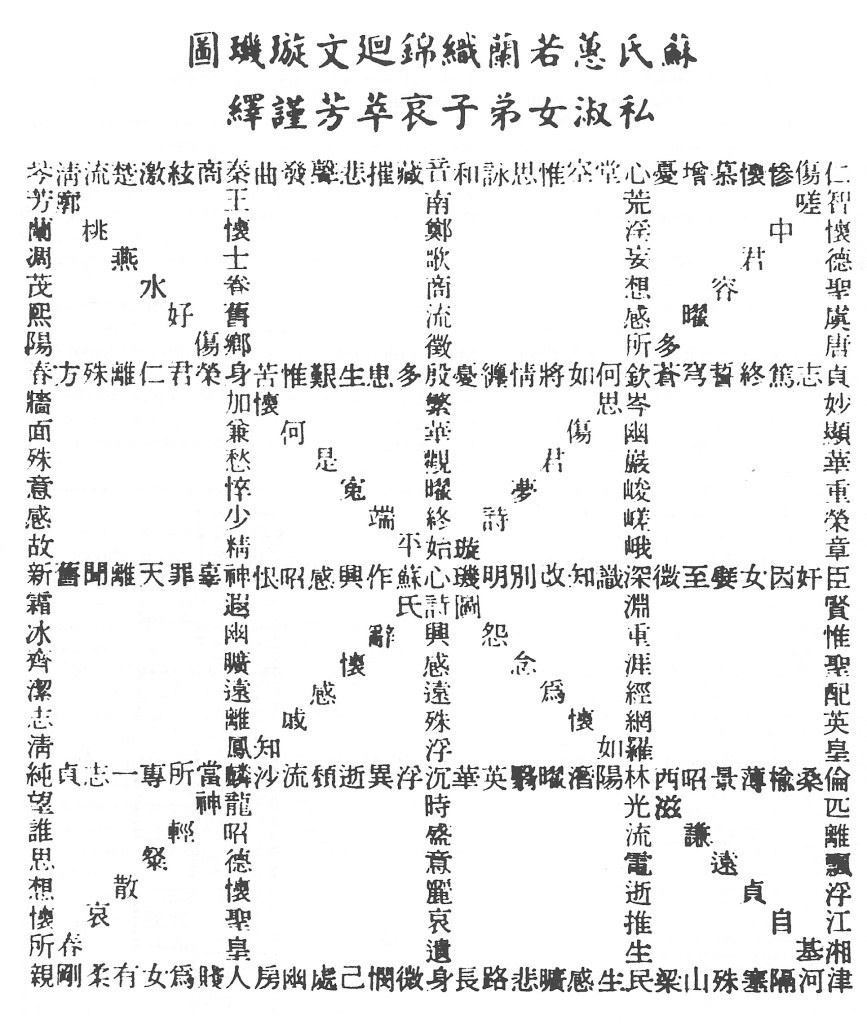
This Chinese “poem block” was written by Su Hui c. 300s AD. It can be read in dozen of combinations — backwards, forwards, diagonally, in squares, etc. It expresses “sorrow and love” for her husband who had taken up with a concubine. (Higgins, p. 212) This could be seen as the forerunner to acrostics, symbolists, and concrete poetry, etc.
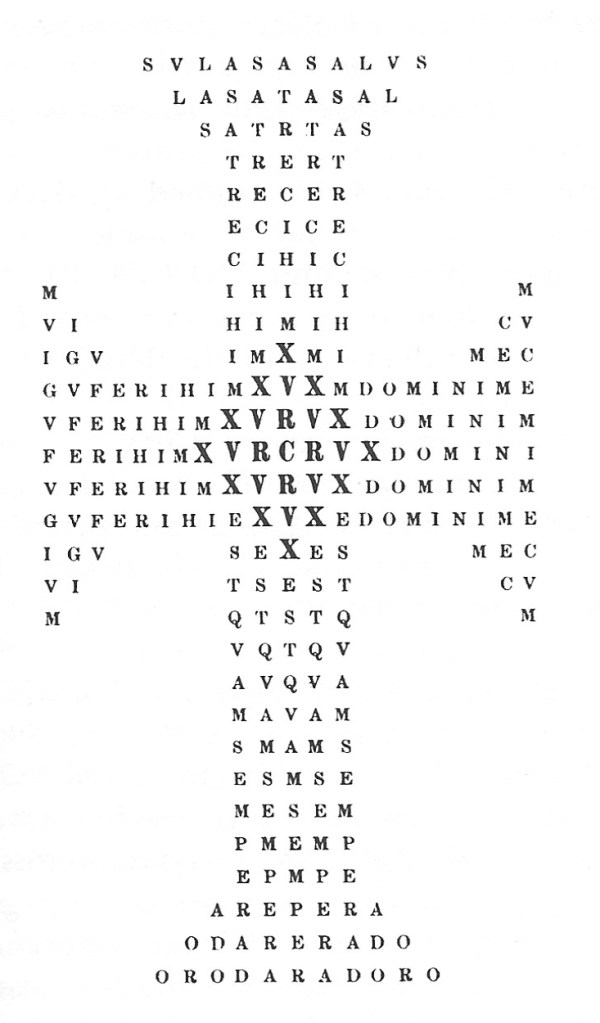
Cross-shaped poem by poet and hymn writer Venantius Forunatus c.late 500s. Along with the chalice, the cross poem continued to be used as a pattern poem through the ensuing centuries. (Higgins, p. 36)
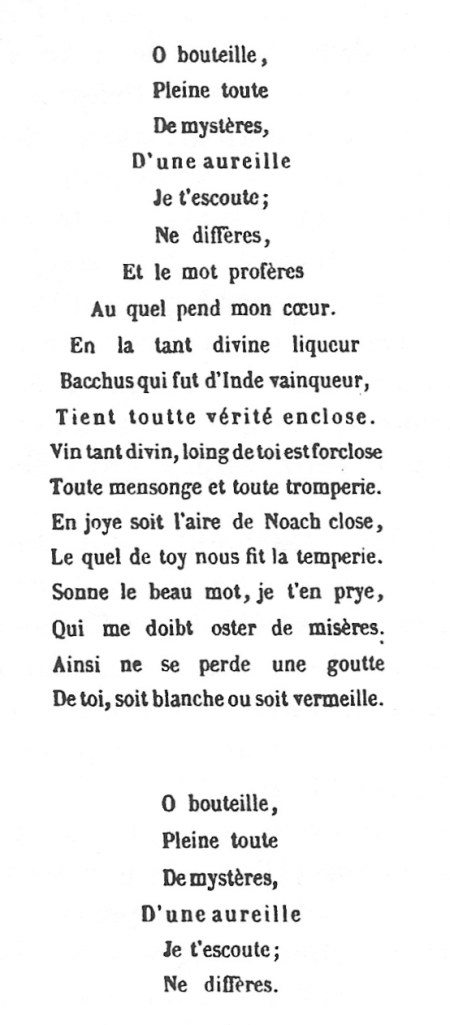
Bottle and cork pattern poem is attributed to French writer Francois Rabelais c. early 1500s. It has become one of the best known pattern poems in French. (Higgins, p. 67) The French Symbolists built on this in the 1800s (see AHOPC #24). Other shapes in early French patterns poems include the pyramid, hour glass, wing, and cross.
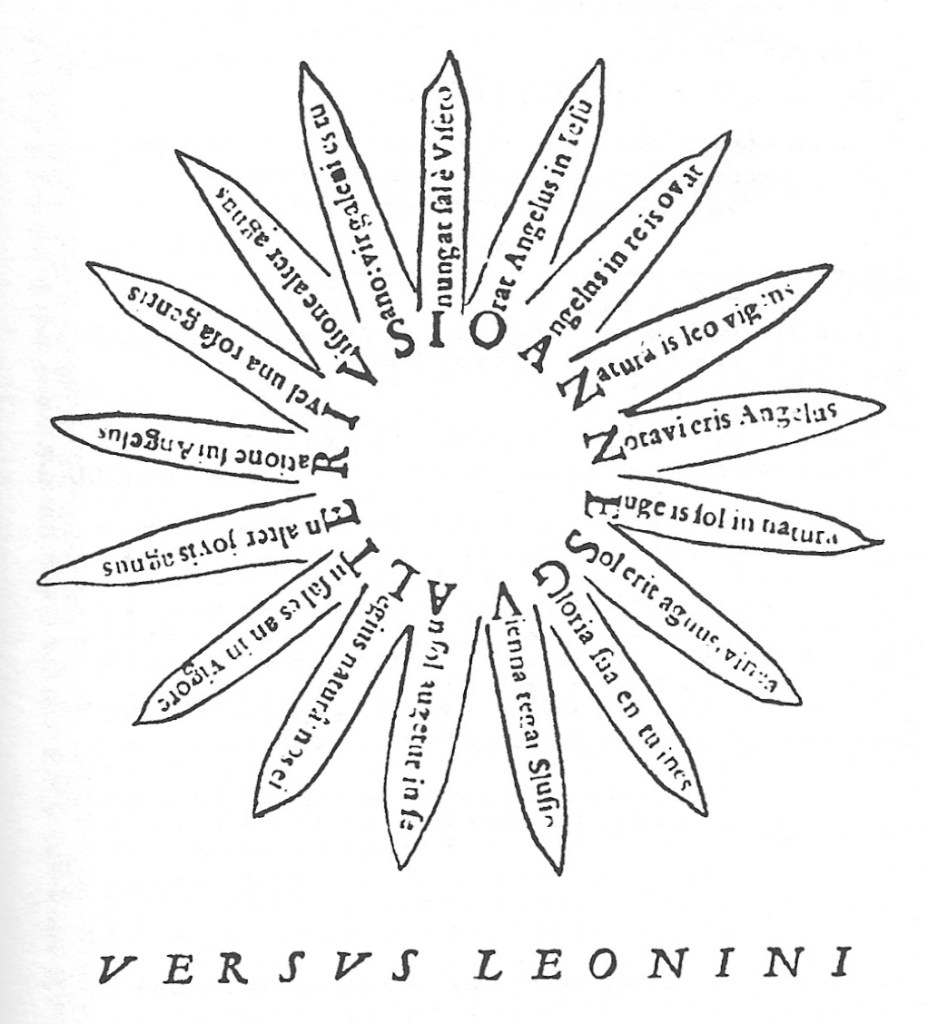
Sun-shaped poem in Latin by Hermannus de Santa Barbara c. early 1600s. Sun, star and chalice shapes are ubiquitous in pattern poems. Higgins notes this one is also an acrostic. (Higgins, p. 37)
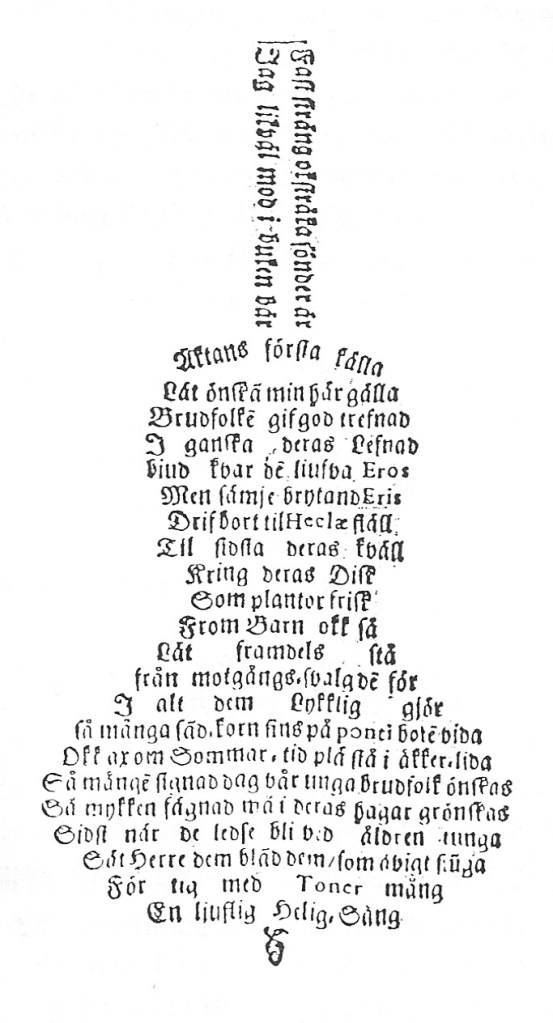
Viol-shaped poem by Swedish poet Israel Phalleen 1697. It was created to celebrate his nephew’s wedding (Higgins, p. 93) Mazes, heart shapes, chalices, pyramids and figures were also created in Scandinavia.
The Berlin Bear by German Johann Leonard Frish c. early 1700s. Ironically, this pattern poem is in part an attack on patterns poems and has become one of the works Frish is most remembered for. (Higgins, p. 86)

Timeline: Prehistory

Warning: This incomplete history maps my journey as a poet learning about comics and doesn’t follow a strict chronological order.
A History of Poetry Comics

poetry comics of bp Nichol (part 2)

(Our first two-parter! bpNichol continued …)

There’s so much more to blow your mind about the poetry comics of bpNichol.

Nichol brought his obsession with language and words to his comics and drawing. One of the restraints of comics Nichol explored was frames (see AHOPC #12). Drawing also gave him a way to make words tangible for the reader. He’s quoted in the introduction for bpNichol Comics (Talonbooks, 2002): “how can the poet reach out and touch you physically as say the sculptor does by caressing you with objects you caress?”

To that end, he found ways to incorporate letters, the alphabet, and words into his drawings and comics – blurring the line between pictures and words. Here are examples of Nichol’s use of letters/lettering in his art.

Frame 3 by bpNichol originally from love: a book of remembrances (1974) reprinted in a book of variations (Coach House Books, 2013)
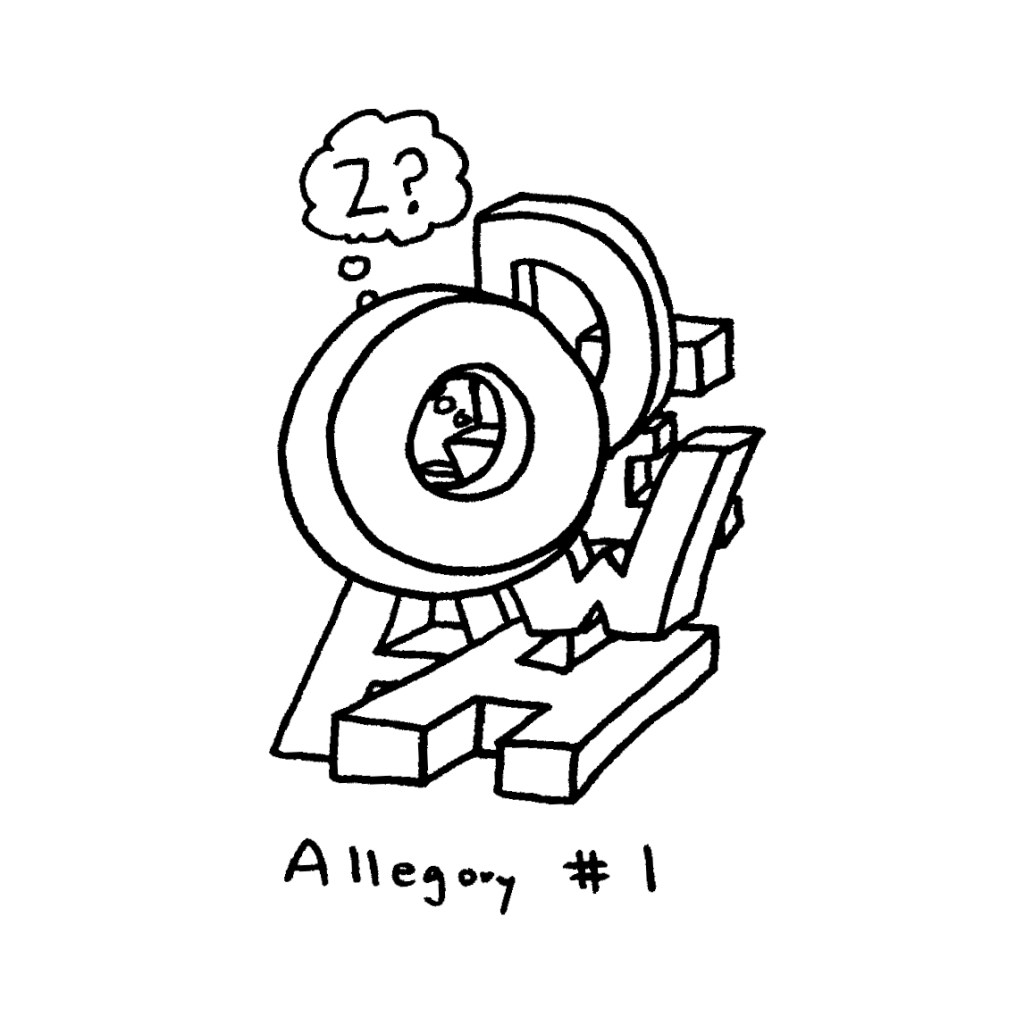
Allegory #1 by bpNichol originally from love: a book of remembrances (1974) reprinted in a book of variations (Coach House Books, 2013)
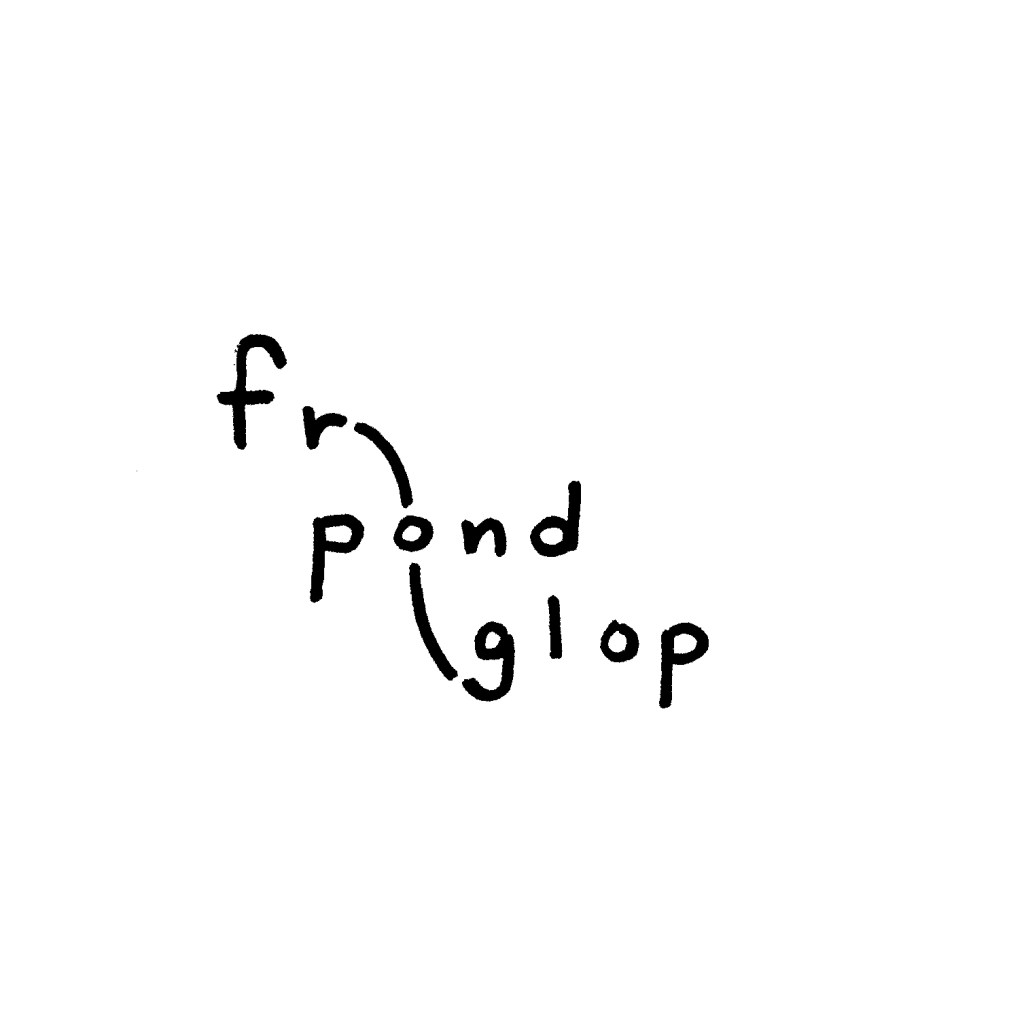
Sixteen Lilypads by bpNichol originally from art facts (1990) reprinted in a book of variations (Coach House Books, 2013)
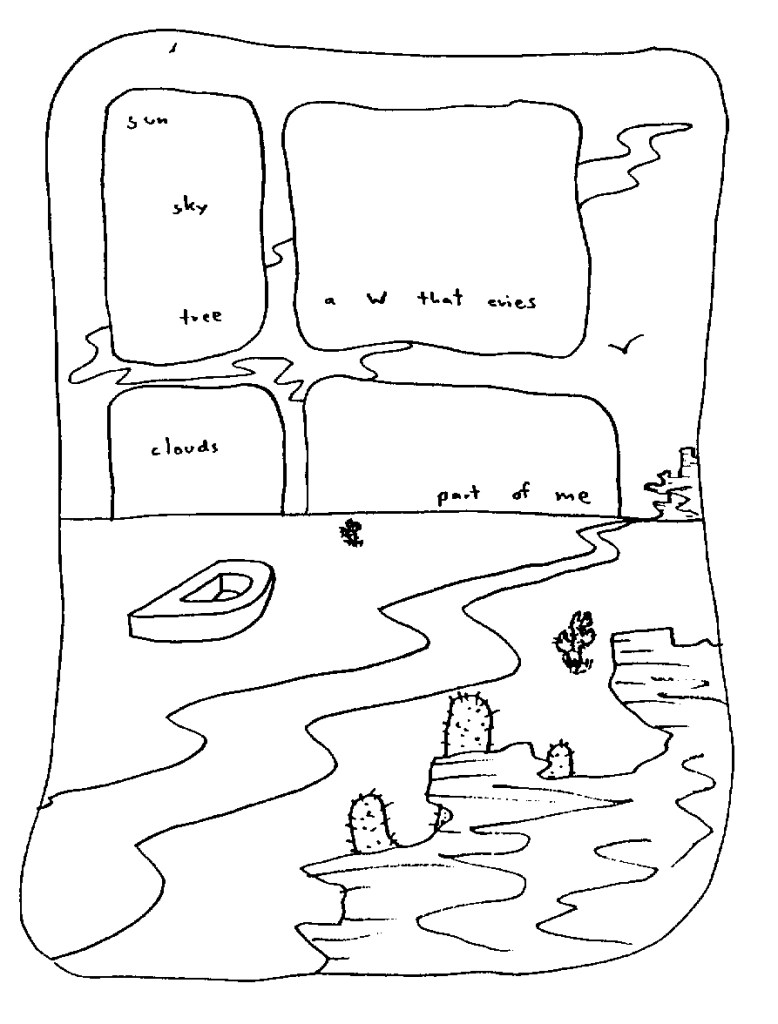
Unititled by bpNichol originally from art facts (1990) reprinted in a book of variations (Coach House Books, 2013)

I admire the wit and the humor in these poems. A comic written with just words and a horizon line. Is the Z missing or is the Z sleeping? The erasure of the word frog until we’re left questioning (did we even see a frog?). The witty homage to Basho’s famous haiku (old pond / a frog jumps in / splash!) where you can also see the motion.

bpNichol makes us think about poetry and comics differently. He adeptly used the two to create something new. Fusing words and pictures, he found ways to transcend both.

Recommended: Lots more to explore in the bpNichol Archives.

Timeline: 1960-1980+

Warning: This incomplete history maps my journey as a poet learning about comics and doesn’t follow a strict chronological order.
A History of Poetry Comics

Poetry comics of bp Nichol (part 1)

Canadian poet bpNichol (1944-1988) explored the outer limits of words, sound, and pictures, starting with concrete poetry, moving through sound poetry, and creating a treasury of poetry comics.

In the poet’s own words: hence for me there is no discrepancy to pass back and forth between trad poetry, concrete poetry, sound poetry, film, comic strips, the novel or what have you in order to reproduce the muse that musses up my own brain. (Quoted in the introduction to bpNichol Comics (Talonbooks 2002))

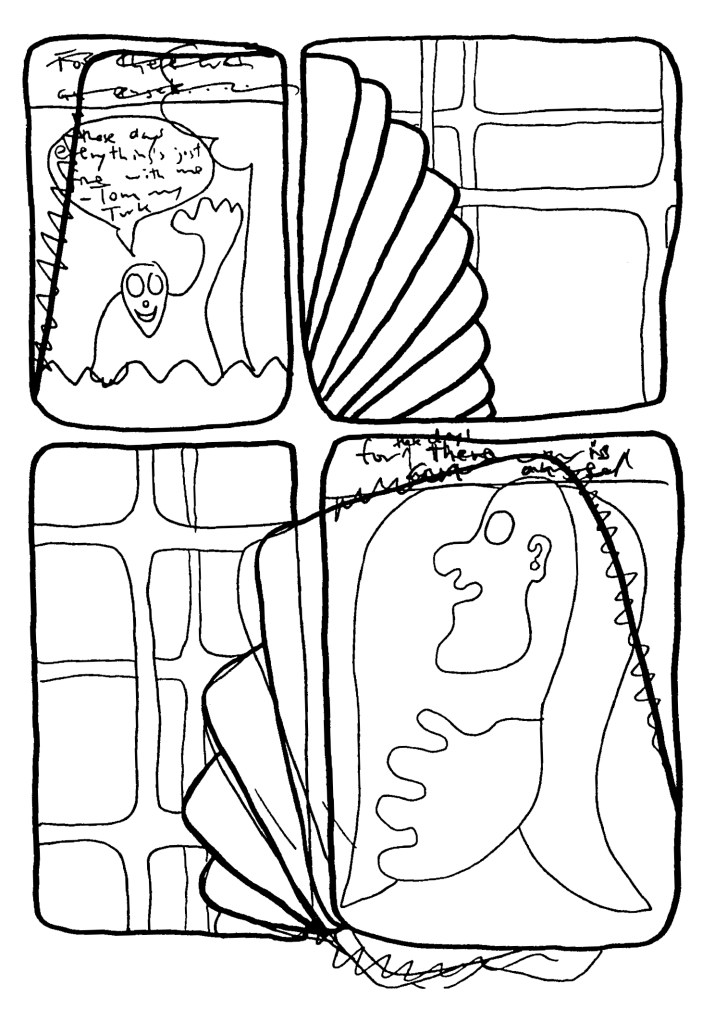
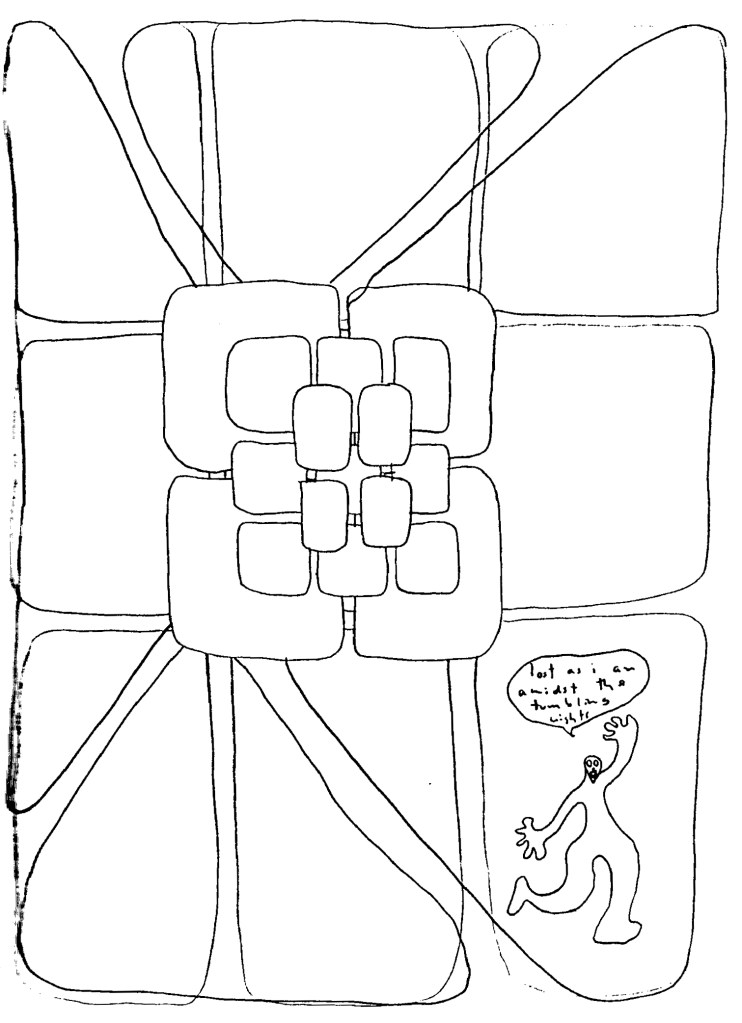
He incorporated many of the restraints of comics into his poetry comics – lettering, frames and strips, superhero homage (Captain Poetry), recurring characters, captions, speech bubbles, and emanata. He also featured letters of the alphabet including a starring role for *H*, signifying H-section in Winnipeg where he lived as a child. But he also pushed against these restraints – ignored the frame, lettering ranging from precise to illegible, empty speech bubbles.

Here are 3 examples that illustrate how Nichol used the conceit of the comic book strip or grid but pushed against what was expected.

bpNichol from “Notebook 1971” collected in bpNichol Comics (Talonbooks 2002)
bpNichol from “The True Tale of Tommy Turk” collected in bpNichol Comics (Talonbooks 2002)

These are wild! There are frames coming out of pictures, frames inside frames, a network of frames, frames fanning and folding, frames ignoring gutters while creating their own runaway gutters, frames that are crossed out. They make their own universe with their own context and logic – surreal, meta, morphed – while carrying simple yet profound poetic messages. Much to admire here and be inspired by.

To be continued …

Timeline: 1960-1980+

Warning: This incomplete history maps my journey as a poet learning about comics and doesn’t follow a strict chronological order.
A History of Poetry Comics

Concrete poetry – honoring our forerunners

Concrete poetry can inform our understanding of poetry comics. They are literally words, letters and/or characters as pictures. The graphic element emerges from the letters and characters used.

The common idea I see is that the words/letters/characters and the resulting picture/image/field come together to do what they can’t achieve on their own. (See my note on *illumination* in my attempt in #05 to define poetry comics.)

There’s also an urge I sense by the concrete poets to provide context for their ideas. Concrete implies building and foundation. The resulting whole (words as image) underpins the attempt to place letters and typewriter characters graphically on the page often times within frames (or at the least within the restraint of margins). It’s the same process that the comics artist wrestles with – composition on the page within the boundaries of a frame.

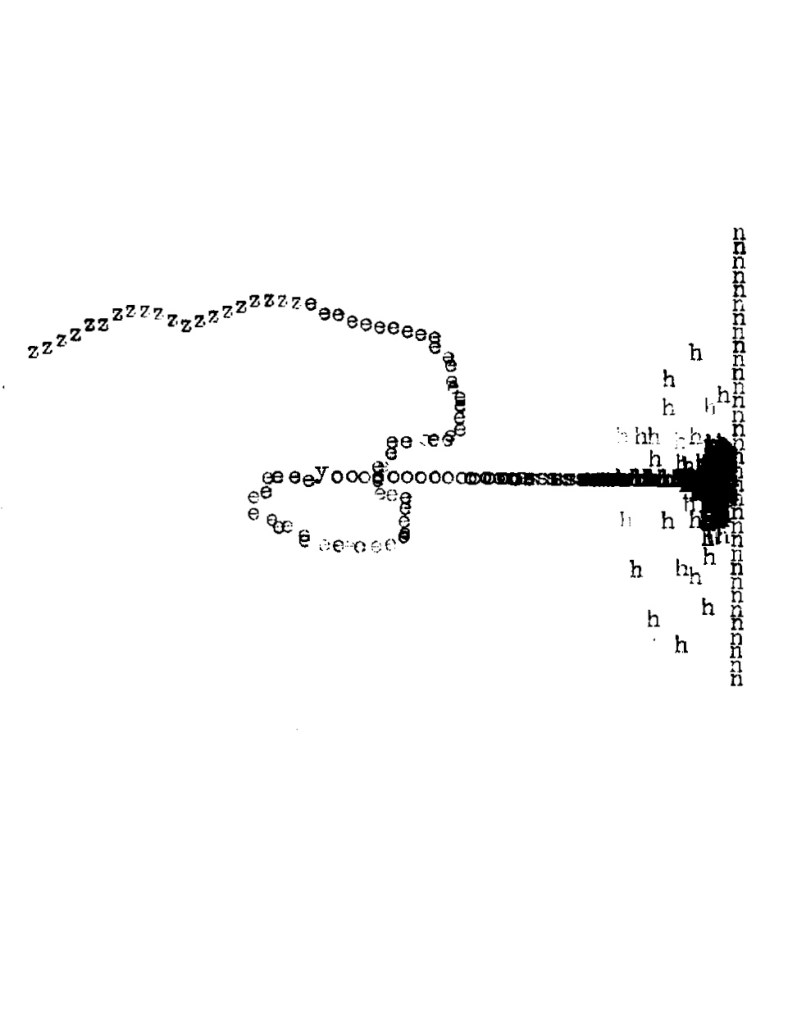
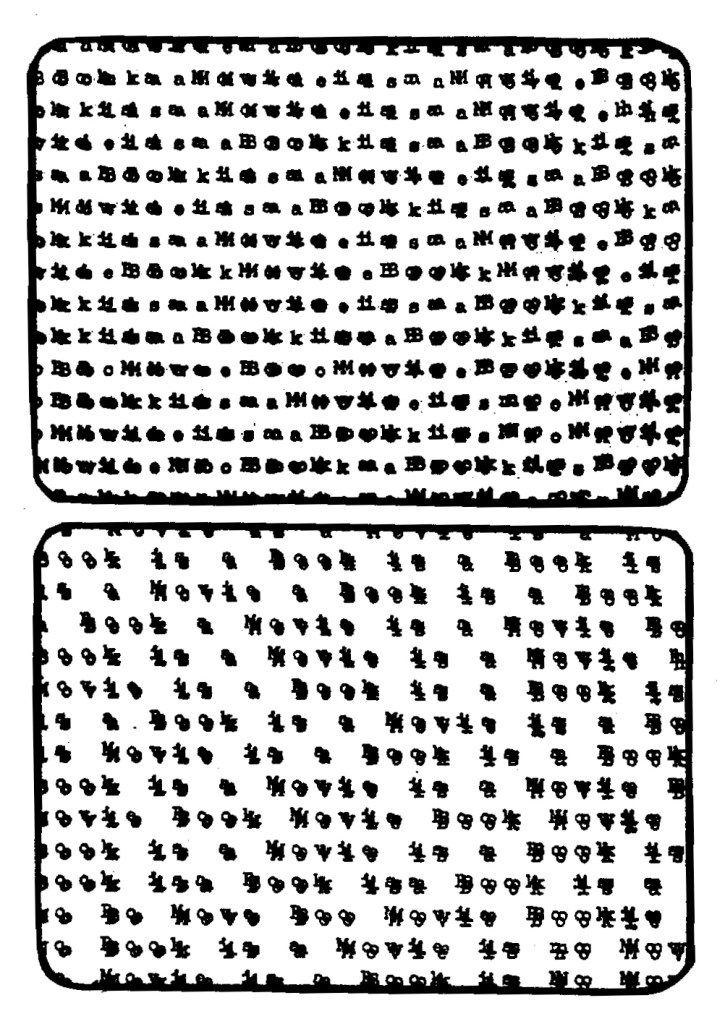
Concrete poetry is centuries old, however, the term *concrete poetry* was coined in the early 1950s. Below are some concrete poems from the 60’s, 70’s, and 80’s. Though my predisposition for manual typewriters is evident in these examples, the proliferation of home computers has even further expanded the exploration of concrete poems, pushing into the realm of visual poetry.

zeeeyooosshhhhhhhh by Cavan McCarthy from Typewriter Poems (Something Else Press, 1972)
“From: A Movie Book” by Bob Cobbing from Typewriter Poems (Something Else Press, 1972)
from “4 vizual pomes” by bill bissett reprinted in breth (Talonbooks, 2019); originally published in soul arrow (blewointmentpress, 1980)
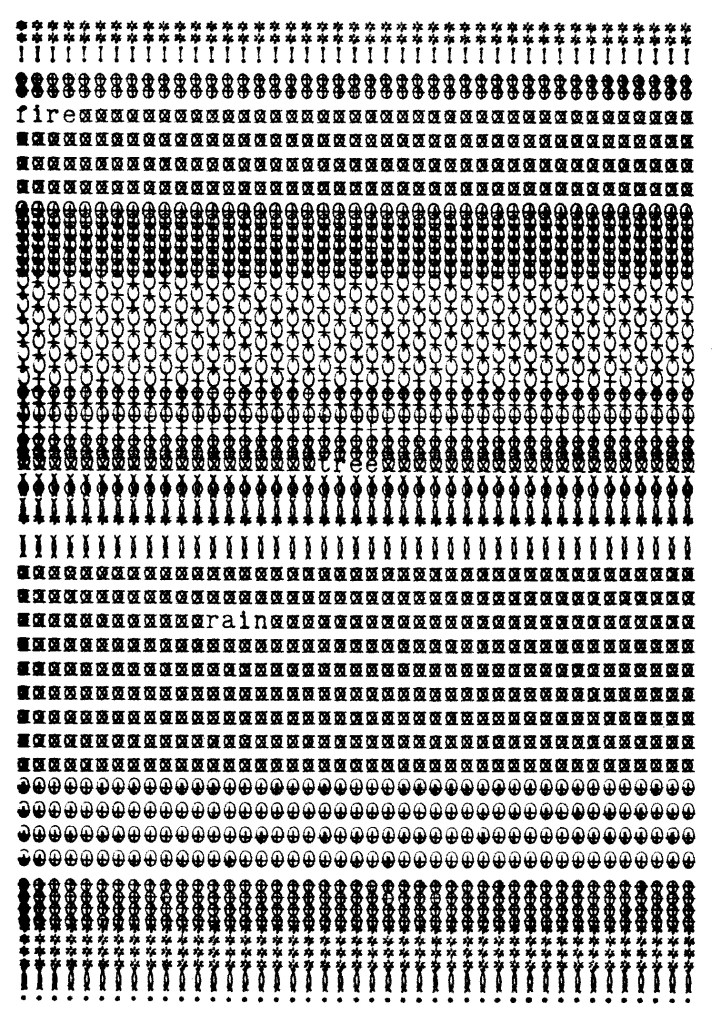
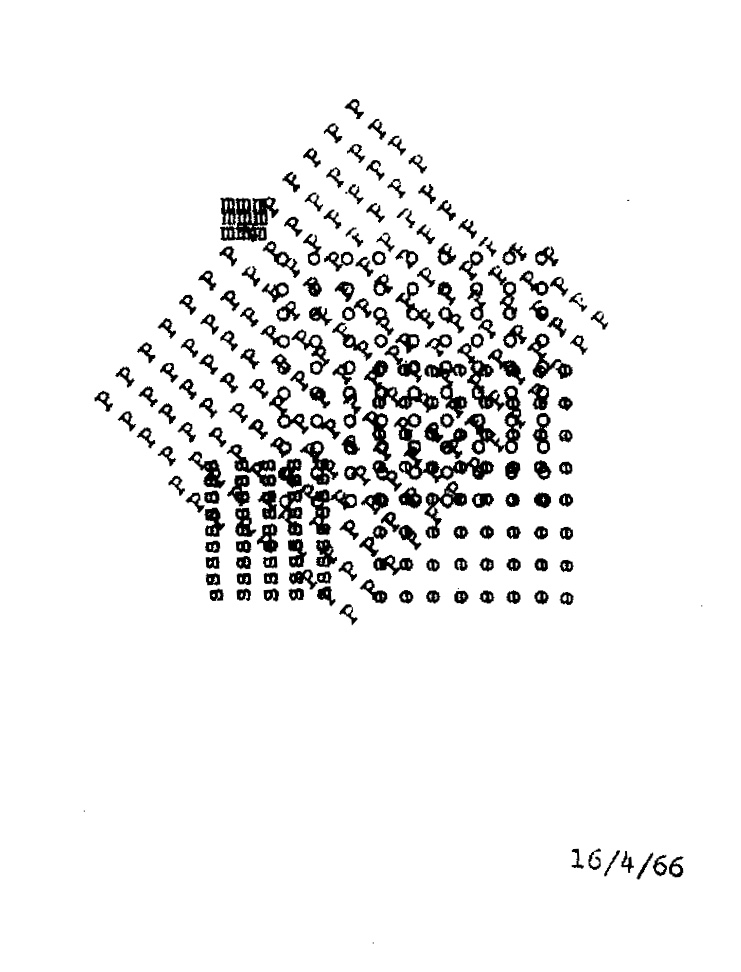
from “KON 66 & 67” by bp nichol reprinted in bp: beginnings (BookThug, 2014); originally published by Ganglia, 1968.

Many concrete poems are also sound poems, which mirrors the challenges of “performing” poetry comics. The intimacy of encountering the poetry comic on the page can’t truly be replicated through projection or screen sharing at a reading. (I will explore performance of poetry comics in a future post.)

Timeline: 1960s – 1980s

Warning: This incomplete history maps my journey as a poet learning about comics and doesn’t follow a strict chronological order.