Book Review: Joe Brainard’s C Comics: among earliest poetry comics
There’s not a stronger link between poetry and comics than the poetry comics created by poet-artist Joe Brainard in collaboration with other poets in the New York School in the mid 1960s.
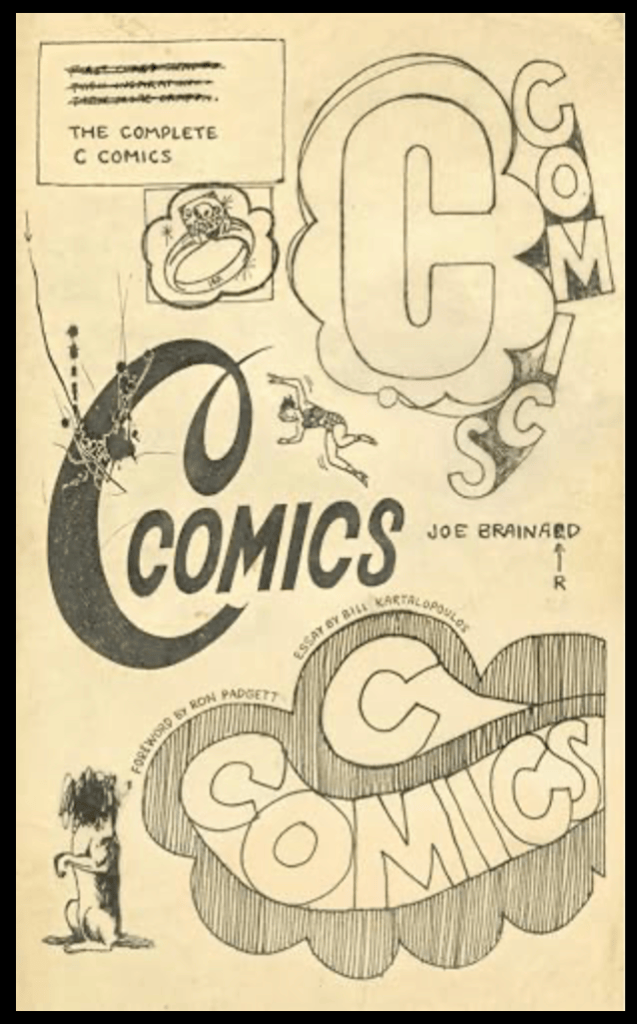
We first touched on Brainard’s work in A History of Poetry Comics #08 where we looked at his Nancy comics. (Yes, the popular comic strip Nancy but presented in contemporary contexts.) We now have his two comic books collected in an affordable* reprint: The Complete C Comics from New York Review Books (2025).
In a lot of ways, this was a generation of artists who lived the Golden Age of comics, and Brainard was able to translate this into his own manifestation of a comic book. C Comics Issue #1 was mimeographed legal-sized; Issue #2 was 8.5×11 and saddle-sticked–both reflecting a DIY ethos that still persists in today’s zine culture.
The poetry comics themselves are varied–some just one page, some multiple pages. Many are constructed on a familiar comic book page grid of frames; many more break the restraints of frame. Sometimes the poets wrote directly on the comics Brainard drew; other times Brainard would handletter their poem into his comic himself. There are homages to superheroes, romance (both heterosexual and homosexual), Nancy and Archie, popular culture, and horror. While not beholden to them, he uses the trappings of comics here in innovative ways, including speech bubbles, lettering of various sizes, sequental narratives, and caption boxes. And there’s advertising pages like the offers in the back of classic comic books.
All that said, it still isn’t easy to categorize these comics. They feel very much like forerunners to the underground comix movement of the 1970s. In a lot of ways they make art (in this case drawings and poems) accessible by using a known framework. Here’s an example by Brainard and poet Kenneth Koch. (See a post about Koch’s own poetry comics here: A History of Poetry Comics #07.)
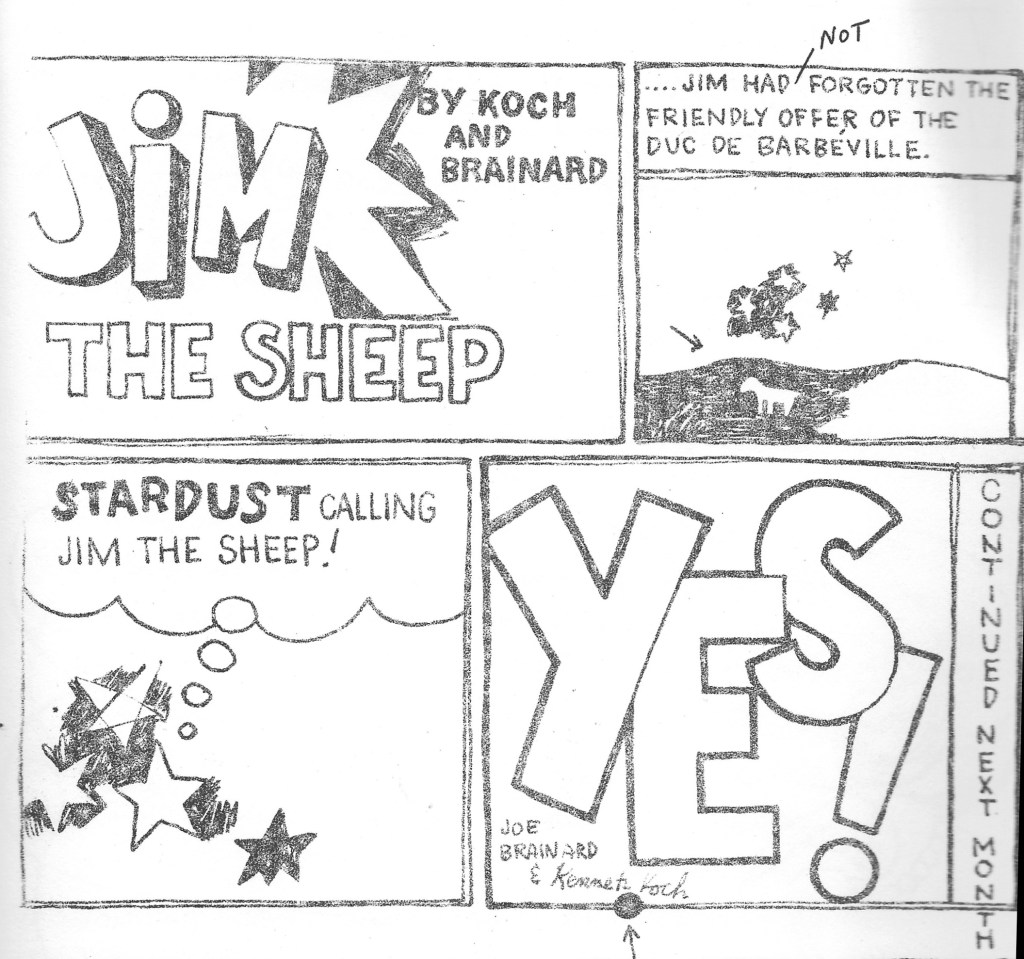
In his essay “C, Joe Brainard, and Comics” at the back of this collection, comics scholar** Bill Kartalopoulos sums it up: “Working together in an unlikely form, they produced a singular body of comics that is arresting, funny, confounding, and beautiful. Their collaborative works were utterly unlike the commercial comics from which they drew inspiration, and distinct from the more visible Pop Art of the era.”
Indeed. C Comics still inspire!
*Affordable at $45 in the sense that on eBay the original C Comics are out of reach of most of us, going as high as $2,750 for Issue #1 and $695 for Issue #2.
**Doesn’t that sound like a great career! Comics scholar!
Timeline: 1964-1966
Warning: This incomplete history maps my journey as a poet learning about comics and doesn’t follow a strict chronological order.