Pattern Poetry: Words and Pictures have Gone together since the beginning
Poetry comics are just one step on a continuum. They’re among the recent incarnations of words and pictures being used together to create context and/or deeper meaning. Tracing these roots back — well before comics existed as a form of literature — leads you to century-old forerunners that evolved to inform today’s illuminated texts, picture poems, concrete poetry, visual poetry (vispo), and poetry comics. For discussion sake, let’s collectively categorize these words-and-pictures progenitors as pattern poetry.
“The story of pattern poetry is, in fact, not the story of a single development or of one simple form, but the story of an ongoing human wish to combine the visual and literary impulses, to tie together the experience of these two areas into an aesthetic whole.” Poet Dick Higgins wrote that in “A Short History of Pattern Poetry” from his 1987 work “Pattern Poetry: Guide to an Unknown Literature” (State University of New York Press, 1987).
Let’s look at early examples of pattern poetry from c. 300 BC to c. 1700 AD, collected by Higgins, to get a sense of how long the history is of poets using words and pictures together. There are pattern poems in more than the countries and areas chosen here, too, speaking to the diversity and range of this impluse.
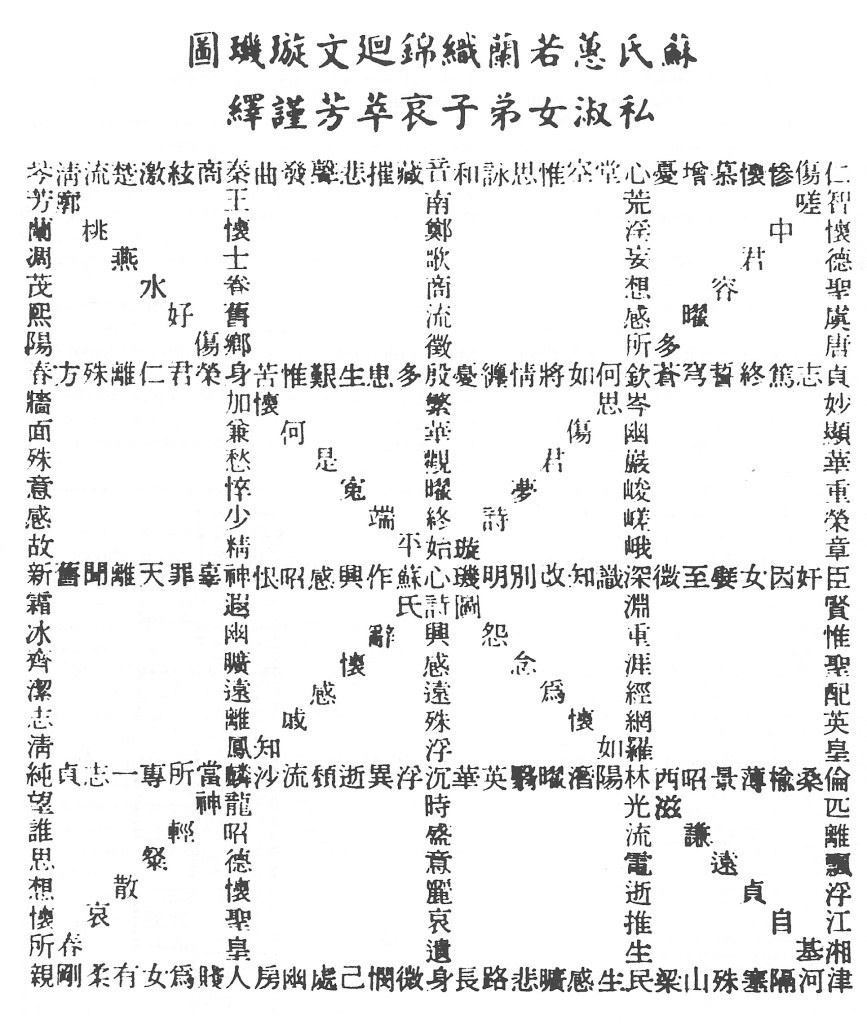
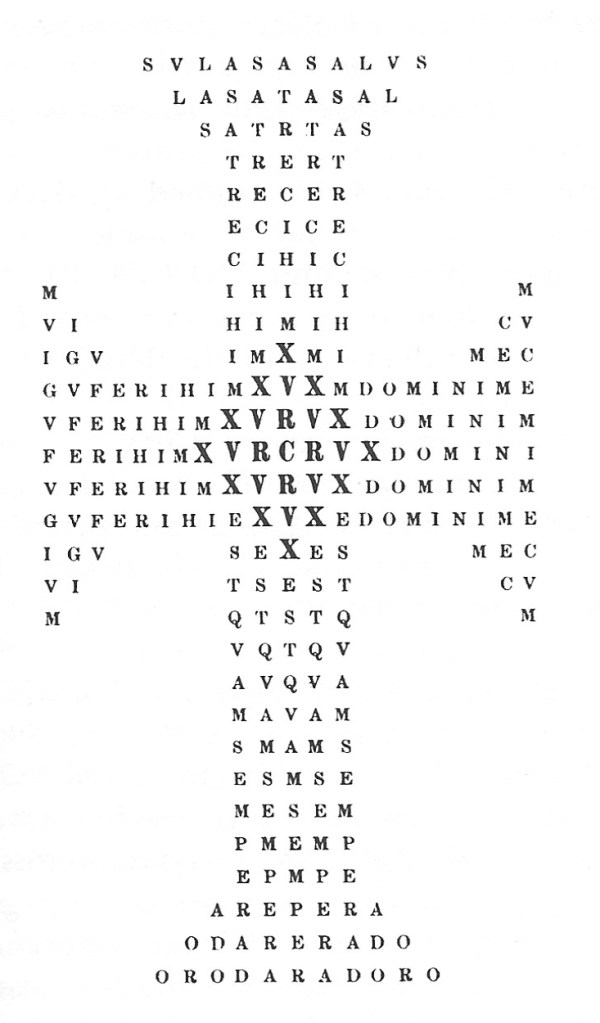
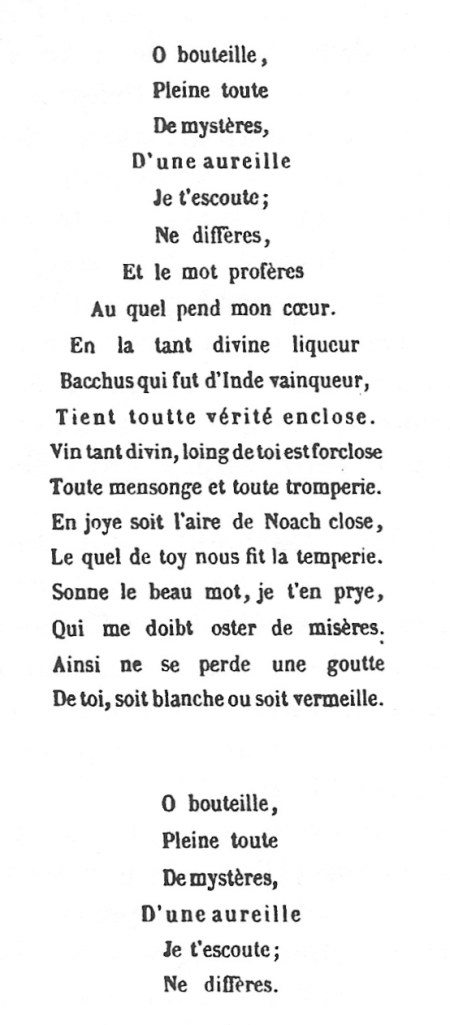
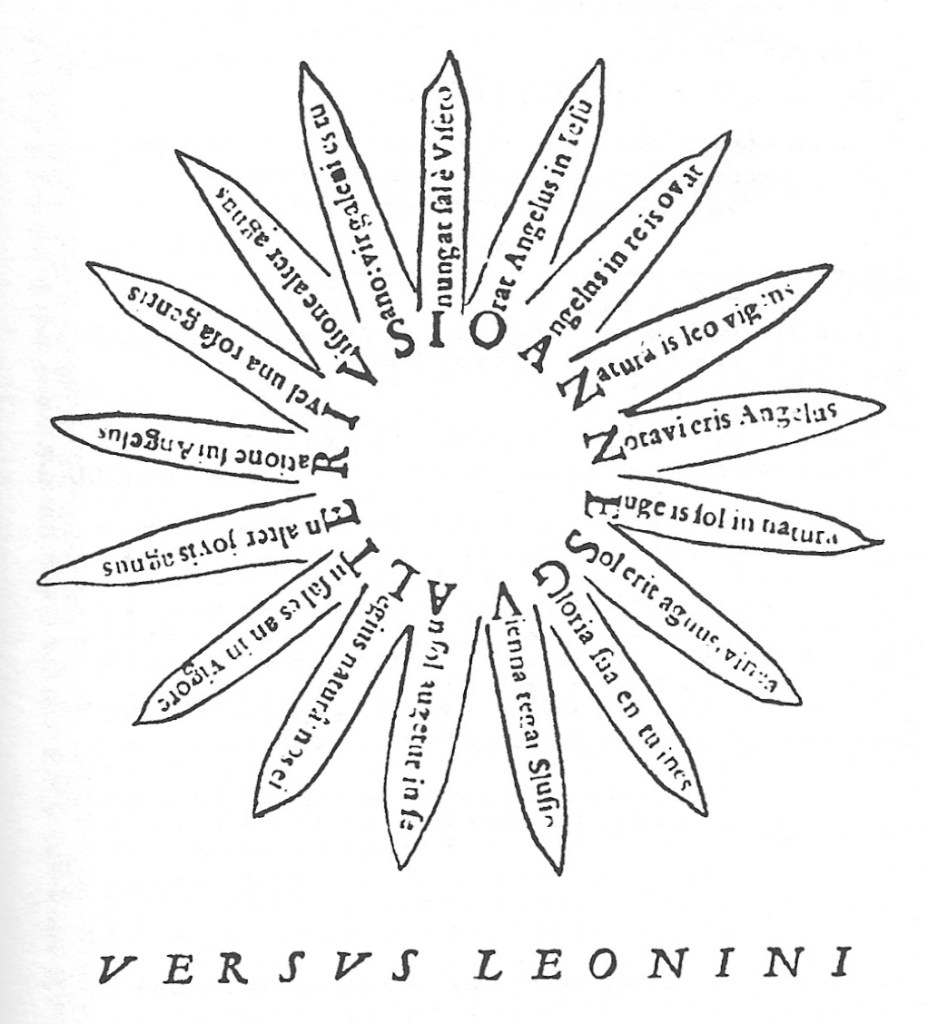
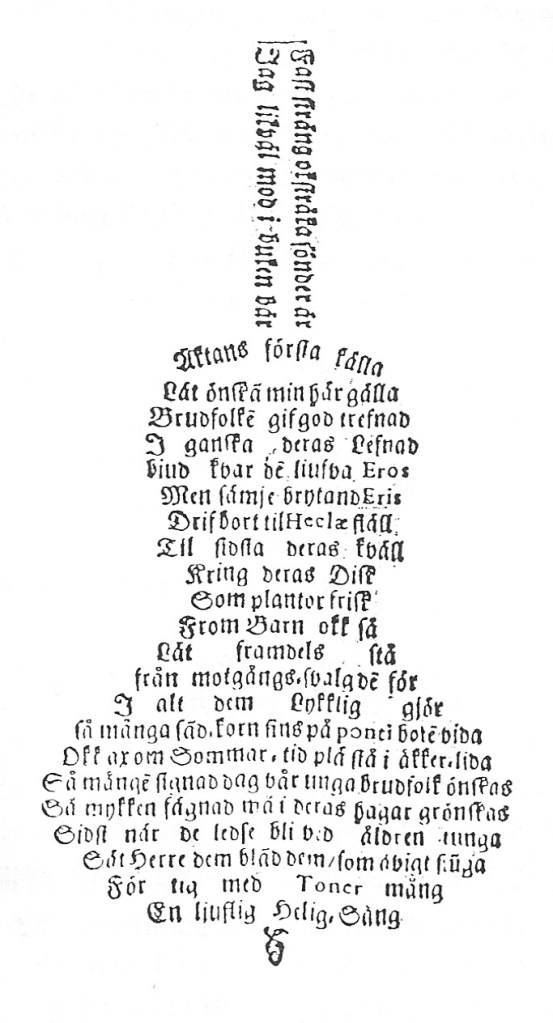
“The Egg” by Simmias of Rhodes c. 325 BC. According to Higgins, “The text is lyrical, celebrating nature.” This makes it one of the earliest extant examples of poetry and shape being used together. (Higgins p. 20)This Chinese “poem block” was written by Su Hui c. 300s AD. It can be read in dozen of combinations — backwards, forwards, diagonally, in squares, etc. It expresses “sorrow and love” for her husband who had taken up with a concubine. (Higgins, p. 212) This could be seen as the forerunner to acrostics, symbolists, and concrete poetry, etc.Cross-shaped poem by poet and hymn writer Venantius Forunatus c.late 500s. Along with the chalice, the cross poem continued to be used as a pattern poem through the ensuing centuries. (Higgins, p. 36)Bottle and cork pattern poem is attributed to French writer Francois Rabelais c. early 1500s. It has become one of the best known pattern poems in French. (Higgins, p. 67) The French Symbolists built on this in the 1800s (see AHOPC #24). Other shapes in early French patterns poems include the pyramid, hour glass, wing, and cross.Sun-shaped poem in Latin by Hermannus de Santa Barbara c. early 1600s. Sun, star and chalice shapes are ubiquitous in pattern poems. Higgins notes this one is also an acrostic. (Higgins, p. 37) Viol-shaped poem by Swedish poet Israel Phalleen 1697. It was created to celebrate his nephew’s wedding (Higgins, p. 93) Mazes, heart shapes, chalices, pyramids and figures were also created in Scandinavia. The Berlin Bear by German Johann Leonard Frish c. early 1700s. Ironically, this pattern poem is in part an attack on patterns poems and has become one of the works Frish is most remembered for. (Higgins, p. 86)
Timeline: Prehistory
Warning: This incomplete history maps my journey as a poet learning about comics and doesn’t follow a strict chronological order.


 JB
JB 