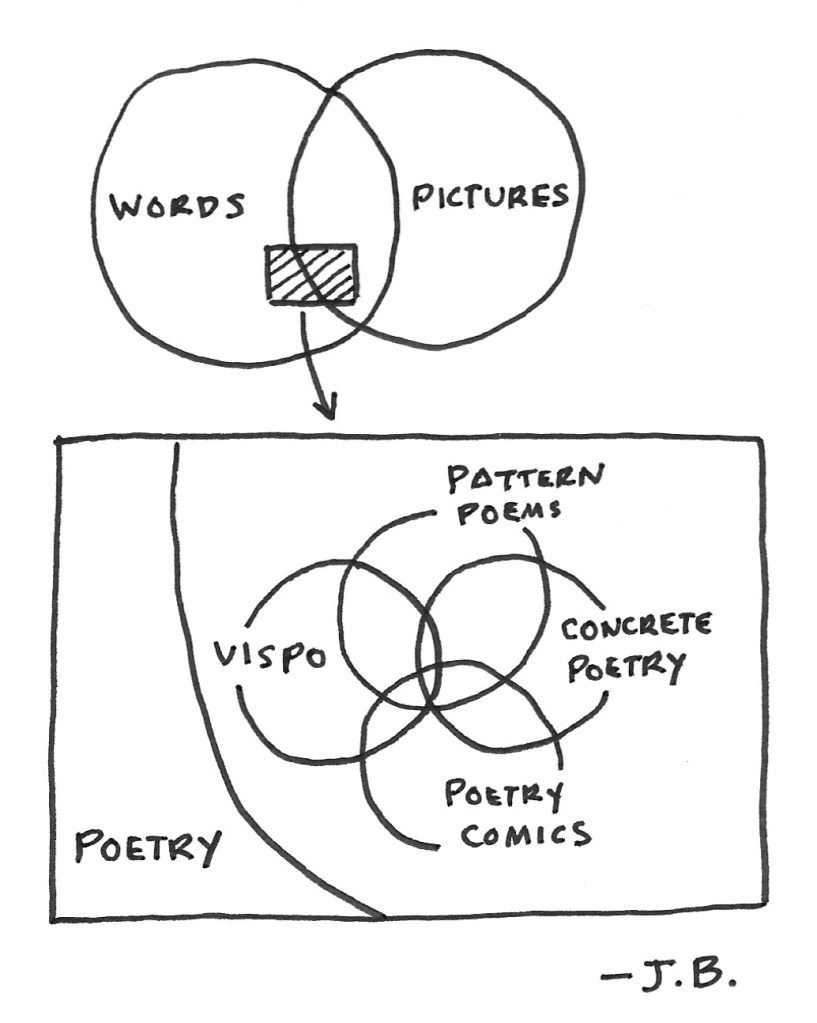
There’s a reason why borders, boundaries, and categorizations don’t work. Even with narrowly defined genres, movements, schools, etc. there are works that blur the edges and distinctions. Such is the case with visual poetry (vispo) and its intersection with poetry comics.
While definitely an oversimplication, here’s a Venn diagram that attempts to illustrate this point of overlap and influence:
Vispo grew directly out of the concrete poetry movement of the mid-1900s. (See AHOPC #10 for more on concrete poetry.) Definitions of vispo are as varied as its practicioners. Poet Nico Vassilakis in a 2014 inteview with BODY offers this way into understanding vispo:
Vispo is clearly a response to language. It tends to enhance the quantum aspects of language by focusing on the elemental design parts of language material. What’s that mean? People like fidgeting with alphabet.
The letter, itself, has been my point of interest.
Vispo is a response to reading and writing language. There is a connection between seeing writing and writing reading and reading seeing (hand-eye-brain).
–Nico Vassilakis
To locate the overlap between vispo and poetry comics, I turned to the volume “The Last Vispo Anthology: Visual Poetry 1998-2008” (Fantagraphics Books, 2012) edited by Crag Hill and Nico Vassilakis. I found examples that hint (either directly or indirectly) at some aspect of poetry comics, such as sequential panels, comic books, speech bubbles, and hand lettering. I make the case these works exist in the intersection of vispo and poetry comics — regardless of how they’re categorized.
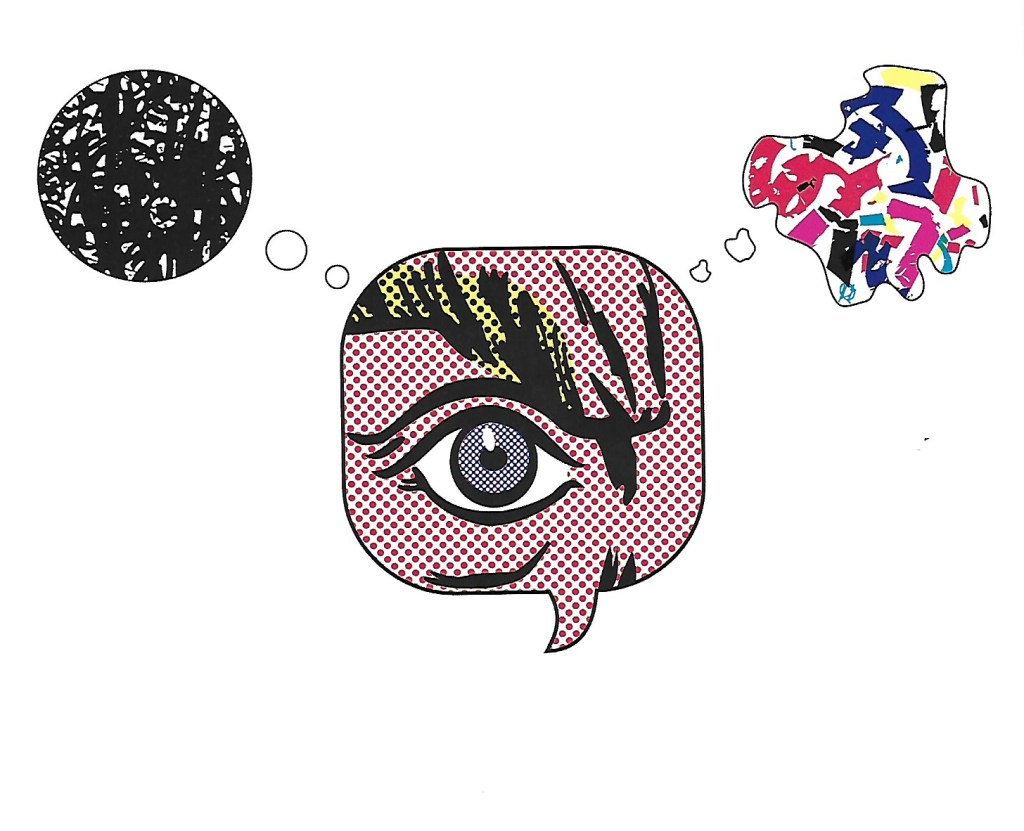
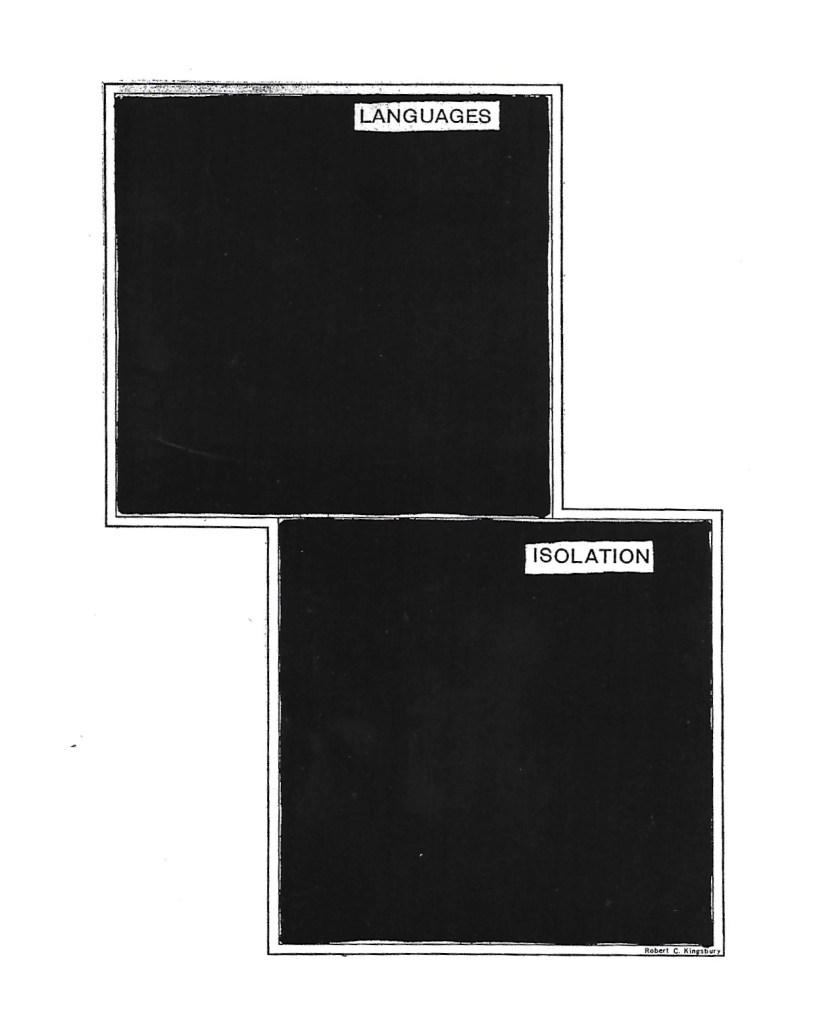
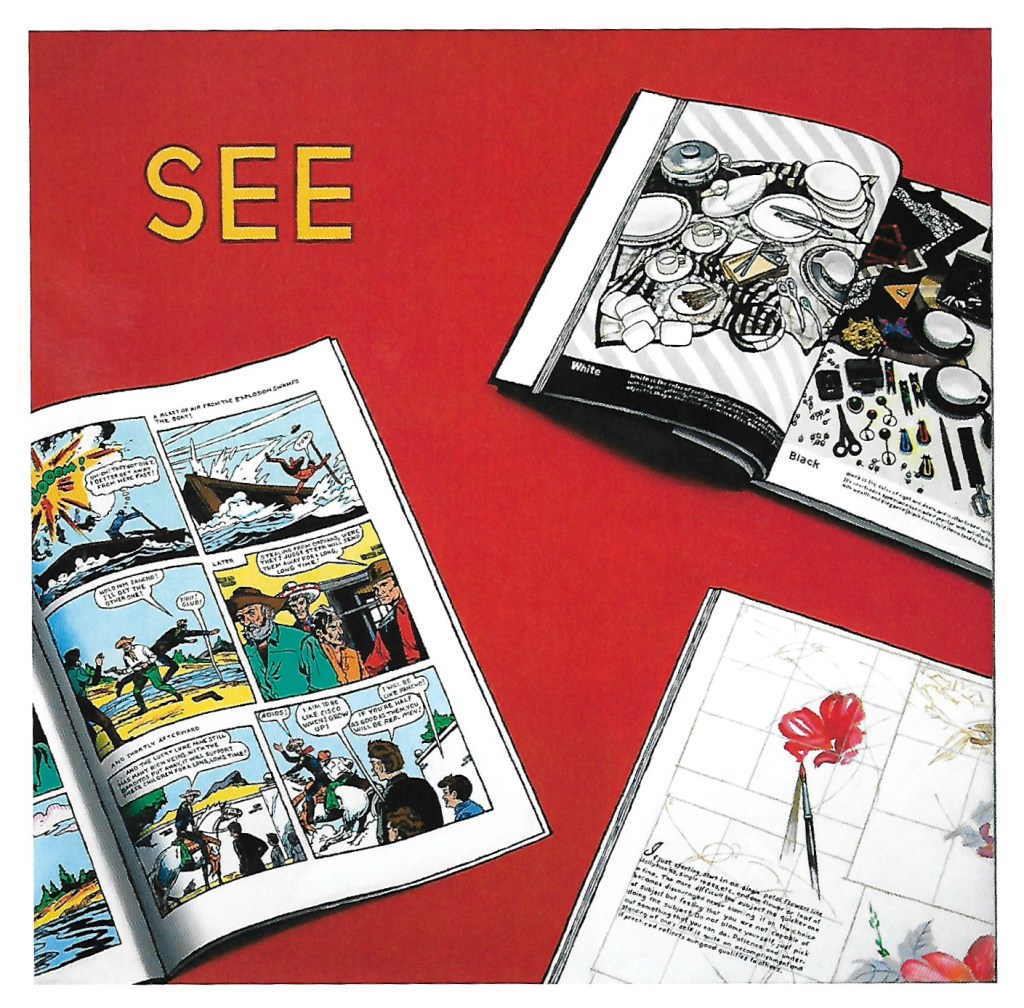
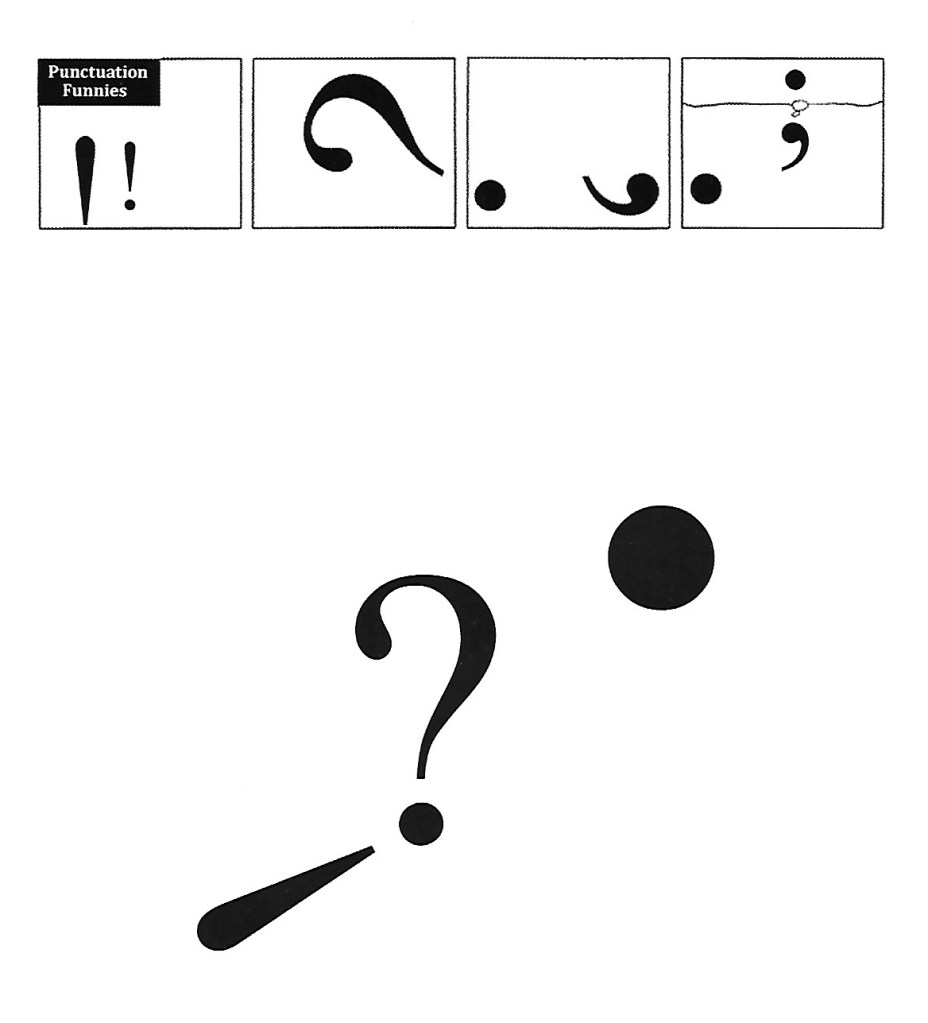
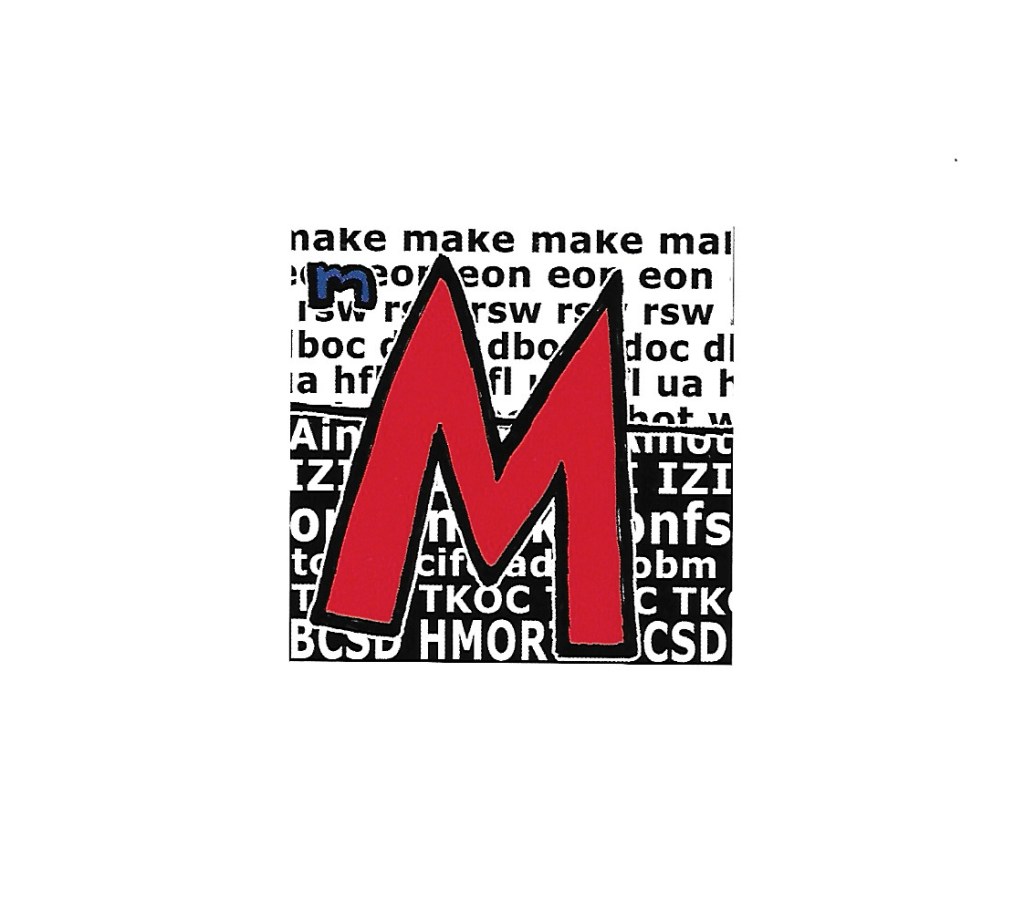
Closed Caption by damian lopes (The Last Vispo Anthology, No. 36). The poetry here is created in the interplay between speech/thought bubbles; the speech bubble, with a Lichtenstein looking eye, is having thoughts of its own, each more abstract. With the above we’re led to consider Pop Art as well as comics. Speech bubbles have a long history when pictures and words are used together and have become of one of the hallmarks of comics and graphic novels. Languages & Isolation by Gustave Morin (The Last Vispo Anthology, No. 109). These two-panels allude to a sequential narrative, one definition of comics. To be sure we see this poem as sequential, the poet has the two panels overlap slightly. It makes me ponder how isolating languages can be for travelers, immigrants, and others. And I wonder what has been blacked out. Check out Morin’s “Toon Tune” on the Poetry Foundation website. See by David Ostrem (The Last Vispo Antholoogy, No. 168). It’s easy to consider this work in terms of poetry comics; a little harder to explain why. The poet/artist includes faithfully drawn copies of three books, one being an opened Western comic book (easy). The word SEE is open to interpretation (harder). I take it as “notice this” — here are drawn pictures of books that are either about drawing or are drawn themselves.Punctuation Funnies / Questionable Shadow by Gary Barwin (The Last Vispo Anthology, No. 221). I feel this work by Canadian poet/artist Gary Barwin definitely falls inside the shared space of vispo and poetry comics. It’s one of my favorite examples. Starting with calling these drawings “funnies,” then using the standard newspaper comic strip of four frames, and ending with a thought bubble, there’s little doubt they intended to evoke comics. The visual joke of the Questionable Shadow mirrors the kind of humor found in daily newspaper comic strips. Cartoon0002 by Paul Lambert (The Last Vispo Anthology, No. 249). There’s something comic-book-ish about the lettering that hints at a connection with poetry comics. The shape of the frame and how the lettering reverses to create a kind of horizon line cause a comics feeling to arise. Again, it’s hard to put an exact finger on the reason, but what’s happening in this single frame results in something happening outside the frame, which in turn makes the reader/viewer imagine a second sequential frame and then perhaps a third.
Timeline: 2000s
Warning: This incomplete history maps my journey as a poet learning about comics and doesn’t follow a strict chronological order.
 JB
JB 
Thank you very much for showing this. I really appreciate it.
LikeLike