Defining poetry comics – a first attempt
This post comes with a disclaimer.
Up to now, “A History of Poetry Comics” has gone along without defining *poetry comics.* I believe any definition should be as inclusive and open as possible. As we pause to consider “what are poetry comics?” please remember: there’s a lot of room to color outside the lines.
What are poetry comics?
Is it a poetry genre like concrete poetry or visual poetry? Or is it a comics genre akin to literary fiction? Let’s look at 4 ways we can perhaps corral poetry comics — even if we can’t pigeonhole them.
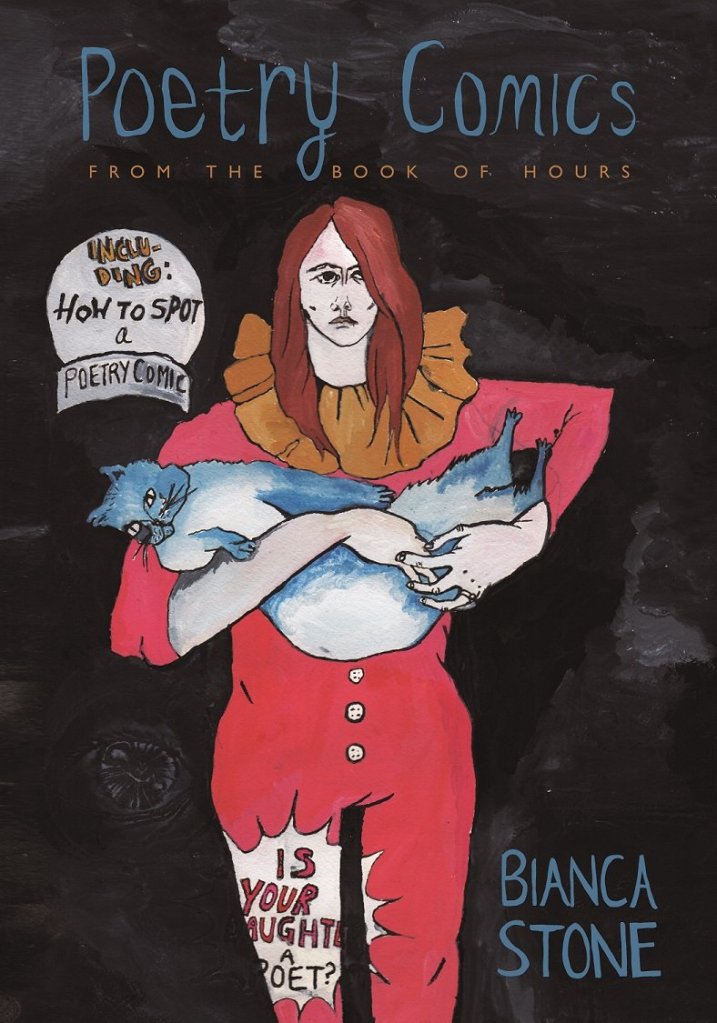
Intention – Does the artist intend the work to be poetry comics? One good indicator: the creator calls them poetry comics. That’s straight-forward and perhaps the easiest way to categorize. Starting as early as the 1950s and continuing through today, there are many examples of artists calling their poems comics or taking direct inspiration from comics, including Kenneth Koch, Joe Brainard, bp nichol, Bianca Stone, Johnny Damm, Susanne Reece, and (my teacher) David Lasky. Another example is the lit zine Ink Brick (2013-2019), which asserted its intention by describing itself as “The Press for Comics Poetry.”
Occupation – Is the comics artist a poet? Or is the poet a comics artist? The order in which that occurs doesn’t matter, but it takes experience/experiment in both to create poetry comics and is a good indicator that what you’re seeing/reading are indeed poetry comics. There are great examples of poets as drawers, painters, and comics artists, including bp nichol (see “The Captain Poetry Poems Complete” (Book Thug, 2011)). Equally there are great examples of comics artists, drawers, and painters as poets, including John Porcellino (see “Busy Bee” or “Old Hearts” or “Spring Signs” in “Map of My Heart” (Drawn & Quarterly, 2009)).
Point: “the poet who paints or sculpts is different from the painter who writes. he comes at his art from an entirely different angle and brings to it different concerns yet similar ones. but he is always a poet.” –bp nichol in “Comics” (Talonbooks, 2002; p. 13)
Counterpoint: “Any cartoonist will tell you that the deeper you dig into the form, the more nuances and subtleties you find. … It’s not as static as a fixed image, it’s a flow. The more I looked into comics, and this kind of ‘flow,’ the more similarities to poetry I found.” –John Porcellino, interview with The Herald, April 2018.
Construction – Is the work both a poem and a comic? Does it include compositional elements from comics (panels, speech bubbles, captions, etc.) and poems (structure, syntax, rhythm, etc. )? Be aware when answering those questions that sometimes the elements will be fragmented, implied, or even omitted, which keeps things new. In “Over the Line: An Introduction to Poetry Comics” (Sidekick Books, 2015; p. 13), the editors assert: “In the same way that it’s a mistake to think of comics as ‘prose with illustrations’ rather than being more complex compositions, it’s a mistake to think of poems as prose divided into different lines.”
Illumination – Do the words and pictures create a third meaning beyond what words or pictures could do on their own? Pictures and words are often integrated in poetry comics in ways that create context that illuminates and/or transcends what they bring individually to the composition.
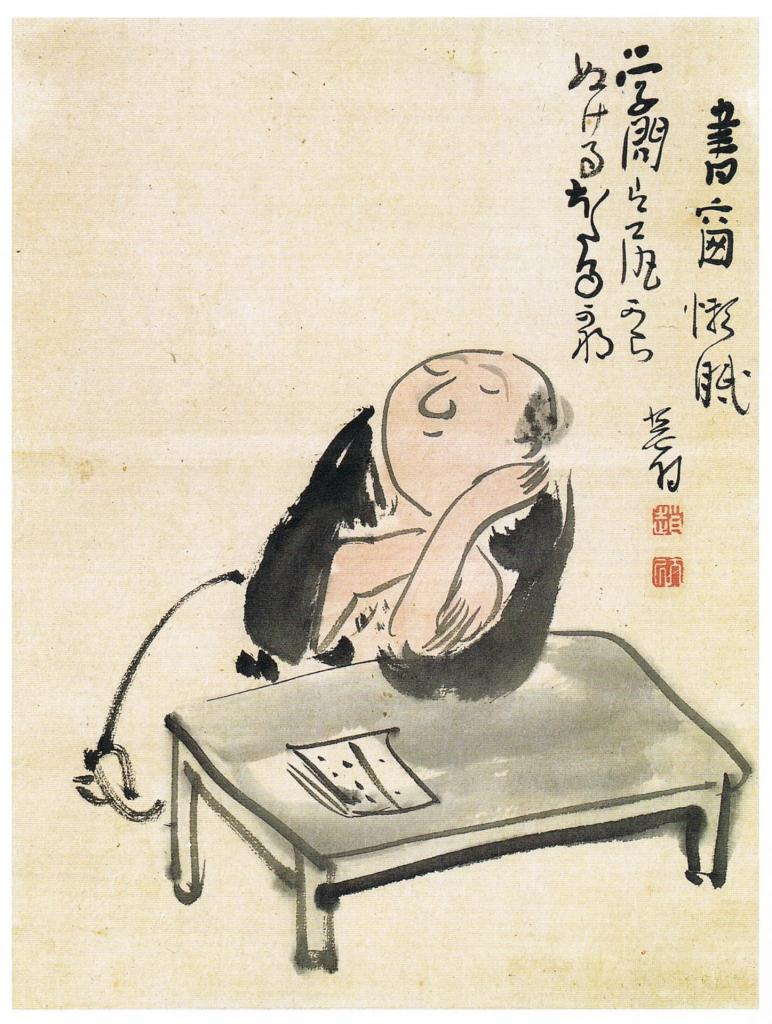
As one example, in Japanese poetry including traditional haiku there is a “cutting word” kireji. It serves a lot of purposes, including creating a break or a leap in meaning, relationship or emphasis. In comics terms it would be the gutter, white space or even a changed aspect from frame to frame. The result is the same: a meaning emerges in the reader’s mind as a result of that juxtaposition. That leap is what illuminates.
Warning: This incomplete history maps my journey as a poet learning about comics and doesn’t follow a strict chronological order.