A History of Poetry Comics

musings on words + pictures by R.H. Blyth

Here’s some found text that provides additional thoughts on words and pictures from R.H. Blyth in the classic Haiku Vol. 1 Eastern Culture published in 1949.

Although Blyth is discussing painting and poetry in context in terms of Japanese haiga – brush paintings that illuminate a poem, often times a haiku (first discussed in AHOPC #03) – I think it’s relevant to poetry comics. His comments support my belief that drawing and writing together can illuminate and transcend what they can’t always accomplish singularly. (See also “What are poetry comics” in AHOPC #05.)
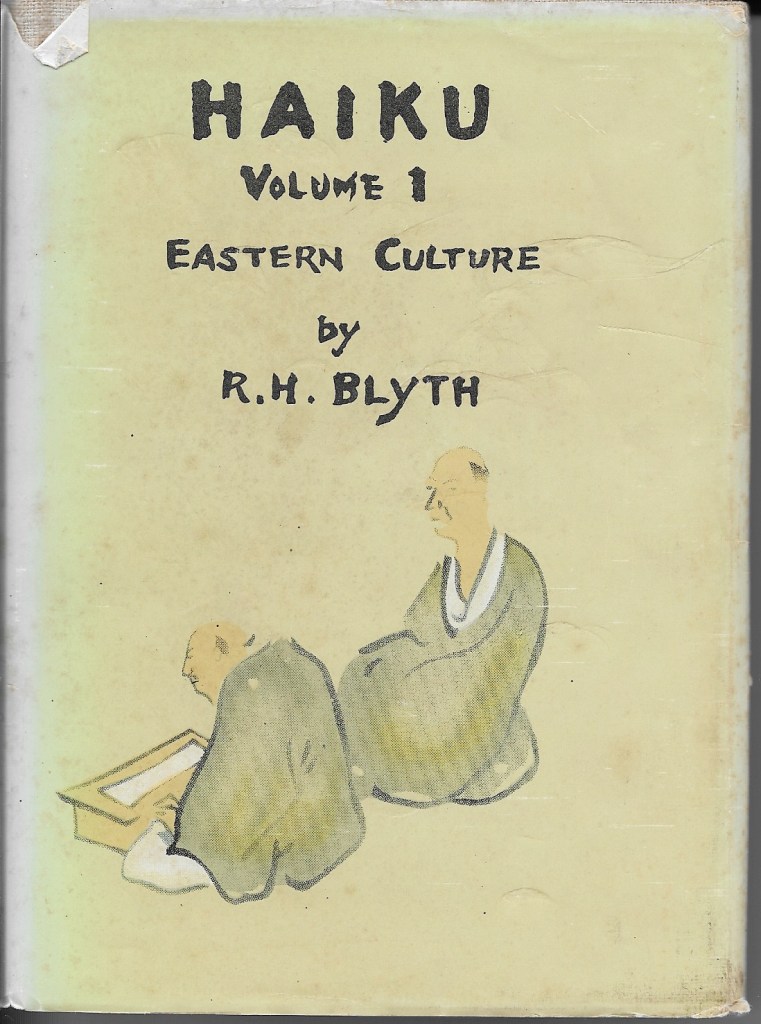
Haiku Volume 1 Eastern Culture by R.H. Blyth (Hokuseido, 1959)

The qualities of haiga are rather vague and negative. The lines and masses are reduced to a minimum. The subjects are usually small things, or large things seen in a small way. The simplicity of the mind of the artist is perceived in the simplicity of the object. Technical skill is rather avoided, and the picture gives an impression of a certain awkwardness of treatment that reveals the inner meaning of the thing painted.

pp. 89-90

Applied to poetry comics: The simplicity and directness of comics and line drawings are perfectly aligned with poetry, even more so with the “small” haiku. Comics – underground comics especially – often celebrate the honest, the real, the creative over the technical skills of the artist/poet. Words and drawing together can transcend inherent limitations of each.

The combination of haiku and haiga is perhaps the most important practical question. One may spoil the other; but in the case of a complete success, how does one help the other? There seem to be two main ways of doing this. The haiga may be an illustration of the haiku, and say the same thing in line and form; or it may have a more independent existence, and yet an even deeper connection with the poem.

p. 90

Applied to poetry comics: This aligns with what Scott McCloud lists in his classic Understanding Comics (William Morrow, 1993) as categories for “the different ways in which words and pictures can combine in comics:” Word specific (illustrative); picture specific (words add a soundtrack); duo specific (words and pictures say the same thing); additive; parallel (words and pictures follow very different courses); montage; and interdependent (“words and pictures go hand-in-hand to convey an idea that neither could convey alone”). (See pp. 152-155.) The last three are closest to what Blyth calls independent existence and can express something neither could do on their own.

Art comes down to earth; we are not transported into some fairy, unreal world of pure aesthetic please. The roughness gives it that peculiar quality of sabi without age; unfinished pictures, half-built houses, broken statuary tell the same story. It corresponds in poetry to the fact that what we wish to say is just that which escapes the words. Haiku and haiga therefore do not try to express it, and succeed in doing what they have not attempted.

p. 104

Applied to poetry comics: Comics are down-to-earth and can make even the most difficult topics accessible. Comics span decades and can still hold an audience (e.g., Peanuts). Poetry can convey difficult or sublime concepts in just a few words. Poetry too can move through generations. Words and pictures together, as in poetry comics, open up the possibility for “yet an even deeper connection.”

Timeline: Prehistory

Warning: This incomplete history maps my journey as a poet learning about comics and doesn’t follow a strict chronological order.
book reviews – notley, field guide, Damm, bp

End of summer means the end of summer reading! Here are some of the poetry comics (and books on poetry comics) I read this summer.

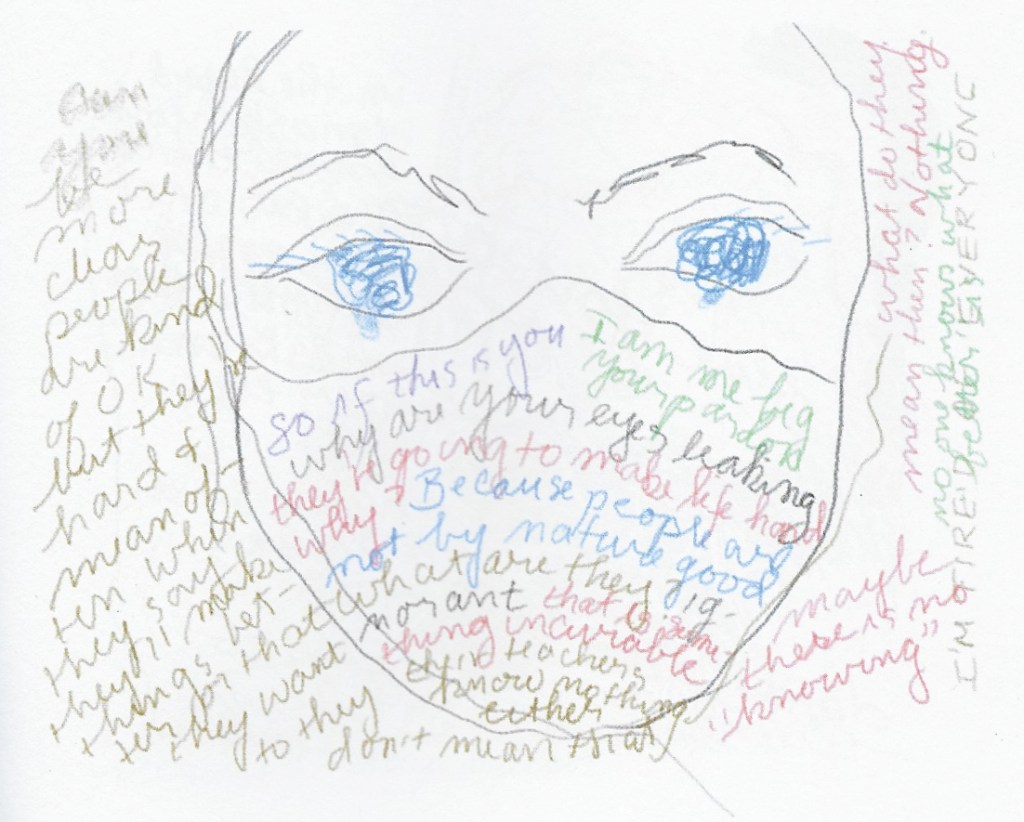
>Runes and Chords by Alice Notley (Archway Editions, 2023). Poet Alice Notley started posting these “poem/drawings” on Instagram in 2019 during the pandemic. As she writes in the introduction, “They seemed to portray my state of mind better than a selfie, they wasted more time than a selfie, and were generally fun.” Done in her own handwriting, her words are interlaced with pictures of masked faces, portraits, flowers, and doodles; and the lettering piles on top of each other, becomes crosswords, and/or change colors in each panel, sometimes obscuring the drawings and vice versa. They comment on current affairs both political and personal. Most importantly, they directly reveal what the artist is thinking in her own voice. Here’s one example:

From Runes and Chords by Alice Notley (Archway Editions, 2023)

>Field Guide to Graphic Literature edited by Kelcey Ervick and Tom Hart (Rose Metal Press, 2023). Wow! A book for instructors, students, and writers who are looking to create “graphic narratives, poetry comics, and literary collage.” Each of the 28 essays/lessons is by a poet/writer/artist working in a specific aspect of combining pictures and words; each comes with an example of their work; and each comes with an exercise to guide your own creation. In total, these comprise a great survey of current state of affairs. I couldn’t put it down! My favorite aspect of the book is the “Alternate Table of Contents by Form,” which makes it easy to navigate to the form you want to explore, such as “Poetry Comics & Comics Poetry.”

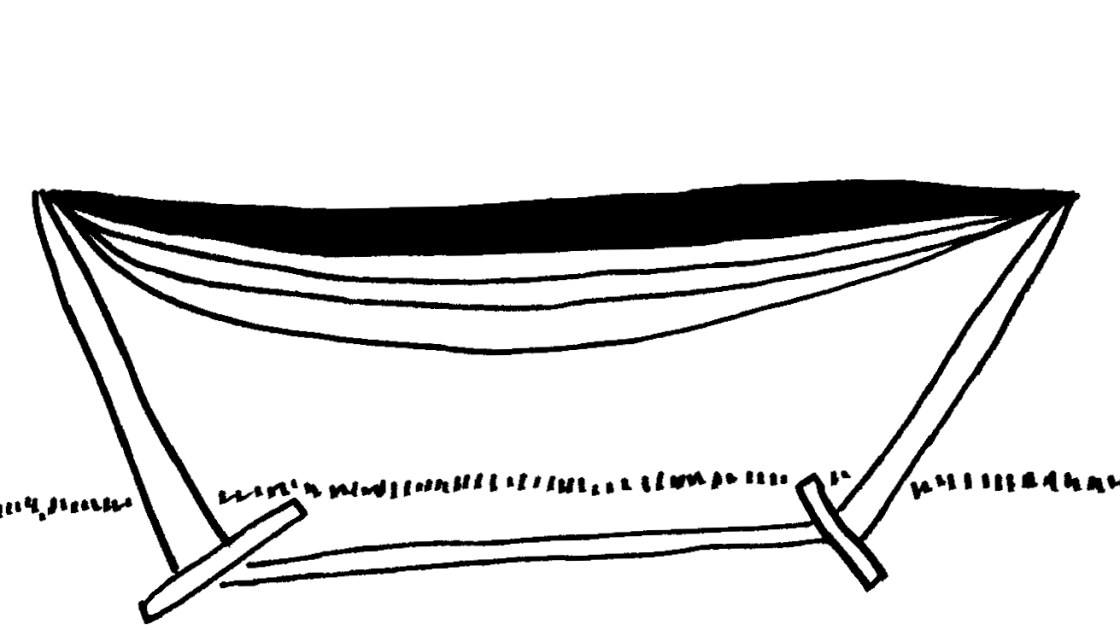
>The Stoneware Jug, by Stefan Lorenzutti and John Porcellino (Nieves, Bored Wolves, and Spit and a Half, 2022). Stefan Lorenzutti, poet and publisher (with Joanna Osiewicz-Lorenzutti) of Bored Wolves in Krakow and the Polish Highlands, provided the words. John Porcellino, poet and comics artist of King Cat fame, provided the drawings. The collaboration works on a number of levels. The haiku-esque poetry is perfectly illumninated by elegantly simple pictures in comic-book panels settings. This work encapsulates my sensibilities of poetry comics. (More on collaborations in a future post.) Get your copy now!

>Riot Comics & “I’m a Cop” No. 2 by Johnny Damm (2023). Johnny Damm continues his hybrid-comics-collages using found text with two new works this year. Riot Comics combines cut-up classic cops comics and Depression-era photos with quotes from those who participated or witnessed the Tompkins Square Park riot in 1988. “I’m a Cop” No. 2 directly quotes “actual statements of police union leaders.” Both resonate with current events.

By placing these “law and order” comics in the context of a real-world police, Riot Comics seeks to challenge the carceral logic that dominates the vast majority of U.S. comic books and to question if this medium might also serve as a space of abolitionist possibility.

Johnny Damm in Notes to Riot Comics

For more on Johnny Damm’s work, see AHOPC #9.

>Team Photograph by Lauren Haldeman (Sarabande Books, 2022). Graphic novelist/poet Lauren Haldeman interleaves poems between chapters of this graphic memoir and ghost story. While not fully integrated visually, the poems serve as a soundtrack to the narrative she’s telling in graphic novel format, providing context, depth and space for the story to unfold. Or perhaps it’s the other way around — the graphic novel provides context for the poems. Either way, this work made me realize there are different ways to think about the relationship between poetry and comics; a welcomed reminder to keep an eye on the overall.

>St. Art: The Visual Poetry of bpNichol curated by Gil McElroy (Confederation Centre Art Gallery and Museum, 2000). This catalog to an exhibit of bp Nichol‘s visual poetry features three insightful essays, his “mech sheet for pome objects,” and a detailed list of his works. Here are three insights I gleened from the essays and bp Nichol in his own words:

  1. My earliest visual poems I called “ideopomes” because I had read Fenellosa on the Chinese written character as a medium for poetry, because I was very interested in Chinese, Japanese, Haida & Kwakiutl poetic modes, & because I saw myself as consciously working with the ideogrammatic potential of the arabic alphabet … This interest in the ideogrammatic & (as I later saw) runic capacity of the alphabet, ran parallel to an interest in the comic strip & its narrative & syntactic convention. (bp Nichol)
  2. Within the realm of the literary arts, visual poetry, a poetic form with a history that arguably stretches back to at least 1700 B.C.E., truly came of age in the century with the work of the French poet (and first major theoretician of Cubism) Guillaume Apollinaire, his Dadaist contemporary, Tristan Tzara, and the Italian Futurist, F.T. Marinetti. (Gil McElroy)
  3. While painter Roy Lichtenstein moved into the comics frame to work at a kind of molecular level of technique, Nichol pushed out against the frame and other comic conventions to a more panoramic approach. The simply drawn, minimally detailed figures of the characters and scenes in Nichol’s comics contrast with the sophisticated play occurring with the panels themselves. (Paul Dutton)

Timeline: 2000, 2022, 2023

Warning: This incomplete history maps my journey as a poet learning about comics and doesn’t follow a strict chronological order.