A History of Poetry Comics

Poetry comics of bp Nichol (part 1)

Canadian poet bpNichol (1944-1988) explored the outer limits of words, sound, and pictures, starting with concrete poetry, moving through sound poetry, and creating a treasury of poetry comics.

In the poet’s own words: hence for me there is no discrepancy to pass back and forth between trad poetry, concrete poetry, sound poetry, film, comic strips, the novel or what have you in order to reproduce the muse that musses up my own brain. (Quoted in the introduction to bpNichol Comics (Talonbooks 2002))

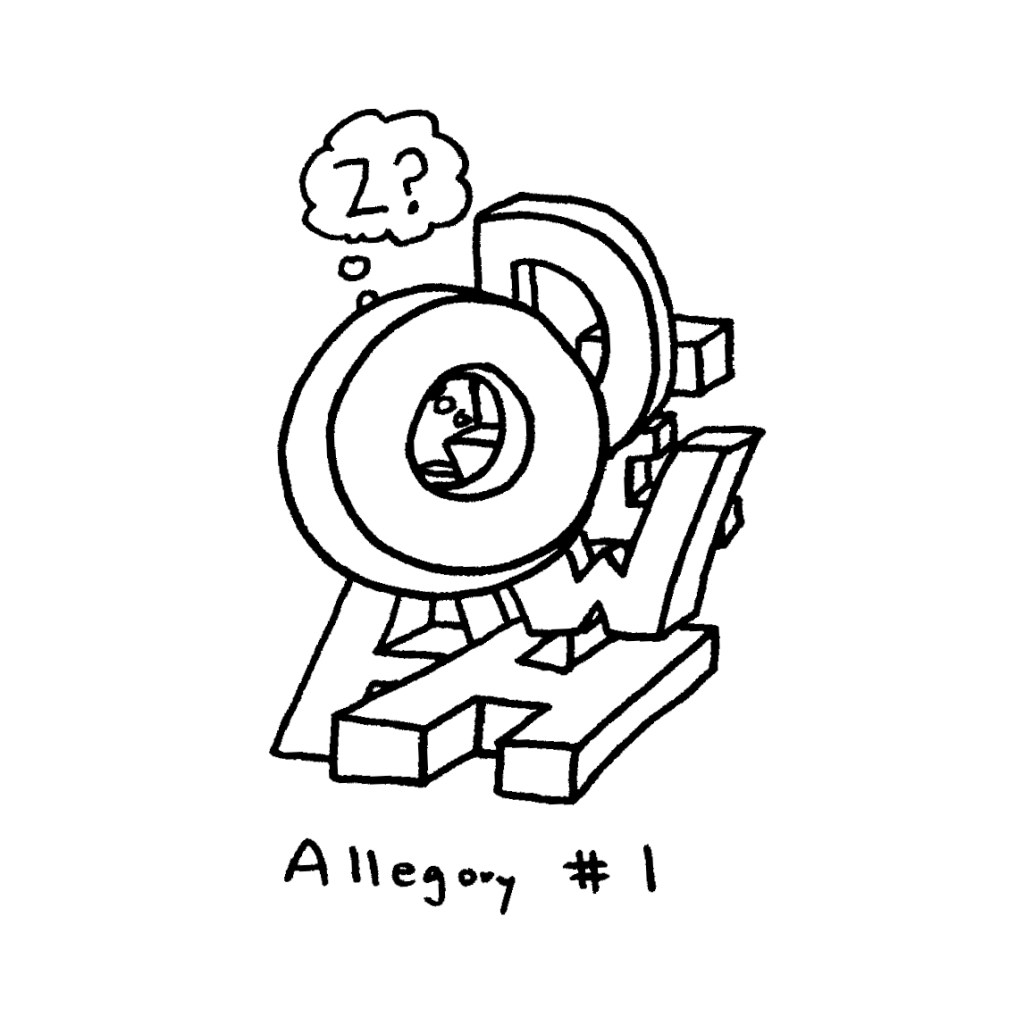
He incorporated many of the restraints of comics into his poetry comics – lettering, frames and strips, superhero homage (Captain Poetry), recurring characters, captions, speech bubbles, and emanata. He also featured letters of the alphabet including a starring role for *H*, signifying H-section in Winnipeg where he lived as a child. But he also pushed against these restraints – ignored the frame, lettering ranging from precise to illegible, empty speech bubbles.

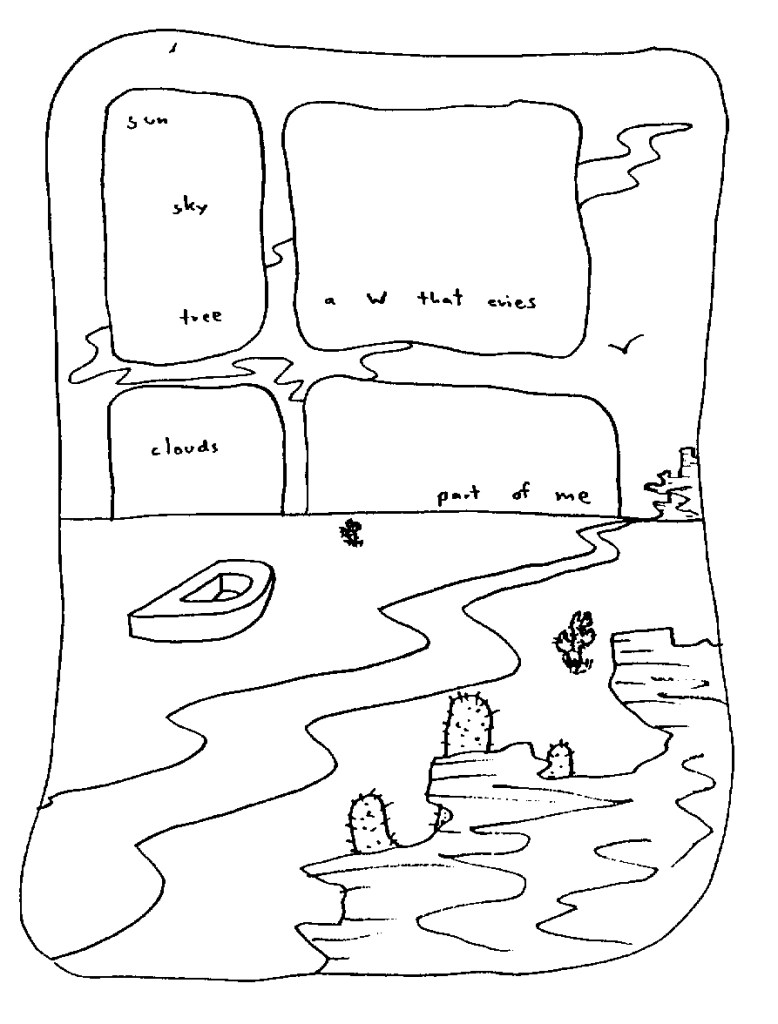
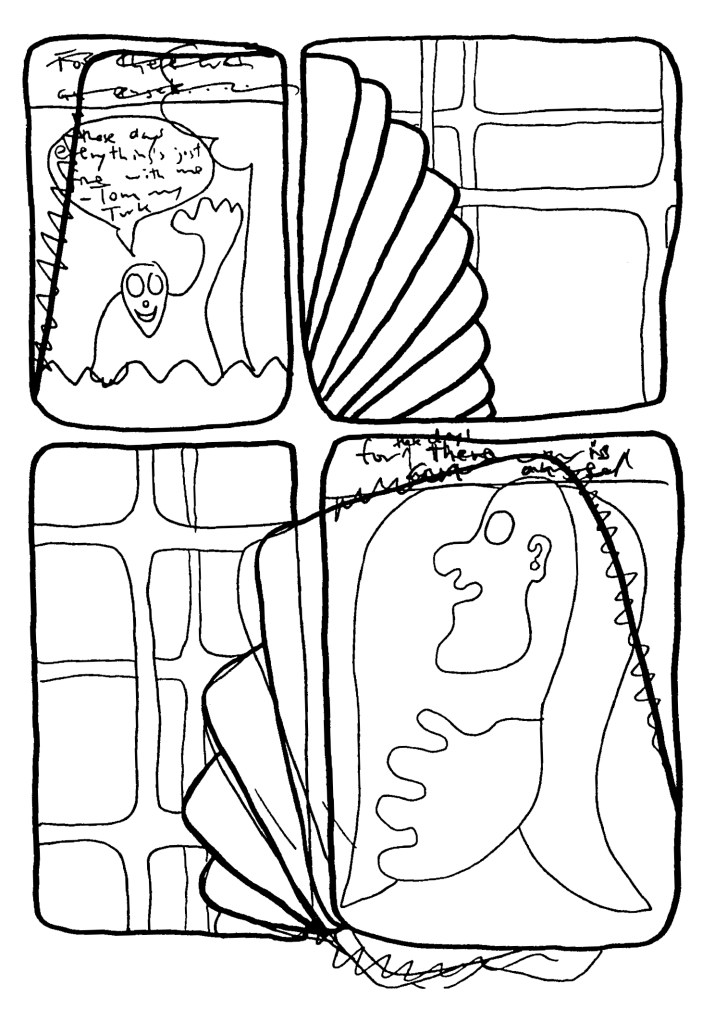
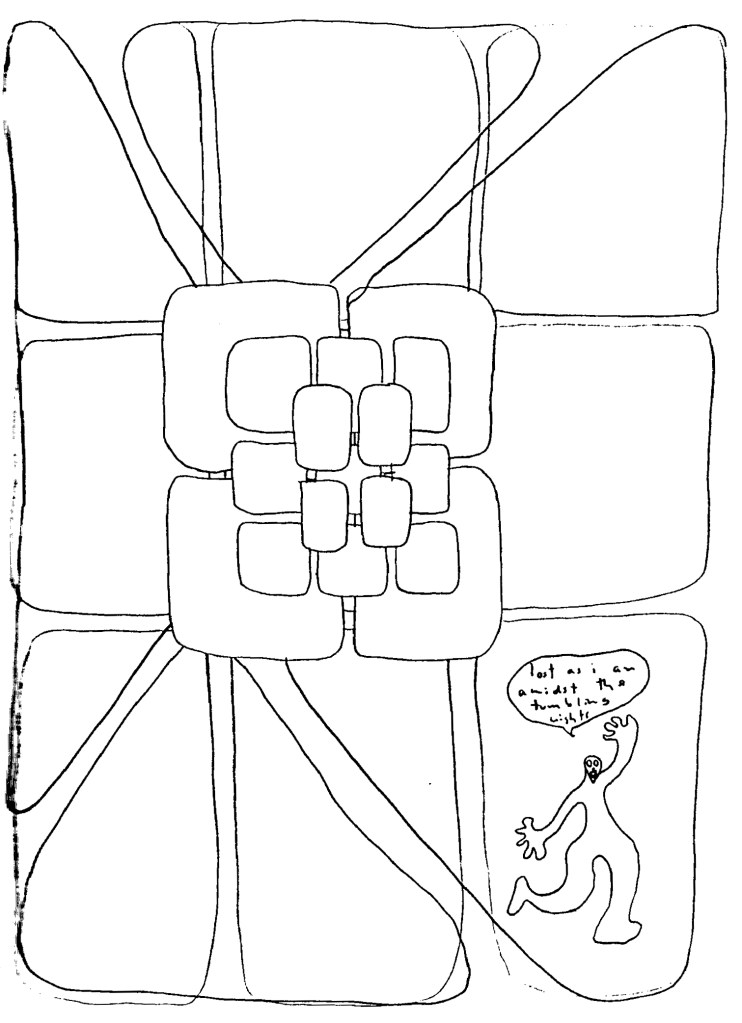
Here are 3 examples that illustrate how Nichol used the conceit of the comic book strip or grid but pushed against what was expected.

bpNichol from “Notebook 1971” collected in bpNichol Comics (Talonbooks 2002)
bpNichol from “The True Tale of Tommy Turk” collected in bpNichol Comics (Talonbooks 2002)

These are wild! There are frames coming out of pictures, frames inside frames, a network of frames, frames fanning and folding, frames ignoring gutters while creating their own runaway gutters, frames that are crossed out. They make their own universe with their own context and logic – surreal, meta, morphed – while carrying simple yet profound poetic messages. Much to admire here and be inspired by.

To be continued …

Timeline: 1960-1980+

Warning: This incomplete history maps my journey as a poet learning about comics and doesn’t follow a strict chronological order.

A History of Poetry Comics

Book review – DIY poetry comics from Susanne Reece

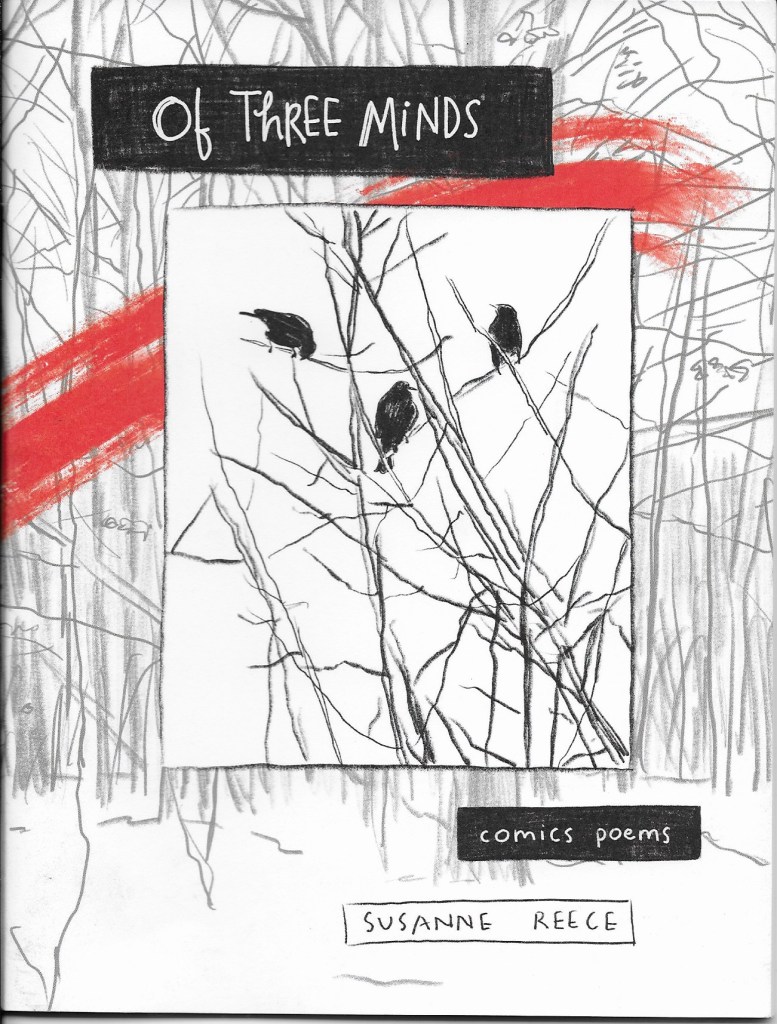
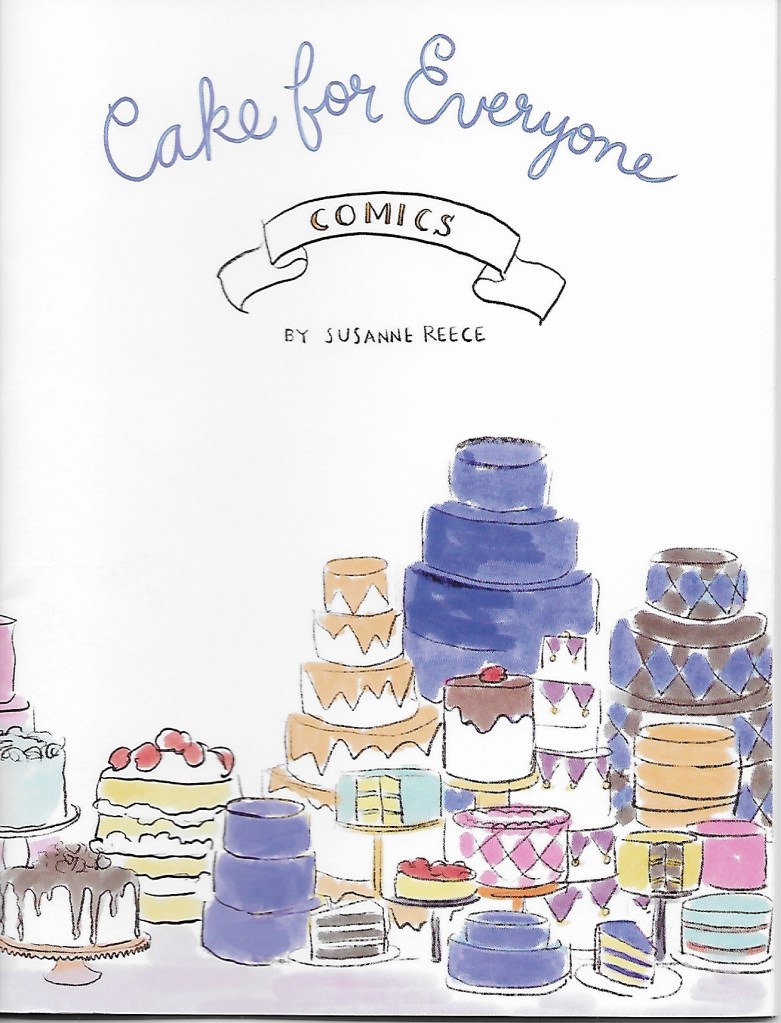
(New section!) Book review: “Of Three Minds” by Susanne Reece (DIY, 2022) and “Cake for Everyone” by Susanne Reece (DIY, 2022)

In ways less experimental, in other ways more compelling, the poetry comics of Susanne Reece are direct, confessional, and wonder-provoking. Two recent zines of poetry comics by the writer/artist are engaging examples of words and pictures creating a third meaning. (For more on defining poetry comics see AHOPC #05.)

“Of Three Minds” opens with the title poem, inspired by Wallace Stevens’s blackbird. It’s a series of frames or windows set atop of a bleak winter scene that encloses the lines of the poem and small moments of noticing – a blackbird, clouds, a falling leaf. Anchoring it all is the poet herself, bundled up against winter as observer/experiencer. It brilliantly captures how the mind works, how we assemble a whole from the parts.

This is followed by a series of haiku comics, with the poem spread across three panels with a 5-7-5 syllable count. All of them direct observations by the poet-artist, with titles continuing the winter theme: “A Winter Walk,” “Ice Storm,” “Blizzard,”and “Hibernation.” Each frame provides a different perspective from close-ups to scene setting. After spring, summer, and fall diary comics, Reece returns to haiku comics to end the collection with the dark yet beautiful “DFW–>LGA” and “Insomnia.” In the former, the night opens up the wonders of city lights observed from an airplane. In the latter, night becomes an antagonist when the artist can’t fall asleep. Her confessions always get at something deeper.

This is also true in Reece’s “Cake for Everyone.” Nestled among the dominant diary comics are two poetry comics – “Guilty Pleasure” and “The Lantern Fish.” In both, from the darkness, light appears as a flicker – desperate yet defiant. There is advice we learn from our elders as well as from nature, she reminds us. In both, as Reece writes, “trying to find / Its way in the dark.” Indeed.

Reece self-describes her work as “comics poetry, comics essays, and diary comics.” See more of her comics – and buy her books – at her website here.

Timeline: 2022

Warning: This incomplete history maps my journey as a poet learning about comics and doesn’t follow a strict chronological order.

A History of Poetry Comics

Concrete poetry – honoring our forerunners

Concrete poetry can inform our understanding of poetry comics. They are literally words, letters and/or characters as pictures. The graphic element emerges from the letters and characters used.

The common idea I see is that the words/letters/characters and the resulting picture/image/field come together to do what they can’t achieve on their own. (See my note on *illumination* in my attempt in #05 to define poetry comics.)

There’s also an urge I sense by the concrete poets to provide context for their ideas. Concrete implies building and foundation. The resulting whole (words as image) underpins the attempt to place letters and typewriter characters graphically on the page often times within frames (or at the least within the restraint of margins). It’s the same process that the comics artist wrestles with – composition on the page within the boundaries of a frame.

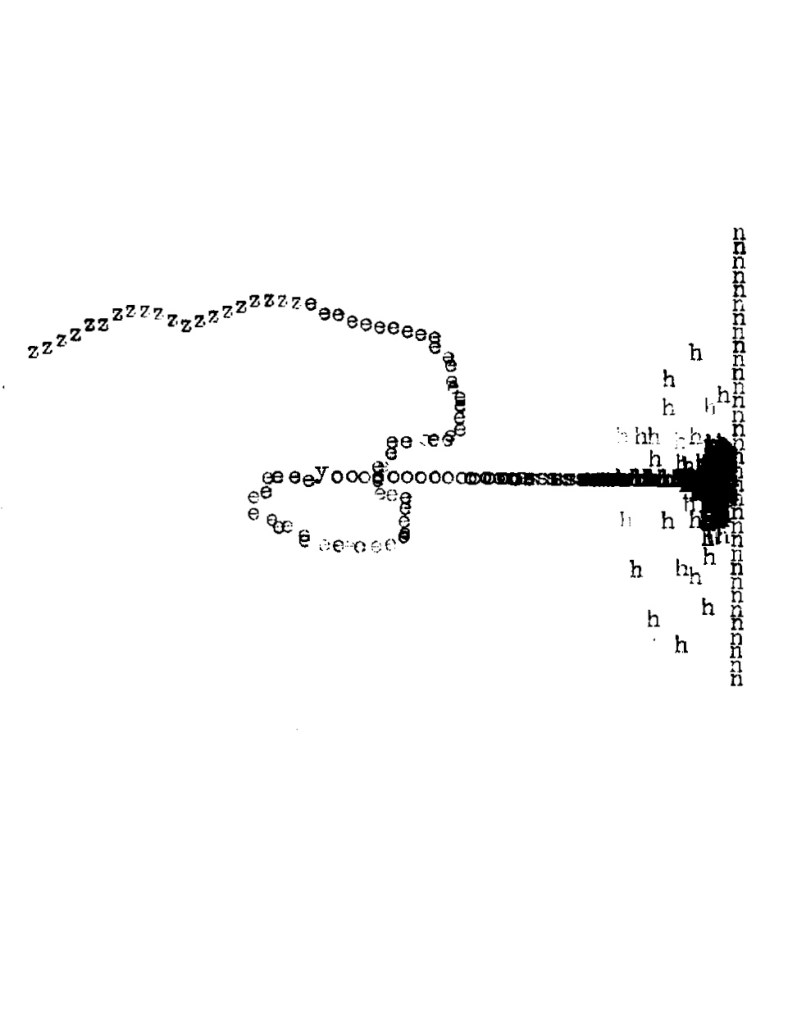
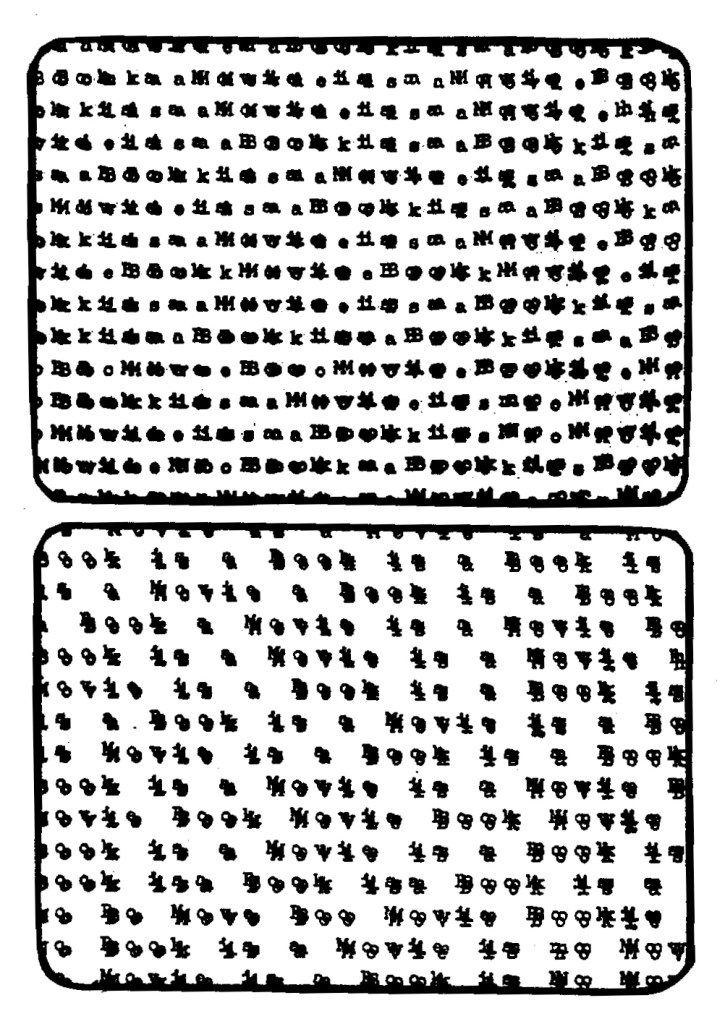
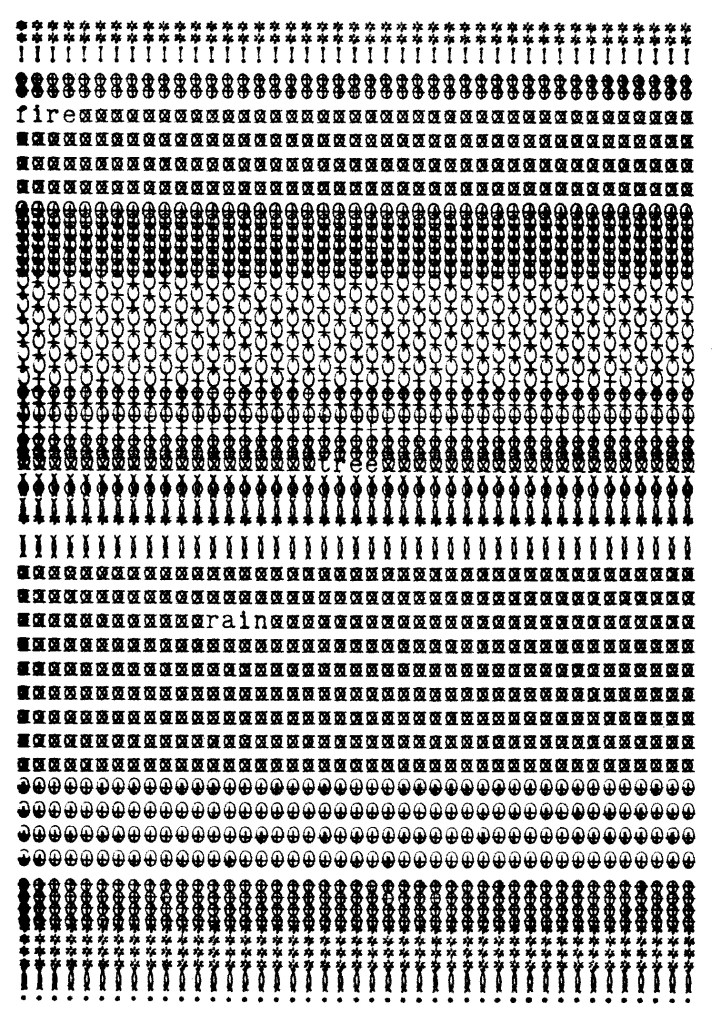
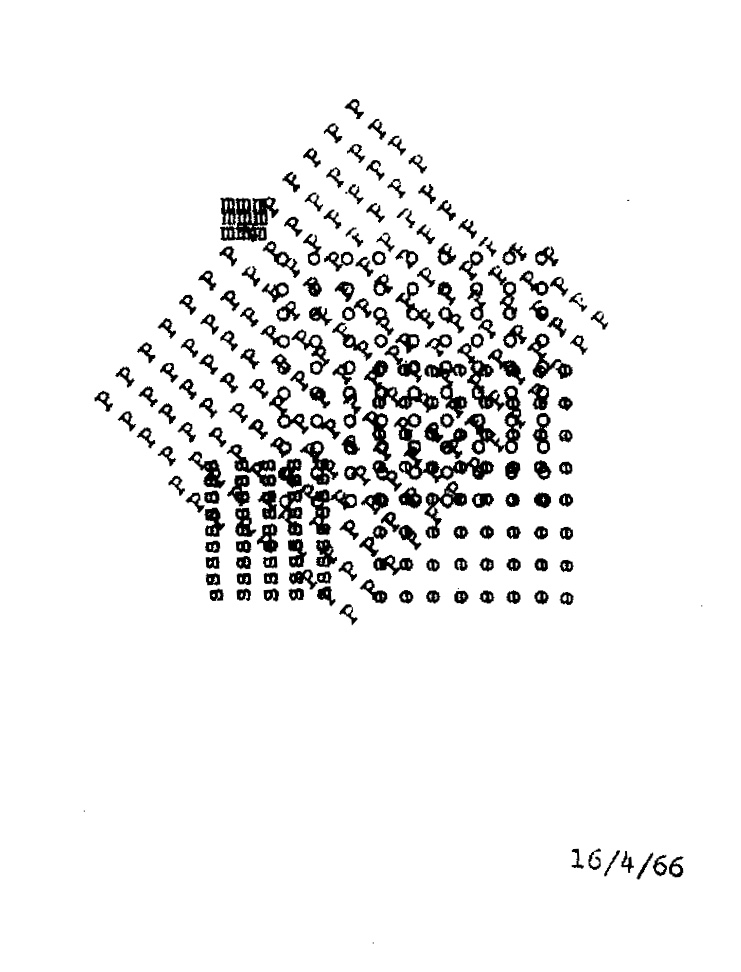
Concrete poetry is centuries old, however, the term *concrete poetry* was coined in the early 1950s. Below are some concrete poems from the 60’s, 70’s, and 80’s. Though my predisposition for manual typewriters is evident in these examples, the proliferation of home computers has even further expanded the exploration of concrete poems, pushing into the realm of visual poetry.

zeeeyooosshhhhhhhh by Cavan McCarthy from Typewriter Poems (Something Else Press, 1972)
“From: A Movie Book” by Bob Cobbing from Typewriter Poems (Something Else Press, 1972)
from “4 vizual pomes” by bill bissett reprinted in breth (Talonbooks, 2019); originally published in soul arrow (blewointmentpress, 1980)
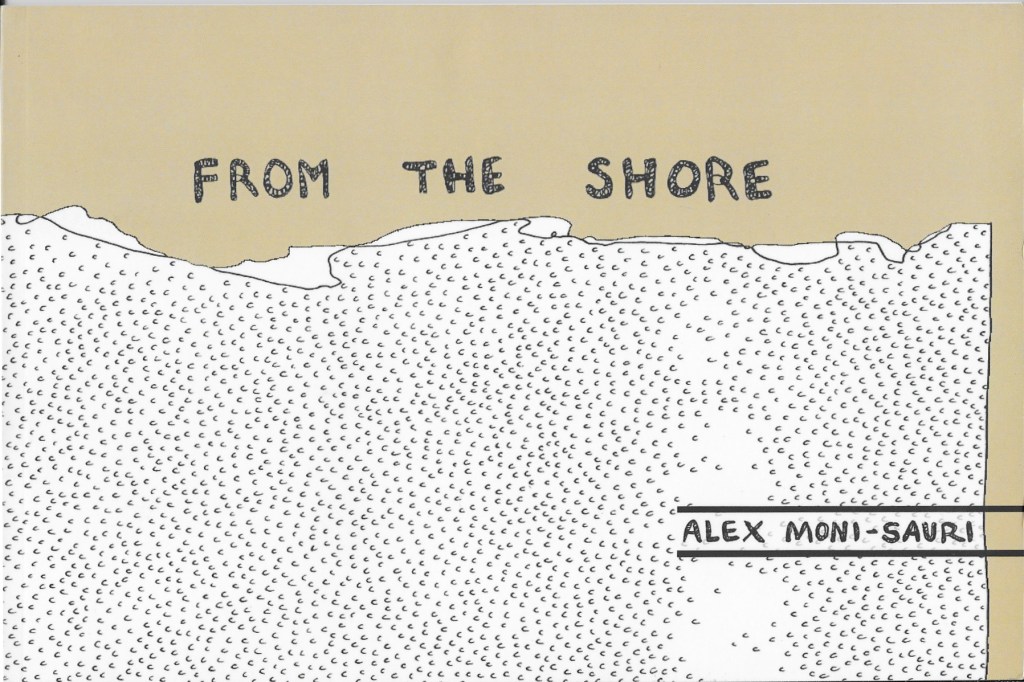
from “KON 66 & 67” by bp nichol reprinted in bp: beginnings (BookThug, 2014); originally published by Ganglia, 1968.

Many concrete poems are also sound poems, which mirrors the challenges of “performing” poetry comics. The intimacy of encountering the poetry comic on the page can’t truly be replicated through projection or screen sharing at a reading. (I will explore performance of poetry comics in a future post.)

Timeline: 1960s – 1980s

Warning: This incomplete history maps my journey as a poet learning about comics and doesn’t follow a strict chronological order.
A History of Poetry Comics

Book review – Johnny Damm brings found text to his poetry comics

Artist-poet-teacher Johnny Damm‘s most recent poetry comics carefully collages X-Acto-knived images from vintage comics books pairing them with found text. Perhaps beyond genre or classification, his work speaks to the edge of the universe where comics become poetry and poetry becomes comics.

There’s no mistaking he’s currently working within the context of comics. His supplies consist of vintage comic books from the late 1940s and 1950s from which is “excepts” panels and images. As he states in an interview included in the back of Failure Biographies (The Operating System, 2021), “I make comics out of other comics.” (p.170)

Damm uses found text from sources as varied as journals, public statements, articles, interviews, and letters — juxtaposing these words and phrases within the context of the panels. The resulting found poetry changes both the comics and the text in ways that shift and create new meaning.

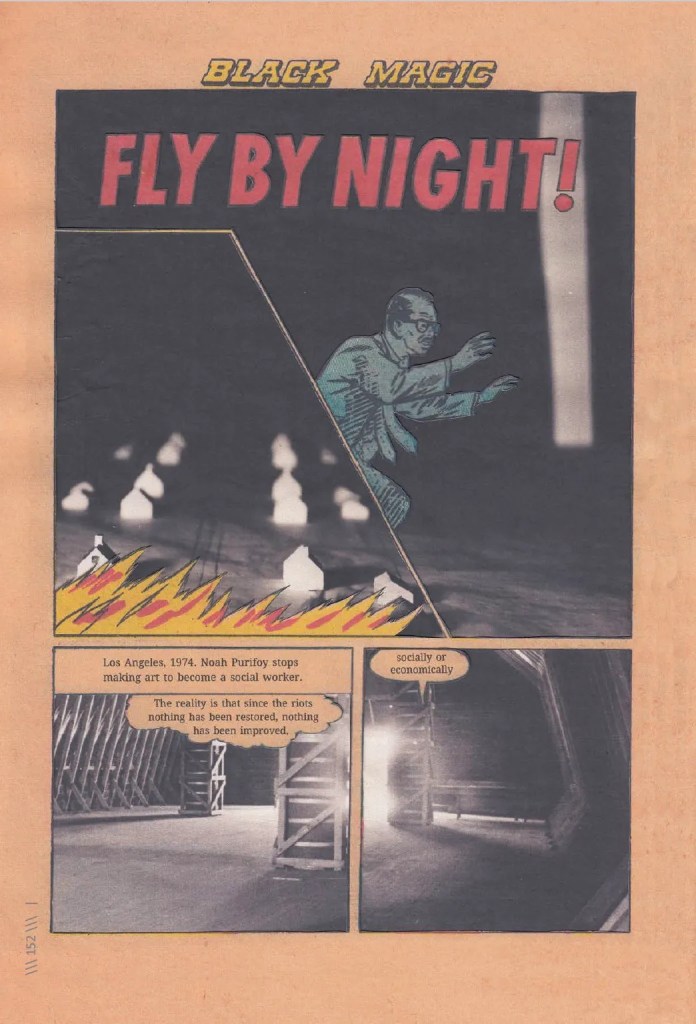
Here’s an examples from “Failure Biographies:”

From “Failure Biographies ” by Johnny Damm (The Operating System, 2021)

Like the best poetry, Damm has created something entirely new working within preset constraints. (Think “The Sonnets” by Ted Berrigan.) The comics and the text work to build a context for each other, increasing the impact of both. These poetry comics may appear simple, i.e. effortless, but the comics and text together communicate the complexities and challenges of contemporary life in an exacting and engaging way.

Recommended: Damm’s 2022 work “I’m a Cop.” Provocative and timely.

Footnote: Tradition of found poetry is a long one. An example I admire is Charles Reznikoff’s “Testimony” (Black Sparrow Press, 1978), a work created entirely from transcripts from U.S. trials 1885-1915. He worked on the project for 10 years, according to the introduction note. His work inspired me to assemble poems using text found in the Journals of Lewis & Clark in “by Land…” (Ravenna Press, 2015). Another book I’ve kept around is Found Poems by Bern Porter (republished by Nightboat Books, 2011). Many of the poems in this collection use text found in newspaper advertising.

Timeline: 2017-now

Warning: This incomplete history maps my journey as a poet learning about comics and doesn’t follow a strict chronological order.
A History of Poetry Comics

Pop art or poetry comics? of Joe Brainard

Writer and artist Joe Brainard (1942-1994) was obsessed with (among other things) Nancy, finding ways to collaboratively collage, coerce and copy the comic strip stalwart into his art.

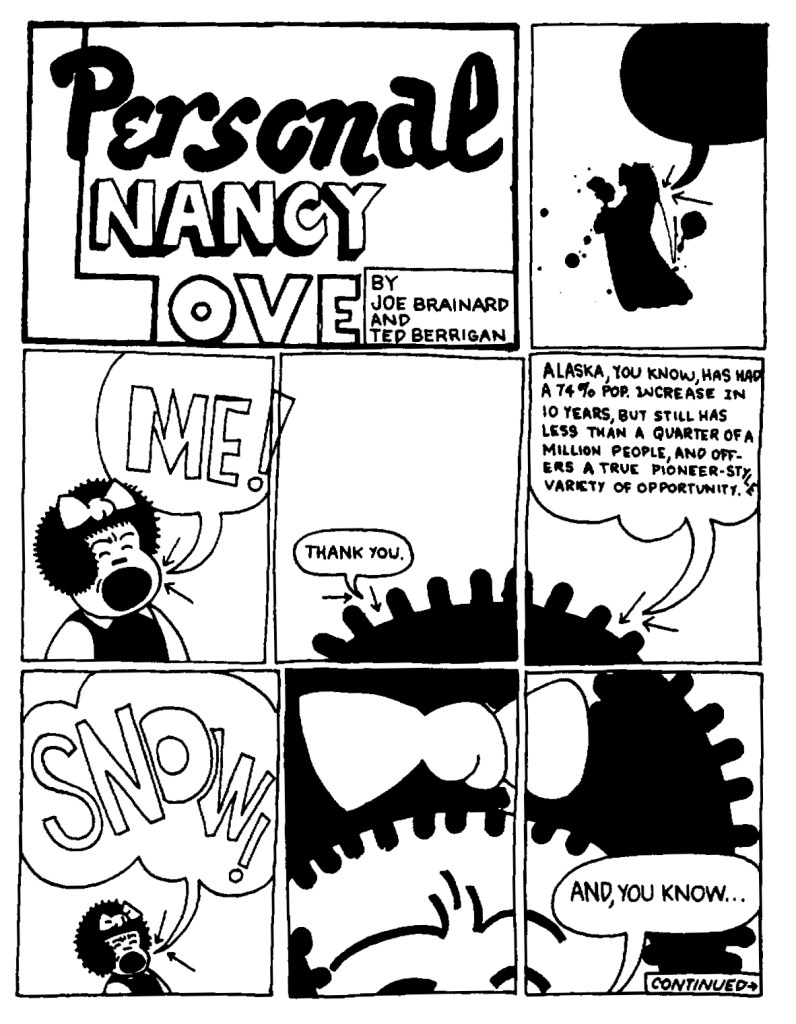
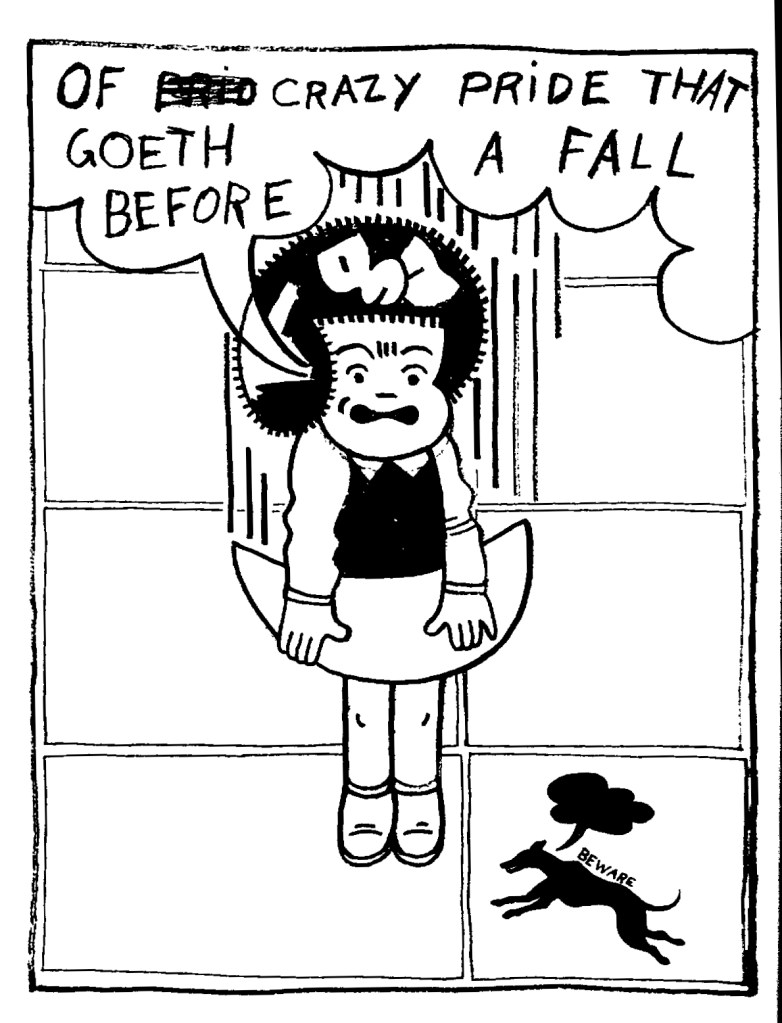
Brainard’s The Nancy Book (Siglio Press, 2008) collects a large selection of his work (both written and drawn) that features Nancy. He draws his subject in the style of other artists, collages her into cigarette ads, and other times poses her in pornographic situations. He often places her within the visual language of comics, using elements such as panels, speech bubbles, captions, and emanata. Two examples are below.

Collaboration between Joe Brainard and poet Ted Berrigan from The Nancy Book (Siglio Press, 2008)
Collaboration between Joe Brainard and poet Ron Padgett from The Nancy Book (Siglio Press, 2008)

In the first one, the panels can hardly hold Brainard’s Nancy until she finally breaks the gutter and covers the bottom lower right panels. In the second one, Nancy is free falling across the panels. In both cases, they perfectly represent what Ann Lauterbach calls in the introduction to The Nancy Book: “Candor: a kind of fearlessness about boundaries.” (p. 8)

There’s also the concept of collaboration to consider in these poetry comics. Both examples credit poets Ted Berrigan and Ron Padgett. Thinking collage, in the same way he found Nancy in the comics page, he found poetry in the words of his friends. (More about collaborations in a later post.)

Of note, in addition to his Nancy drawings, Brainard created other comic books, including “People of the World: Relax!,” “Some Drawings of Some Notes to Myself,” and “The Cigarette Book” all found in The Collected Writings of Joe Brainard (The Library of America, 2012). These underscore his ongoing conversation with comics.

As Brainard makes us consider popular comics as rightful subjects and architecture for fine art, he equally makes us consider a wider acceptance of what a poem is. This is what I think the best poetry comics do.

Timeline: 1963-1978

Warning: This incomplete history maps my journey as a poet learning about comics and doesn’t follow a strict chronological order.
A History of Poetry Comics

Ink Brick was watershed for poetry comics in the twenty-teens

To understand the expanse of the poetry comics universe, the online remains of INK BRICK (2013-2019) provide a perfect primer. Contributors to the literary journal, which was exclusively dedicated to poetry comics, include poets and comics artists working in all media. The resulting 10 volumes fill in the central tenets of poetry comics while pushing the outer reaches.

INK BRICK was a micro-press dedicated to comics poetry

Here are 5 ways INK BRICK inspires me:

  1. Overwhelming feeling of encouragement. I’m not alone. There are others who continue to make art that build context using words and drawings.
  2. The feeling of inclusiveness. There’s a heartening diversity in this community. No matter if you find your way to poetry comics as a poet first or a comics artist first, you are welcomed.
  3. There’s a lot to explore (and learn) here. For example: The list of Contributors include links to artists’ websites that lead to new explorations and inspirations.
  4. Pro Tip: Dig through the Archive for hidden gems. You’ll find lots of great notes and quotes here.
  5. And the best take-away: There’s not just one way to express poetry comics or comics poetry. “There are many paths to the top of the mountain.”

R.I.P. INK BRICK.

Timeline: 2013-2019

Warning: This incomplete history maps my journey as a poet learning about comics and doesn’t follow a strict chronological order.
A History of Poetry Comics

Defining poetry comics – a first attempt

This post comes with a disclaimer.

Up to now, “A History of Poetry Comics” has gone along without defining *poetry comics.* I believe any definition should be as inclusive and open as possible. As we pause to consider “what are poetry comics?” please remember: there’s a lot of room to color outside the lines.

What are poetry comics?

Is it a poetry genre like concrete poetry or visual poetry? Or is it a comics genre akin to literary fiction? Let’s look at 4 ways we can perhaps corral poetry comics — even if we can’t pigeonhole them.

Intention – Does the artist intend the work to be poetry comics? One good indicator: the creator calls them poetry comics. That’s straight-forward and perhaps the easiest way to categorize. Starting as early as the 1950s and continuing through today, there are many examples of artists calling their poems comics or taking direct inspiration from comics, including Kenneth Koch, Joe Brainard, bp nichol, Bianca Stone, Johnny Damm, Susanne Reece, and (my teacher) David Lasky. Another example is the lit zine Ink Brick (2013-2019), which asserted its intention by describing itself as “The Press for Comics Poetry.”

Occupation – Is the comics artist a poet? Or is the poet a comics artist? The order in which that occurs doesn’t matter, but it takes experience/experiment in both to create poetry comics and is a good indicator that what you’re seeing/reading are indeed poetry comics. There are great examples of poets as drawers, painters, and comics artists, including bp nichol (see “The Captain Poetry Poems Complete” (Book Thug, 2011)). Equally there are great examples of comics artists, drawers, and painters as poets, including John Porcellino (see “Busy Bee” or “Old Hearts” or “Spring Signs” in “Map of My Heart” (Drawn & Quarterly, 2009)).

Point: “the poet who paints or sculpts is different from the painter who writes. he comes at his art from an entirely different angle and brings to it different concerns yet similar ones. but he is always a poet.” –bp nichol in “Comics” (Talonbooks, 2002; p. 13)

Counterpoint: “Any cartoonist will tell you that the deeper you dig into the form, the more nuances and subtleties you find. … It’s not as static as a fixed image, it’s a flow. The more I looked into comics, and this kind of ‘flow,’ the more similarities to poetry I found.” –John Porcellino, interview with The Herald, April 2018.

Construction – Is the work both a poem and a comic? Does it include compositional elements from comics (panels, speech bubbles, captions, etc.) and poems (structure, syntax, rhythm, etc. )? Be aware when answering those questions that sometimes the elements will be fragmented, implied, or even omitted, which keeps things new. In “Over the Line: An Introduction to Poetry Comics” (Sidekick Books, 2015; p. 13), the editors assert: “In the same way that it’s a mistake to think of comics as ‘prose with illustrations’ rather than being more complex compositions, it’s a mistake to think of poems as prose divided into different lines.”

Illumination – Do the words and pictures create a third meaning beyond what words or pictures could do on their own? Pictures and words are often integrated in poetry comics in ways that create context that illuminates and/or transcends what they bring individually to the composition.

As one example, in Japanese poetry including traditional haiku there is a “cutting word” kireji. It serves a lot of purposes, including creating a break or a leap in meaning, relationship or emphasis. In comics terms it would be the gutter, white space or even a changed aspect from frame to frame. The result is the same: a meaning emerges in the reader’s mind as a result of that juxtaposition. That leap is what illuminates.

Warning: This incomplete history maps my journey as a poet learning about comics and doesn’t follow a strict chronological order.
A History of Poetry Comics

No doubt – Bianca Stone creates poetry comics

To make it so, name it so.

If you wonder if pictures and words together is poetry comics, consider what the artist calls it. Here’s an example.

Contemporary poet Bianca Stone leaves no doubt what she’s creating are poetry comics — she calls them poetry comics, uses the URL poetrycomics.com as her homepage, and incorporates (and bends) the basic framework of classic comic books.

“Poetry Comics from the Book of Hours” by Bianca Stone (Pleiades Press, 2016)

Her cover for Poetry Comics from the Book of Hours (Pleiades Press, 2016) echoes classic comic book covers: the callout for bonus materials, the burst (partially obscured) declaring “Is your daughter a poet?” and our superhero front and center — saving a victim, bursting out of the darkness.

The parallel continues inside. There are sequential panels, caption boxes and speech bubbles. And at 7×10, the size feels comic-book size.

The point here is intention. Did the artist intend their work to be poetry comics? I believe it’s as simple as: if they’re called poetry comics by the poet-artist, then they’re poetry comics.

P.S. Stone illustrated poet Anne Carson’s translation of “Antigonick” by Sophokles (New Directions, 2012). Her drawings on velum overlay hand-lettered text, which shows through in evocative ways, making a direct connection with and illuminating the words. Definitely worth seeking.

Timeline: 2010s

Warning: This incomplete history maps my journey as a poet learning about comics and doesn’t follow a strict chronological order.
A History of Poetry Comics

Japanese haiga still informs us today

Centuries-old Japanese haiga offer elements that can deepen our understanding of poetry comics today. Haiga often combine drawing with haiku, the now ubiquitous short poem form, delivered in the artist’s own hand. Foremost for me is the balance found in the words and drawings compositionally on the page.

There are many Japanese haiku and haiga masters; poet-painter Yosa Buson (1716-1784) is revered for excelling at both. One famous example of his haiga shows the poet resting at his writing table with an expression of blissful satisfaction. There’s a lot to admire here.

“Learning …” haiga by Buson (Public Domain)

The brush drawing is (what we would call today) cartoon-like and signals the intended humor of the accompanying poem. (For a note on the translation, David LaSpina considers this particular haiku here: “Great learning, or great farting.”) What attracts me the most: The upper left third is blank, strategically balancing the haiku and the self-portrait. It gives space for contemplation for both the artist and the viewer, and space for the meaning to (literally) dissipate.

For me, this white space works the same way the gutter does between panels of a comic — it shifts time, action, perspective or even meaning.

On a personal note, I’ve practiced shodo, Japanese calligraphy, for more than 30 years, always aware of balancing the written characters with blank space on the page. I’ve learned to consider blank space an important element of composition. This pause gives the reader/viewer time to fill in the blanks (or gives room for a fart!), and becomes an integral third element with pictures and words.

P.S. More haiga by Buson and others can be seen here.

Timeline: Prehistory

Warning: This incomplete history maps my journey as a poet learning about comics and doesn’t follow a strict chronological order.